

This week, Cut the Crap Investing founder Dale Roberts summarizes the latest financial headlines and explains what they mean for Canadian investors.
We’re moving in slow motion
With regular columnist Kyle Prevost away for a few weeks, I’m stepping in to review recent market developments and offer context for Canadian investors. Let’s begin with inflation and the broader economic picture.
In my final column of 2022 for “Making sense of the markets,” I reviewed the year and outlined plausible scenarios for 2023. Several clear investment themes emerged: energy and commodity stocks performed strongly in an inflationary environment, while value and defensive sectors also held up well. On my Cut The Crap Investing blog, I shifted toward an energy dividend approach, preferring steady dividend income over exposure to volatile oil prices. That strategy paid off: the energy sector’s dividend streams increased significantly in 2022 and continued to provide income in early 2023, even as some energy share prices softened.
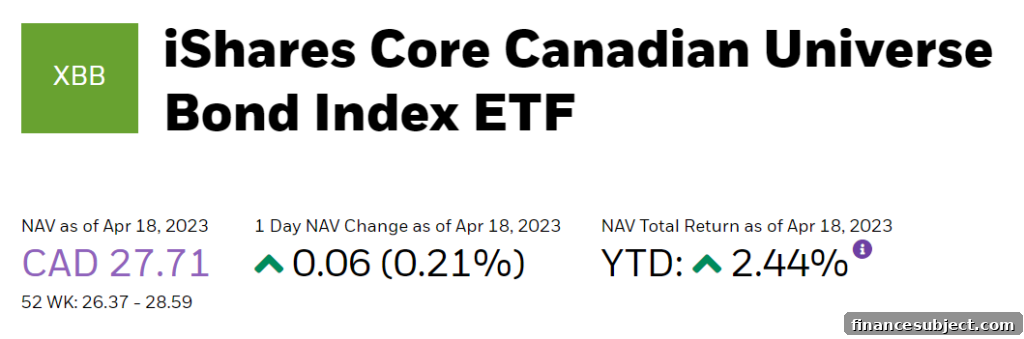
Bonds also found a footing as the bond market adjusted to the Bank of Canada’s pause in rate increases. With bond yields stabilizing, prices have been edging higher, offering modest relief to income-focused portfolios.
If I had to summarize the economic backdrop in a phrase, I’d call it “moving in slow motion.” Monetary policy operates with long lags—often 12 to 18 months—before rate changes fully ripple through the economy, slowing growth and moderating inflation. That lag means the pending recession many expect could arrive much later than anticipated, or may be milder than feared if the economy adjusts gradually. A strong labour market in Canada and the U.S. is a key factor in this slow-motion dynamic: tight employment makes employers reluctant to lay off workers, and consumers with jobs keep spending, supporting growth.
That said, there are clear signs of fragility across the economy. I maintain a growing list of recession indicators and watch them closely.
What the inverted yield curve predicts
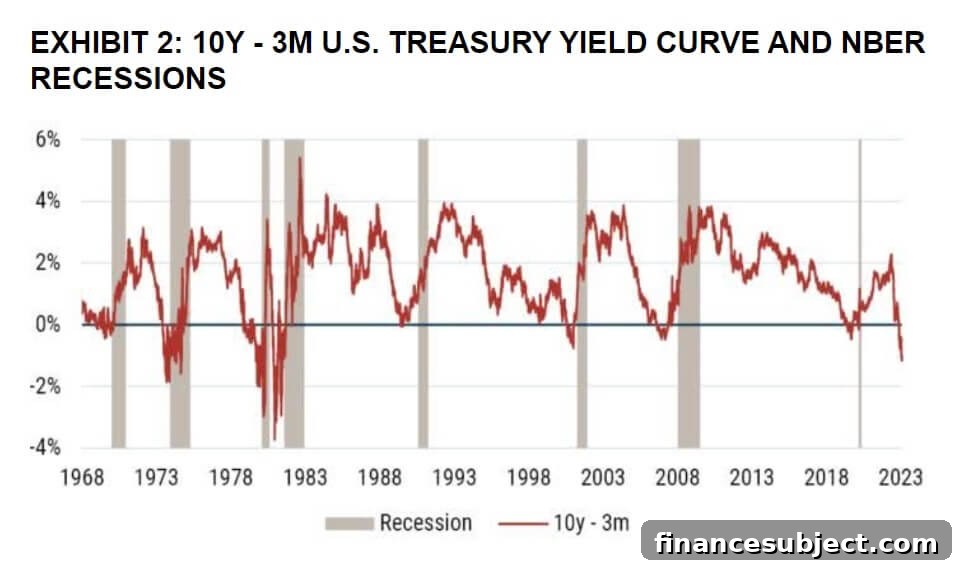
The bond market has a strong track record in forecasting recessions. Historically, an inverted yield curve—when shorter-term yields exceed longer-term yields—has preceded recessions several times. Recently, the U.S. yield curve steepened after reaching deep inversion, but the inversion remains a key warning sign. Most economists and market participants now expect a soft recession, potentially arriving in the second half of 2023 or in early 2024. Canada typically follows the U.S. if a recession occurs there first.
Inflation in Canada is trending lower, but it’s likely to remain elevated in certain areas, especially food. Energy prices and rising wages could reintroduce inflationary pressure. My view, shared by many, is that the economy may settle into higher-than-target inflation—perhaps closer to 3–4%—rather than returning to a steady 2% target. Historically, that range is not catastrophic for equities; many stocks perform reasonably well with moderate inflation.
In this environment, defensive sectors—consumer staples, health care, and utilities—tend to provide shelter if a recession arrives. Bonds should also perform better if inflation moderates. For investors in the accumulation phase, regular investing remains a sensible approach: use lower prices when they appear and stay aligned with your tolerance for volatility. Retirees should prepare for a wider range of outcomes and protect purchasing power where possible.
U.S. bank earnings offer hope
The regional banking turmoil in the U.S. earlier this year—highlighted by the collapse of Silicon Valley Bank and Signature Bank—raised the spectre of wider financial stress. The U.S. authorities acted to protect depositors, but the episode exposed vulnerabilities, especially around interest-rate sensitivity and uninsured deposits.
The big U.S. banks come to the rescue
Large U.S. banks kicked off earnings season with solid reports that reassured markets temporarily. Key highlights (U.S. dollars):
Bank of America (BAC)
- Q1 GAAP earnings per share: $0.94, ahead of expectations.
- Revenue: $26.3 billion, up 13.4% year-over-year, beating estimates.
- Net interest income rose 25% to $14.4 billion as higher rates and loan growth helped margins.
- Client balances remained large at $1.6 trillion, with modest quarterly changes.
Goldman Sachs (GS)
- Q1 GAAP earnings per share: $8.79, above forecasts.
- Revenue: $12.22 billion, slightly down year-over-year but solid overall.
- Assets under supervision grew to a record $2.67 trillion.
Citigroup (C)
- Q1 non-GAAP earnings per share: $1.86, beating expectations.
- Revenue: $21.4 billion, a 12% increase year-over-year, driven by net interest income growth.
These results helped stabilize sentiment, but regional banks that followed showed signs of strain. A major concern is approximately USD $1.5 trillion in commercial real estate loans scheduled to reset to higher rates over the next two years. Many commercial borrowers will struggle, which could lead to foreclosures and greater credit stress. That dynamic could turn the regional banking issue into a prolonged headwind for the economy.
More earnings: Tesla and Metro
Tesla’s Q1 results highlighted margin pressure and inventory buildup. The automaker delivered a record number of vehicles—over 422,000 in the quarter—but margin compression and weaker free cash flow raised concerns. Tesla’s gross margin slipped materially year-over-year, and inventory rose as production outpaced deliveries, prompting price cuts to sustain demand. Tesla remains difficult to value because much of its premium is based on future expectations rather than current fundamentals.
In Canada, grocer Metro reported a strong quarter (Canadian dollars): non-GAAP EPS of $0.96 and revenue of $4.55 billion, with same-store sales gains in both food and pharmacy. Grocers have generally been resilient amid higher food prices.
Apple continues its push into fintech
Apple remains one of my favourite companies and a long-term holding. The company is expanding in financial services, recently launching a high-yield savings option in partnership with Goldman Sachs. Apple is also increasing production activity in India while opening retail locations, reflecting efforts to diversify manufacturing and tap growing markets. Apple’s product and services ecosystem allows it to move into adjacent financial offerings, though the stock currently trades at a relatively high forward price-to-earnings ratio.
Bitcoin and modern gold
I’ve previously written about bitcoin as a portfolio allocation and consider it a form of modern, digital gold for some investors. Post-FTX, greater regulation and scrutiny have helped clarify differences between bitcoin and other speculative cryptocurrencies. Bitcoin has recovered strongly since that period, but it remains a higher-risk allocation that is not suitable for every investor. I continue to hold both physical gold and a measured exposure to bitcoin as diversifiers against deteriorating balance sheets and monetary risks in developed economies.
Dale Roberts advocates low-cost, evidence-based investing and blogs at cutthecrapinvesting.com. Find him on Twitter @67Dodge for daily market commentary.