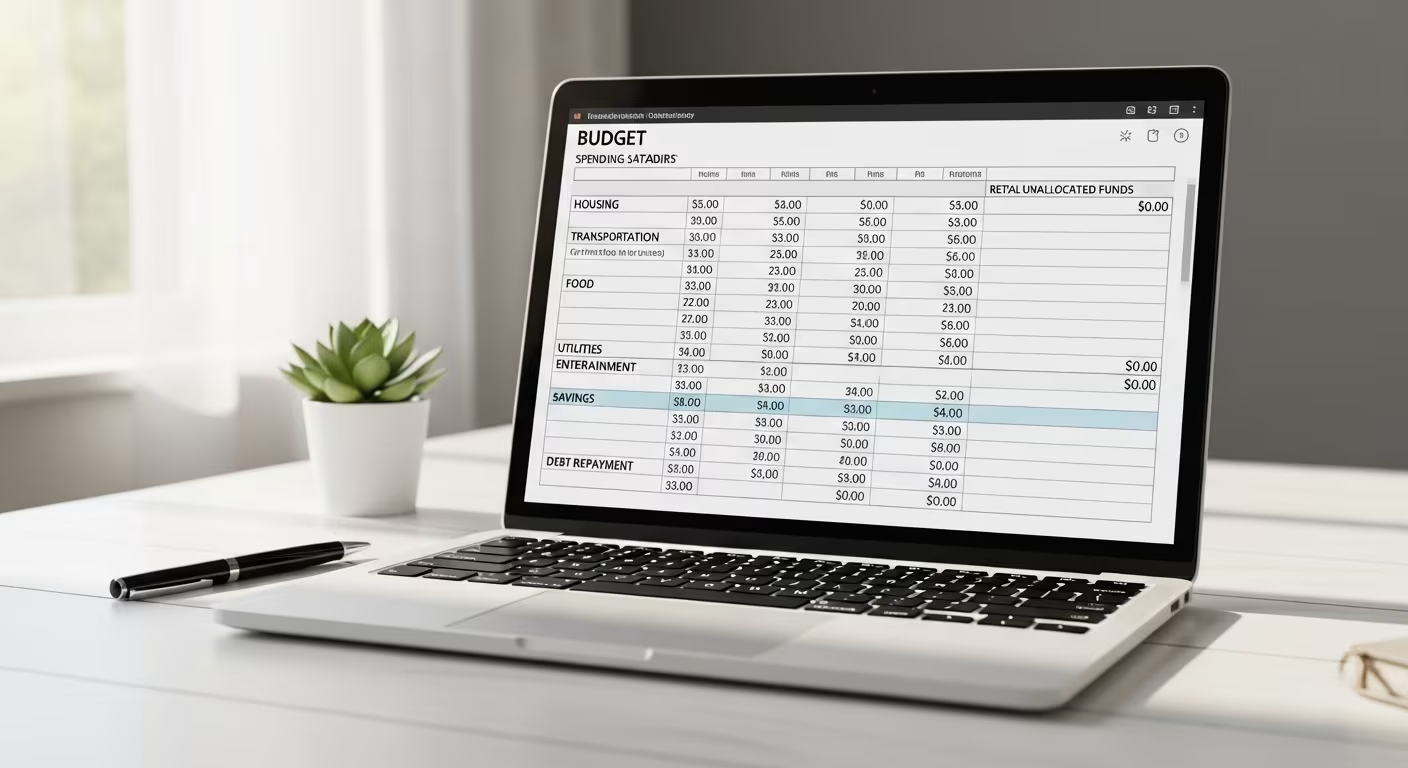
Zero-based budgeting is one of the most powerful budgeting methods available—and one of the most misunderstood. The concept is simple: every dollar of income gets assigned a specific purpose before you spend it. Income minus allocated expenses equals exactly zero. No money sits unassigned, wondering what it should do.
This isn't about spending everything you earn. It's about planning everything you earn. When every dollar has a job, you control your money instead of wondering where it went.
What Makes Zero-Based Budgeting Different
Traditional budgeting often looks backward: "Where did my money go last month?" Zero-based budgeting looks forward: "Where will my money go this month?"
With zero-based budgeting:
- You plan before the month begins
- Every expense category gets a specific dollar amount
- Income - All Planned Expenses = $0
- Nothing is left unassigned
The "zero" in zero-based budgeting doesn't mean you have zero dollars left. It means zero dollars are left without a purpose. That purpose might be savings, investments, or paying bills—but it's intentional.
Why Zero-Based Budgeting Works
Complete Visibility
When every dollar has an assignment, nothing hides. That $47.99 subscription you forgot about? You'll notice it when assigning dollars. Those "small" purchases that add up? They become visible when you're forced to categorize them.
Forced Prioritization
With limited dollars and unlimited wants, zero-based budgeting forces you to prioritize. If you want to add $200 to dining out, you must remove $200 from somewhere else. This creates conscious trade-offs.
Eliminates Lifestyle Creep
When income increases, traditional budgeters often see "extra" money and spend it unconsciously. Zero-based budgeters must assign those new dollars deliberately. This makes lifestyle creep visible and optional rather than automatic.
Adapts Monthly
Every month starts fresh. December has holiday expenses; August might have back-to-school costs. Zero-based budgeting lets you adjust allocations monthly based on what that specific month requires.
How to Create a Zero-Based Budget
Step 1: List All Income
Write down every dollar coming in this month:
- Salary/wages (after-tax)
- Side hustle income
- Investment dividends
- Child support/alimony
- Government benefits
- Any other income
For the average American earning around $62,000-$66,000 annually, this translates to roughly $4,200-$4,800 monthly after taxes.
Step 2: List All Expenses
Write down everything you spend money on, including:
Fixed Expenses:
- Rent/mortgage
- Car payment
- Insurance premiums
- Student loans
- Subscriptions
- Phone bill
Variable Expenses:
- Groceries
- Utilities
- Gas
- Personal care
- Entertainment
Savings and Investments:
- Emergency fund contributions
- 401(k) contributions (2026 limit: $24,500)
- IRA contributions (2026 limit: $7,500)
- Sinking funds
Irregular Expenses (Monthly portion):
- Annual subscriptions ÷ 12
- Car maintenance
- Holiday gifts
- Medical expenses
- Home repairs
Step 3: Assign Every Dollar
Now the work begins. Assign your income to categories until you reach zero.
Example with $5,000 monthly income:
| Category | Amount |
|---|---|
| Rent | $1,600 |
| Utilities | $200 |
| Groceries | $500 |
| Gas | $150 |
| Car Payment | $350 |
| Car Insurance | $120 |
| Health Insurance | $200 |
| Phone | $80 |
| Internet | $60 |
| Subscriptions | $50 |
| Dining Out | $200 |
| Entertainment | $100 |
| Personal Care | $50 |
| Clothing | $75 |
| 401(k) Additional | $400 |
| Emergency Fund | $300 |
| Sinking Funds | $200 |
| Miscellaneous | $165 |
| Total | $4,800 |
| Taxes/Deductions (already removed) | $200 |
| Total Assigned | $5,000 |
Income ($5,000) - Allocated ($5,000) = $0
Step 4: Track Throughout the Month
Zero-based budgeting requires monitoring. When you spend, record it against the appropriate category. When a category runs out, stop spending in that category or adjust from another.
Step 5: Reconcile at Month End
Review what actually happened:
- Which categories went over?
- Which had money left?
- What unexpected expenses appeared?
- What adjustments should next month include?
The Role of Sinking Funds
Sinking funds are essential to zero-based budgeting. These are savings categories for irregular but predictable expenses:
Common Sinking Funds:
- Car maintenance ($100/month)
- Holiday gifts ($75/month)
- Annual subscriptions ($30/month)
- Medical expenses ($50/month)
- Home repairs ($100/month)
- Vacation ($150/month)
- Clothing ($50/month)
By saving monthly for annual expenses, you avoid budget-breaking surprises. When that $600 car repair happens, you have a $600 car maintenance sinking fund ready.
Handling Irregular Income
Zero-based budgeting with variable income requires adjustment:
Method 1: Budget Last Month's Income Wait until you have the money, then budget what you actually received. You're always one month behind but working with real numbers.
Method 2: Budget Your Minimum Budget based on your lowest expected income. Treat anything above as a bonus and assign it to savings or debt.
Method 3: Prioritized List Create a ranked list of expenses. Fund categories in order until money runs out. Essentials first, then nice-to-haves.
Tools for Zero-Based Budgeting
YNAB (You Need A Budget) Cost: $14.99/month or $99.99/year Best for: Serious zero-based budgeters
YNAB is built specifically for zero-based budgeting. Every feature supports the methodology. The learning curve takes 4-6 hours, but the long-term value is substantial.
EveryDollar Cost: Free version or $17.99/month premium Best for: Simplified zero-based budgeting
EveryDollar offers a cleaner interface than YNAB with faster setup. The free version works well; premium adds bank syncing.
Spreadsheets Cost: Free Best for: Those who want complete control
Google Sheets or Excel work perfectly for zero-based budgeting. You control every cell and formula.
Pen and Paper Cost: Free Best for: Those who need tactile tracking
Some people budget better physically. Nothing wrong with a notebook and calculator.
Common Zero-Based Budgeting Mistakes
Under-budgeting Groceries Food costs more than most people estimate.
Track actual spending for two months before setting your grocery budget. In 2026, the average household spends $600-$900/month on groceries.
Forgetting Annual Expenses That $120 Amazon Prime charge you forgot about.
The $200 car registration. Zero-based budgeting fails when irregular expenses ambush your budget.
No Miscellaneous Category Life includes random expenses.
Build a $50-$150 miscellaneous category to absorb small unpredictable costs without disrupting the entire budget.
Being Too Restrictive Zero-based doesn't mean zero fun.
Include reasonable entertainment, dining, and personal spending. Overly restrictive budgets lead to budget abandonment.
Not Adjusting Monthly Copy-pasting last month's budget ignores that each month differs.
December needs holiday gift money. February might have lower utility bills. Customize monthly.
Zero-Based Budgeting for Couples
When budgeting together:
- Combine all income into one pool
- Set joint priorities before allocating
- Include personal spending for each partner
- Schedule regular budget meetings (weekly or bi-weekly)
- Assign a "budget nerd" to manage the system
- Both approve major adjustments
Joint zero-based budgeting reduces money arguments by creating transparency and shared goals.
When Zero-Based Budgeting Isn't Right
Zero-based budgeting might not fit if you:
- Have extremely stable, automated finances
- Prefer minimal financial involvement
- Have income so variable you can't predict next month
- Are in survival mode and need simpler tracking
In these cases, simpler methods like the 50/30/20 rule or "pay yourself first" might work better.
YNAB: The Gold Standard for Zero-Based Budgeting in 2026
YNAB (You Need A Budget) remains the gold standard for zero-based budgeting tools in 2026. At $14.99/month ($109/year), it delivers the highest documented ROI among budgeting apps — users save an average of $6,000 in their first year, a 55x return on the annual cost. The app guides you through assigning every dollar a job and provides real-time visibility into category balances.
Flexibility is the point, not the exception: A common misconception about zero-based budgeting is that it is rigid. In reality, moving money between categories is normal and expected. When groceries run over budget, move money from entertainment or dining out. The total stays at zero — money just moves between jobs. This flexibility is what makes ZBB sustainable long-term.
Handling Variable and Irregular Expenses
The biggest challenge with zero-based budgeting is handling expenses that do not recur monthly. The solution: sinking funds. Take large, infrequent costs — car insurance premiums, holiday spending, annual subscriptions, potential vet bills — and set aside money in smaller, monthly chunks. When the expense arrives, you pay it in full without debt, stress, or drama.
For truly irregular income, YNAB's approach is powerful: only budget money you actually have right now. When new income arrives, assign those dollars to the next priorities. This eliminates the guesswork of projecting future income and forces realistic allocation.
Zero-Based Budgeting vs. the 50/30/20 Rule
These methods are not mutually exclusive. Many successful budgeters use 50/30/20 as a high-level health check (are my proportions roughly right?) while applying zero-based thinking within each category (exactly how much goes to groceries versus gas this month?). This hybrid approach combines big-picture awareness with granular control.
Common Zero-Based Budgeting Pitfalls and Solutions
Pitfall 1 — Forgetting annual expenses: Car registration, holiday gifts, insurance premiums. Solution: Create a master list of every annual expense, divide each by 12, and budget that amount monthly in sinking fund categories.
Pitfall 2 — Being too granular: Tracking 40+ categories creates overwhelm. Solution: Start with 10-15 broad categories. You can split them later if needed. YNAB recommends starting simple and adding complexity only when it serves you.
Pitfall 3 — Treating overspending as failure: Every budgeter overspends somewhere every month. Solution: Move money from an underspent category. This is not cheating — this is the system working as intended. Zero-based budgeting is about awareness and intentional reallocation, not perfection.
Pitfall 4 — Not budgeting windfalls: Tax refunds, bonuses, and gifts need a plan too. Without one, lifestyle inflation absorbs them instantly. Solution: Before the money hits your account, assign it to goals: 50% to highest-priority financial goal, 30% to secondary goal, 20% to enjoy guilt-free.
Pitfall 5 — Abandoning the budget mid-month: Life happens and the budget goes untouched for two weeks. Solution: Set a phone reminder for a 5-minute daily budget check. Most zero-based budgeting apps send notifications for new transactions, making this effortless.
Getting Started This Month
- Calculate this month's total income
- List every expense from the past 3 months
- Categorize and assign dollar amounts
- Ensure income minus expenses equals zero
- Track spending throughout the month
- Adjust next month based on what you learned
Zero-based budgeting requires more upfront work than other methods. But for those willing to invest the time, it provides unmatched control and clarity. When every dollar has a job, you'll finally know exactly where your money goes—and why.
Comments (0)
No comments yet. Be the first to share your thoughts!
Leave a Comment