

Kyle Prevost, editor of Million Dollar Journey and founder of the Canadian Financial Summit, highlights the week’s top financial headlines and explains what they mean for Canadian investors.
Thanks to Diamond Hands Dale Roberts for stepping in to cover the major market stories over the past few weeks.
Powell remains on the expected path as the Fed raises rates
On Wednesday, U.S. Federal Reserve Chair Jerome Powell announced a 25 basis-point increase in the federal funds rate, lifting the target range to 5.00%–5.25%. The move had been widely anticipated and produced only modest market reactions: the Dow Jones Industrial Average fell about 0.8% on the day, while the Russell 2000, which tracks small-cap stocks, finished up roughly 0.41%.
Powell’s remarks underscored that inflation remains materially above the Fed’s 2% objective and that progress has been only gradual. Highlights included:
“Inflation remains well above our longer run goal of 2%. Inflation has moderated somewhat since the middle of last year, nonetheless inflation pressures continue to run high and the process of getting inflation back down to 2% has a long way to go.”
“We on the committee have a view that inflation is going to come down not so quickly. It will take some time, and in that world, if that forecast is broadly right, it would not be appropriate to cut rates and we won’t cut rates.”
“Wage increases have been moving down, and that’s a good sign. Down to more sustainable levels. I think the case of avoiding a recession is in my view more likely than that of having a recession.”
“A decision on a pause was not made today.”
“Looking ahead, we’ll take a data-dependent approach to determining the extent to which additional policy firming may be appropriate.”
Investors hoping this marked the end of the Fed’s tightening cycle were likely disappointed. Powell appears determined to temper expectations for rate cuts, while also trying to minimize disruption in the banking sector. The Fed is signaling that future policy moves will depend on incoming economic data.
TD withdraws from First Horizon deal
On Thursday, TD Bank announced it would no longer pursue its US$13.4 billion acquisition of U.S. regional bank First Horizon Corp. The withdrawal sent First Horizon shares tumbling—down roughly 36%—to around US$10, far below the US$25 per share TD had originally offered. Under the merger agreement, TD must pay First Horizon US$225 million in termination and reimbursement fees.
Despite the costly breakup, TD’s stock finished the day largely unchanged. Some analysts speculate the bank used regulatory uncertainty as cover to walk away from a deteriorating asset, thereby avoiding potentially larger losses as First Horizon shares collapsed. Many Canadian investors likely prefer TD reinvest capital in dividends and share buybacks rather than pursue riskier U.S. expansion right now.
First Republic sold to JPMorgan
U.S. regulators orchestrated the sale of troubled First Republic Bank to JPMorgan Chase. JPMorgan will take on First Republic’s branches, deposits and loans, a move CEO Jamie Dimon described as a response to a government call for institutions to step up during the strain in regional banking.
Initial reports indicate First Republic shareholders may receive little or nothing in the transaction, illustrating a dramatic loss of shareholder value after the bank disclosed roughly US$100 billion of deposit outflows in a single quarter and effectively said it was illiquid. The deal helped calm some immediate concerns, but volatility in regional banking stocks persisted in the days that followed.
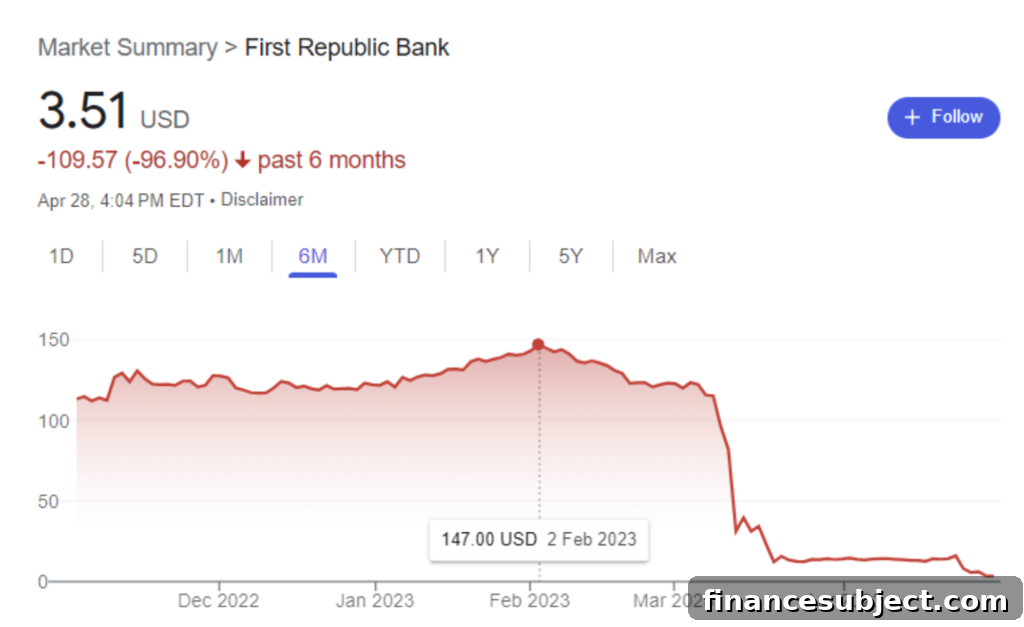
The episode highlights the fragility of depositor confidence and the risks facing mid-sized banks that experience rapid outflows.
Apple proves iPhone demand is resilient
Apple reported stronger-than-expected quarterly results, sending its stock up about 2% in after-hours trading. The company posted earnings per share of US$1.52 (versus US$1.43 expected) and revenue of US$94.84 billion (versus US$92.96 billion expected). While Mac and iPad sales came in softer, iPhone revenue outperformed estimates, and CEO Tim Cook noted the quarter was “better than we expected,” calling out India as a growth market.
During the quarter Apple returned US$23 billion to shareholders through buybacks and dividends and announced a 4% dividend increase to US$0.24 per share.
AMD also reported a solid quarter, beating expectations with reported earnings of US$0.60 per share versus US$0.56 forecast.
Canadian tech shows signs of profitability
Shopify shares surged more than 23% after the company swung to a smaller-than-expected loss and outlined cost-cutting measures. Shopify reported earnings per share of US$0.01 versus a forecasted loss of US$0.04 and said it would reduce its workforce by 20% while divesting certain logistics and robotics businesses.
Key actions announced:
- Reduce headcount by 20%.
- Sell the recently acquired logistics unit (formerly Deliverr) to Flexport.
- Sell warehouse robotics business 6 River Systems to Ocado Group.
Terms were undisclosed, and Shopify will likely absorb some losses relative to earlier acquisition prices. The company is refocusing on its core e-commerce software business and prioritizing profitability over rapid expansion.
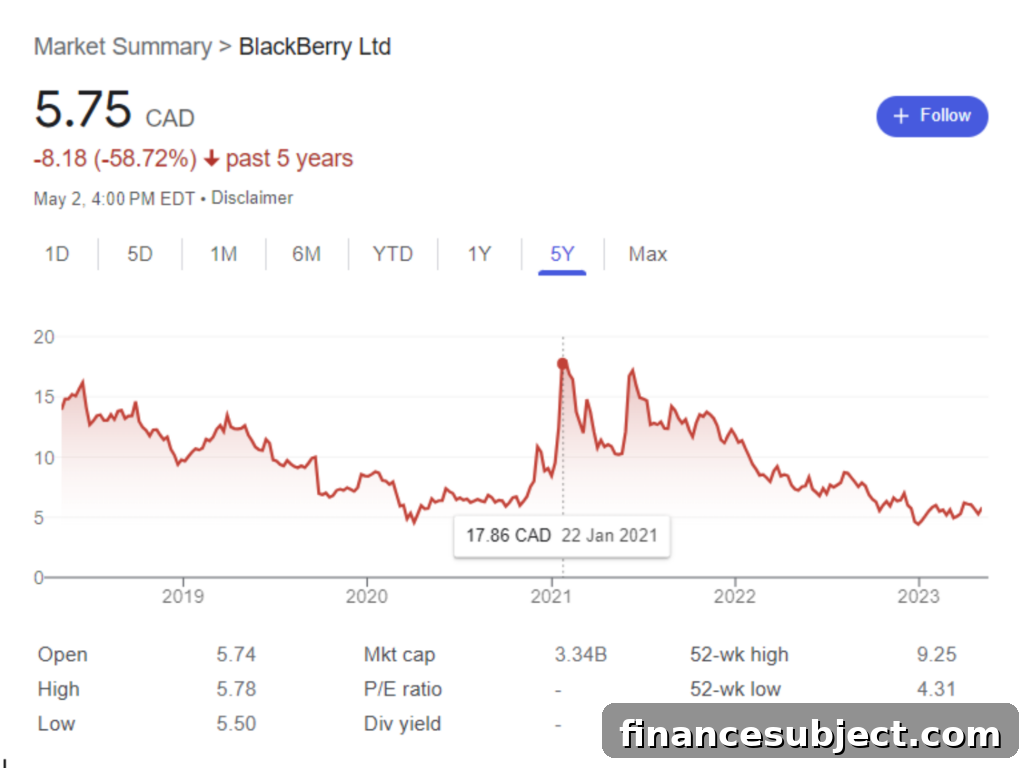
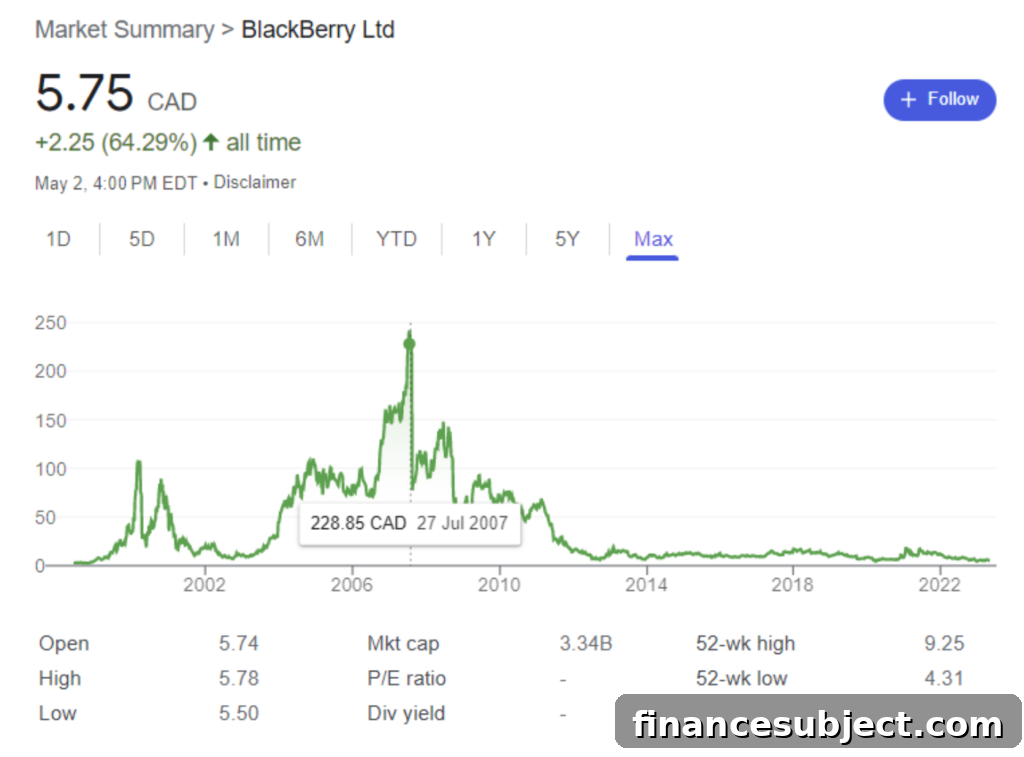
BlackBerry also moved to reshape its future by initiating a formal review of its business portfolio. The announcement, effectively signaling management is exploring strategic alternatives including potential divestitures, pushed shares up roughly 9% on the following trading day. The move underscores how legacy tech firms continue to adapt to new market realities.
Solid results from telcos and other Canadian names
Canada’s large telecommunications companies posted steady results this week, driven by recurring revenue and strong operational execution as they compete for customers in the wake of industry consolidation.
- Telus (T/TSX): Earnings per share of $0.27 (versus $0.26 expected) and revenues of $4.96 billion (versus $4.89 billion expected).
- Bell (BCE/TSX): Earnings per share of $0.85 (versus $0.77 expected) and revenues of $6.05 billion (versus $5.99 billion expected).
Both companies emphasized customer retention and competitive positioning following Rogers’ takeover of Shaw.
Canada’s companies: profits persist despite recession talk
Despite ongoing predictions of a deep recession, many Canadian firms continue to report steady results. Here are a few notable reports (figures in Canadian dollars unless noted):
- Loblaws (L/TSX): EPS $1.55 (in line with expectations) and revenues of $13.0 billion (slightly below the $13.15 billion forecast).
- Thomson Reuters (TRI/TSX): EPS $0.82 (versus $0.80 expected) and revenues of $1.74 billion (versus $1.73 billion expected).
- Franco-Nevada (FNV/TSX): EPS $0.79 (versus $0.82 expected) and revenues of $276.3 million (versus $303.64 million expected).
- Barrick Gold (ABX/TSX): EPS $0.14 (versus $0.12 expected) and revenues of $2.64 billion (versus $2.57 billion expected).
- Fortis (FTS/TSX): EPS $0.91 (versus $0.82 expected) and revenues of US$2.45 billion (versus US$2.24 billion expected).
Essential goods and services—groceries, utilities and mining—remain in demand, and many companies have managed costs well enough to sustain profitability. Year-to-date performance has rewarded shareholders: Barrick and Franco-Nevada are both showing double-digit gains, and most of these names moved modestly higher after reporting.
Even when companies beat earnings expectations, stock prices can still react negatively in the short term; Thomson Reuters beat estimates yet traded down about 4% on the announcement, illustrating how market reactions often reflect forward guidance and sentiment as much as the headline numbers.
The broader lesson for investors is to avoid reacting to alarmist headlines and trying to time the absolute market bottom. Staying invested with a long-term plan generally outperforms attempting to pick exact turning points.
Kyle Prevost is a financial educator, author and speaker. When he’s not on a basketball court or in a boxing ring trying to recapture his youth, you can find him helping Canadians with their finances at MillionDollarJourney.com and the Canadian Financial Summit.