
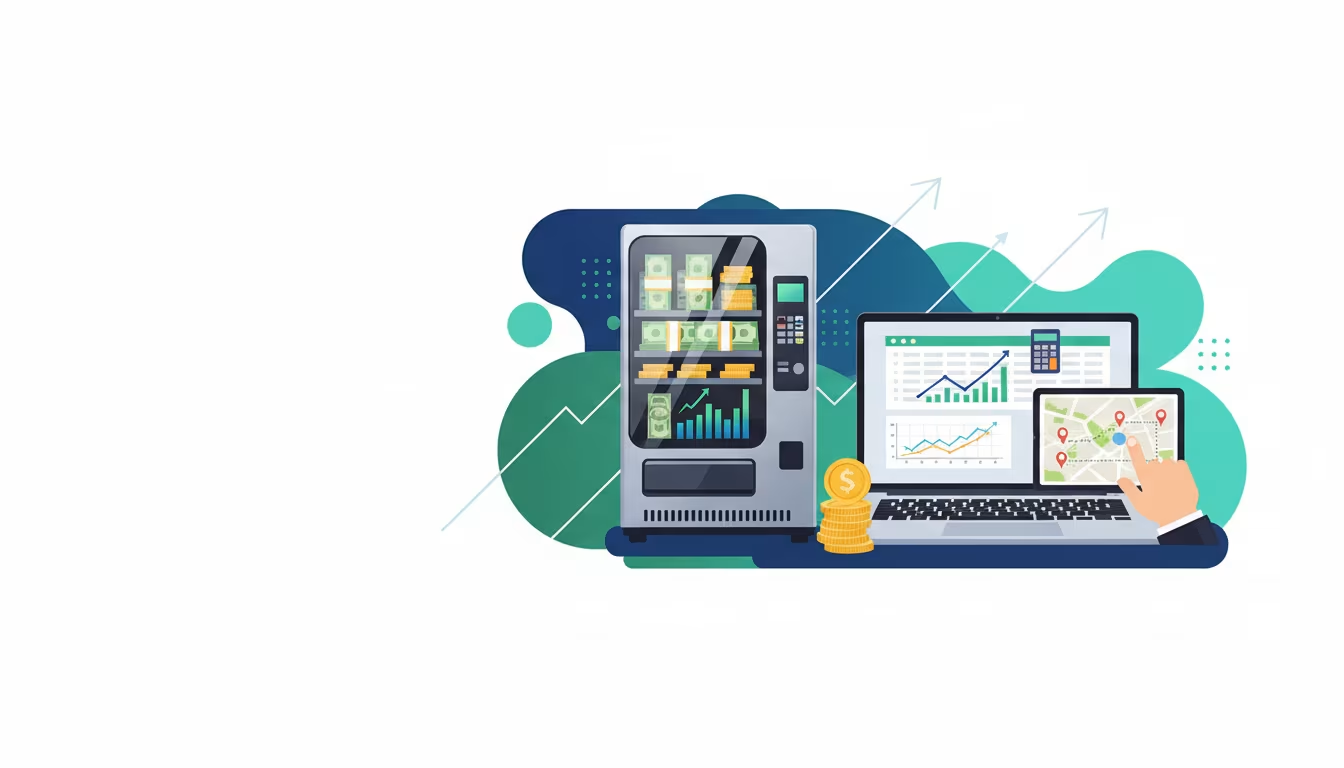
The vending machine sitting in a hospital lobby at 2 a.m. doesn't care that the market is down, that your boss gave you a rough week, or that gas prices spiked again. It runs. That simple fact — a machine collecting money around the clock without a manager or a clocked-in employee — is why so many people look at vending machine business profit as a legitimate path to passive income. But the realistic math looks different from the YouTube thumbnail version. Here's what the numbers actually say.
What It Costs to Get Started With a Vending Machine Business
New machines from established manufacturers — think Crane, AMS, or Wittern Group — run roughly $3,000 to $10,000 depending on configuration. A basic snack or beverage combo unit sits around $3,500–$5,000 new. Refrigerated fresh-food machines start closer to $8,000 and can push past $10,000 with touchscreen interfaces. Specialty units (coffee, ice cream, personal care) can exceed $15,000.
Used machines are the more common entry point for first-time operators. Refurbished units on platforms like UsedVending.com or eBay typically land between $800 and $2,500, though condition varies widely. The risk: older machines break down at higher rates, and finding replacement parts for discontinued models is genuinely painful. A machine that looks like a bargain at $900 can become expensive if it needs a new card reader ($400–$600) or a compressor repair ($300+).
Most operators starting from scratch buy 2–5 machines to test the concept before scaling. At $3,500 per unit, a three-machine starter route needs roughly $10,500 in hardware plus product (initial inventory typically runs $200–$400 per machine) and miscellaneous startup costs: insurance (around $500–$1,000/year for a small route), LLC registration, and a basic toolkit.
Finding Locations: The Commission Math
The machine is secondary. The location is the asset.
A machine placed in a high-traffic hospital, a busy gym, or a mid-sized office building will vastly outperform the same machine sitting in a low-traffic industrial park. Location owners know this, which is why commission arrangements are standard.
Commission rates in the industry typically run 10–25% of gross sales, paid monthly to the location owner. Larger accounts — a 300-employee manufacturing facility — may negotiate 20–25%. Smaller placements (a small barbershop, a boutique gym) often accept 10–15%, and some will take a flat monthly fee instead.
The practical reality: you'll get rejected. A lot. Cold-calling businesses, following up with property managers, and knocking on doors is the actual job of building a route in the first place. Experienced operators suggest expecting 20–30 pitches for every solid placement, especially before you have established machines to point to as proof.
What locations generate enough foot traffic to matter? Rule of thumb among operators: a location needs at least 50–100 people moving past the machine per day for it to produce meaningful revenue. Below that, the weekly trip to restock barely pays for your time and gas.
Product Margin Math: What Actually Goes in Your Pocket
Vending machines operate on gross margins that look healthy on paper but compress quickly when you calculate what you're actually keeping.
A bottle of water bought wholesale at $0.30 sells for $1.50 — a gross margin of 80%. But that's before commission (let's say 15%, or $0.225), before the credit card transaction fee (~2.5–3.5% on digital payments, or about $0.04), and before your share of maintenance, fuel to restock, and depreciation.
A more honest margin lens:
- Sell price: $1.50
- Cost of goods: $0.30
- Commission (15%): $0.225
- Card processing: $0.04
- Net per item before expenses: ~$0.935
At 100 items sold per week from that machine, that's roughly $93.50/week in gross margin before route expenses. Over a month: ~$374.
Chips and snacks run similar numbers — buy at $0.35–$0.55, sell at $1.25–$2.00. Beverages (energy drinks, specialty sodas) bought at $0.80–$1.20 and priced at $3.00–$4.00 offer the best margin per unit. Machines stocked toward higher-margin items out-earn those stocked with generic chips and cola.
Realistic Monthly Net Per Machine
This is where aspiration meets spreadsheet.
A machine in an average location — a small office break room with 40–80 employees — might generate $300–$600 in gross monthly sales. After product cost and commissions, gross margin is roughly 50–60%. That's $150–$360 before route operating costs.
Route costs to allocate per machine: fuel ($20–$50/month depending on distance), insurance ($40–$80/month spread across a full route), machine depreciation (rough estimate: $50–$80/month assuming a 5-year useful life on a $3,000 machine), maintenance reserve ($20–$40/month), and your time.
The realistic monthly net for an average machine: $50–$200.
A machine in a premium location — a hospital cafeteria hallway, a major airport (rare to get), a large university building — can gross $1,000–$3,000/month, putting net closer to $400–$900 after costs.
The math only gets attractive at scale. A route with 15–20 machines averaging $150/month net is $2,250–$3,000/month — meaningful supplemental income, but that took capital to build and takes time to maintain.
Time Per Route Stop: The Hidden Cost
Vending machine business profit calculations often leave out the operator's time, which is a serious omission.
Servicing a typical machine takes 20–45 minutes per visit: drive to location, unload product from your car or van, restock shelves, collect cash (if applicable), wipe surfaces, troubleshoot any jammed mechanisms, and drive to the next stop.
A 10-machine route spaced across a metro area might take 6–10 hours of driving and servicing per week. That's before any emergency service calls for jammed machines, card reader failures, or vandalism.
At an hourly value of $25/hour, a 10-machine route consuming 8 hours/week carries an implicit time cost of $200/week — $800/month — that eliminates the profit of lower-performing machines entirely. This is why experienced operators either focus on tight geographic clusters (reduce drive time) or eventually hire a part-time service tech once the route justifies the payroll.
Common Failure Modes: Theft, Mechanical, and Location Loss
Theft and vandalism happen, and they happen more in some locations than others. Outdoor or semi-exposed machines in low-supervision areas get hit regularly. Inside a secured office building with a key-card entry: almost never. Your location matters here as much as for revenue.
Mechanical failures are the other tax. Coin mechanisms jam. Card readers lose connection. Refrigeration units fail on beverages machines. Spiral dispensing coils bend and stop releasing product. Budget a maintenance reserve of $30–$60/month per machine and expect to replace card readers every 4–6 years.
Location loss is underappreciated. A business closes, a manager who liked you leaves, a building changes tenants — and suddenly you're scrambling to find a new home for a machine with ongoing product inventory. Routes are not passive; they require active account management.
Is the Vending Machine Business Worth It?
For someone who enjoys logistics, likes working with their hands, and wants a business that doesn't require employees or a storefront, a small vending route can absolutely generate real income. The National Automatic Merchandising Association (NAMA) estimates the U.S. vending industry generates over $23 billion annually — the market is real and the model is proven.
The operators who succeed build tight geographic routes (low drive time), target high-foot-traffic locations, stock higher-margin products, and treat the business as a system to be optimized rather than a passive cash machine. The operators who struggle overpay for locations, spread machines too far apart, and underestimate service time.
Starter checklist before buying machine 1:
- Do you have a specific target location already in discussions?
- Can you afford a new or refurbished machine without debt?
- Is your first planned location within 15 minutes of where you'll regularly be anyway?
- Do you have 3–5 hours/week to service a 2–3 machine starter route?
If the answer to all four is yes, the vending machine business profit potential is real — modest at small scale, meaningful at 15+ machines. Just go in knowing that "passive" is a goal you work toward, not the starting condition.
Scaling From a Starter Route to a Real Business
The economics of vending shift at around 15–20 machines. Below that threshold, you're the operator, the servicer, the account manager, and the bookkeeper. Above it, the math starts to support hiring a part-time assistant — typically at $15–$20/hour for route servicing — and the business begins to function more independently.
Operators who've built routes in the 30–50 machine range often describe the same inflection point: somewhere around $6,000–$8,000/month in net revenue, it becomes viable to bring on a route driver, which frees the owner for account acquisition and system management. That transition — from hands-on operator to route owner — is the actual passive income phase most people picture when they first research the business.
Getting there takes 2–4 years of disciplined reinvestment. Profits from early machines fund the next machine purchase. A $150/month net machine becomes down payment on the next unit within 12–18 months if you don't extract all the cash. The compounding is slow by financial market standards, but the business itself is real and the asset (the route plus the machine relationships) has resale value.
Established vending routes sell based on multiples of monthly net — typically 12–24 months of verified net income. A route netting $3,000/month might list for $36,000–$72,000. That makes building a route a genuine business-building exercise with eventual liquidation value, not just an income-generating side project.
Choosing the Right Product Mix for Your Market
Product selection is a lever operators often underuse in the first year. The instinct is to stock the obvious — Doritos, Coke, water — because those are safe choices. The problem: safe choices mean your margin profile matches every other operator competing for the same locations.
Differentiated product mixes work better in specific environments. Gym locations skew toward protein bars, sports drinks, healthy snacks — items with higher price points and better margins. Office buildings with a professional demographic respond well to premium beverage options: cold brew coffee, functional drinks, sparkling water. Manufacturing facilities often prefer value-priced items and volume.
A machine stocked specifically for its location's demographic produces 20–35% more revenue than a generic fill, according to operator forum reports across Reddit's r/vending community (aggregate qualitative finding, not a controlled study). It also reduces shrink — product that expires before it sells.
The supply chain decision also matters. Buying from a food distributor (Vistar, McLane, Core-Mark) at wholesale prices significantly outperforms buying from Costco or Sam's Club once you're servicing 5+ machines. The per-item cost difference of $0.05–$0.15 compounds across hundreds of transactions and thousands of items per month.
Technology: Modern Machines vs. Older Units
The vending industry has changed more in the last decade than in the previous three combined. Card readers and contactless payment acceptance are now essentially mandatory — cash-only machines lose meaningful revenue as fewer people carry bills. NFC payment (Apple Pay, Google Pay) drives significant transaction volume in urban and suburban markets.
Remote monitoring systems allow operators to check inventory levels, sales data, and machine health from a phone app. Brands like 365 Retail Markets and Cantaloupe offer telemetry systems that integrate with modern machines. For a growing route, remote monitoring reduces wasted service trips (driving to a machine with plenty of stock left) and flags problems early (refrigeration unit struggling before it fails completely).
Energy consumption also factors into operating cost. Older machines run at high wattage continuously. Newer units with LED lighting and modern compressors can cut electricity consumption by 30–50%, which matters when the location owner is tracking their utility bill — or when you're paying a portion of it under your lease agreement.
If you're buying used, machines manufactured after 2015 are generally a safer bet for technology compatibility. Pre-2010 machines often lack card reader integration, modern coin mechanisms, and telemetry capability — and retrofitting them costs money that often approaches the machine's purchase price.
The Honest Case for Vending Machine Business Profit
Vending is not a scheme. It is not a path to six-figure passive income from a few machines. What it is: a real small business with real operating complexity, a real capital requirement, and real returns for operators who approach it with discipline.
The people who build successful routes share several traits: they're organized (route schedules, maintenance logs, supplier accounts), persistent in location prospecting, honest about the time investment, and patient with the compounding math. The people who quit within six months typically underestimated service time, overpaid for their first machine, or placed it in a location with insufficient foot traffic.
For a motivated side hustler willing to commit 6–10 hours per week to building a route over 18–24 months, vending machine business profit is a credible goal — one that can eventually produce $1,500–$3,000/month from a well-managed 10–15 machine route. That's not financial independence, but it's a meaningful income stream built on a tangible, portable business asset.
None of this is financial advice. Your situation depends on variables this article can't see — taxes, risk tolerance, time horizon, dependents. A fiduciary advisor can model your specific case.
Comments (0)
No comments yet. Be the first to share your thoughts!
Leave a Comment