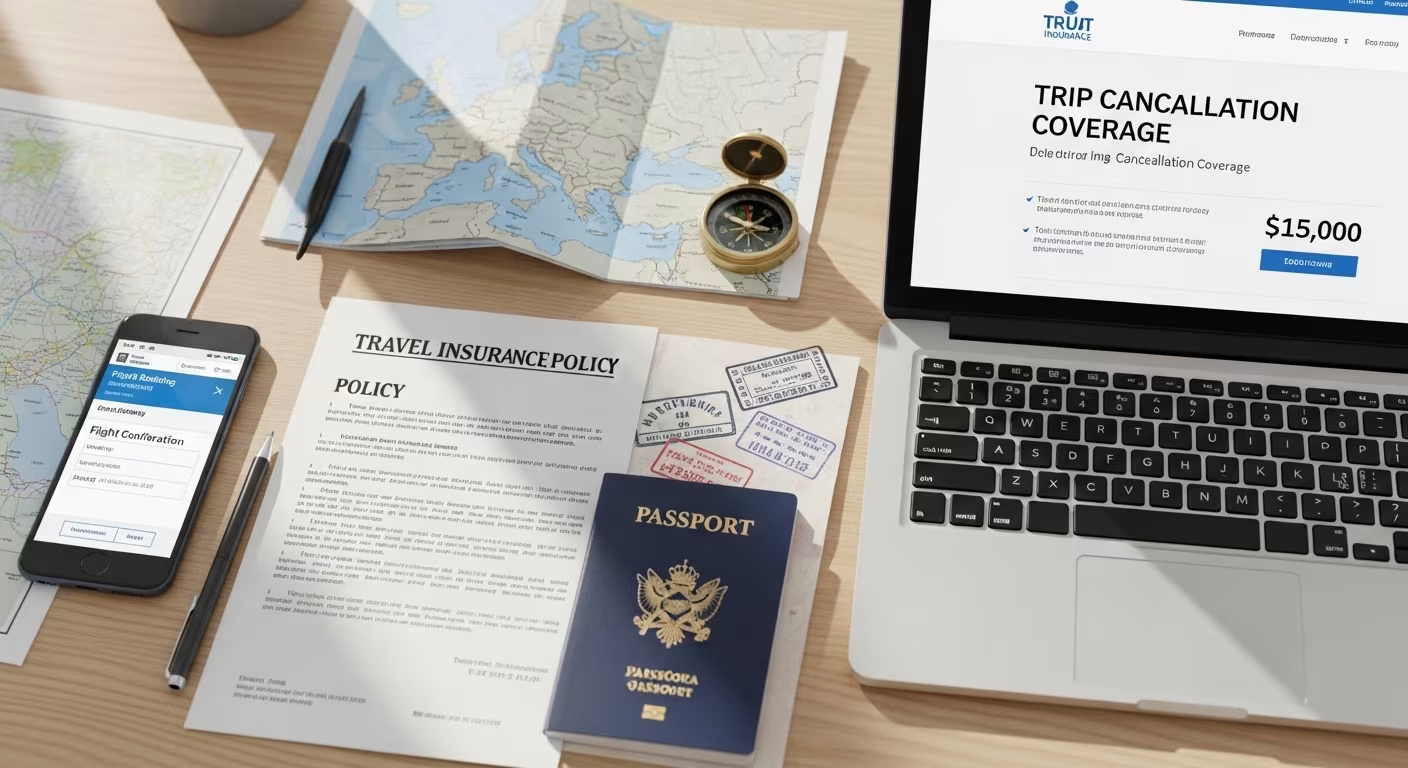
You've spent months planning and thousands of dollars on a trip. What happens if you get sick, your flight is canceled, or you need emergency medical care abroad? Travel insurance protects against the unexpected—but it's not always necessary. Here's when travel insurance makes sense and how to choose the right coverage.
Travel Insurance Costs and Coverage (2026)
Average cost: 4-10% of total trip cost. A $5,000 vacation typically costs $200-500 to insure.
What Travel Insurance Covers
| Coverage | What It Pays | Typical Limits |
|---|---|---|
| Trip cancellation | Prepaid, non-refundable costs | 100% of trip cost |
| Trip interruption | Unused portion + return travel | 150% of trip cost |
| Medical emergency | Hospital, doctor, ambulance abroad | $50,000-500,000 |
| Medical evacuation | Air ambulance, medical transport | $100,000-1,000,000 |
| Baggage loss/delay | Replacement cost of lost items | $1,000-3,000 |
| Travel delay | Hotel, meals during delay | $100-300/day |
When You NEED Travel Insurance
- International travel: Your U.S. health insurance likely does NOT cover you abroad. Medicare covers nothing outside the U.S. A medical evacuation can cost $50,000-150,000 without insurance.
- Expensive pre-paid trips: Cruises, destination weddings, luxury resorts with non-refundable deposits
- Adventure travel: Skiing, scuba diving, hiking in remote areas
- Travel to developing countries: Medical facilities may require evacuation to another country
When You Can Skip It
- Cheap domestic trips: If you can afford to lose the cost, self-insure
- Trips booked with refundable rates: Hotels and flights with free cancellation
- Credit card travel protection: Many premium cards (Chase Sapphire Reserve, Amex Platinum) include trip cancellation, baggage delay, and travel accident coverage
Top Travel Insurance Providers (2026)
| Provider | Best For | Avg Cost (per $1,000 trip) |
|---|---|---|
| World Nomads | Adventure travelers, backpackers | $50-80 |
| Allianz | Comprehensive family coverage | $40-70 |
| Travelex | Budget-friendly basic plans | $30-50 |
| AIG Travel Guard | Premium coverage, cancel for any reason | $60-100 |
| Faye | App-based, instant claims | $40-70 |
Cancel For Any Reason (CFAR): This optional upgrade (adds 40-60% to premium cost) lets you cancel for literally any reason and receive 50-75% refund. Worth it for expensive trips with uncertain plans.
What Travel Insurance Covers
Trip Cancellation
Reimburses prepaid, non-refundable trip costs if you must cancel for a covered reason.
Covered reasons typically include:
- Illness or injury (yours or family member)
- Death of traveler or family member
- Jury duty or court summons
- Job loss (sometimes)
- Home emergency (fire, flood)
- Terrorism at destination
- Airline bankruptcy
- Travel supplier bankruptcy
Not typically covered:
- Changed your mind
- Work conflicts (unless specified)
- Pre-existing medical conditions (unless waiver purchased)
- Fear of traveling
- Political instability (unless specifically covered)
Trip Interruption
Covers costs if you must cut your trip short for a covered reason.
Coverage includes:
- Unused portion of prepaid expenses
- Additional transportation home
- Sometimes extra accommodations
Travel Delay
Reimburses expenses when travel is delayed beyond specified time (usually 6-12 hours).
Coverage includes:
- Meals
- Accommodations
- Transportation to accommodations
Coverage limits: Usually $100-$200 per day, with maximum cap.
Medical Coverage
Emergency medical: Covers treatment for illness or injury during your trip.
Emergency evacuation: Covers transportation to adequate medical facility or home.
Why it matters: U.S. health insurance often doesn't work abroad. Medicare provides no coverage outside the U.S. A medical emergency abroad can cost tens of thousands.
Baggage Coverage
Lost baggage: Reimburses value of lost items.
Delayed baggage: Reimburses essential purchases (toiletries, clothing) while waiting.
Limits: Usually $1,500-$3,000 per person with per-item limits.
Other Coverages
Rental car damage: Covers collision damage waiver costs.
24/7 assistance: Help line for emergencies.
Concierge services: Restaurant reservations, translation, referrals.
When You Need Travel Insurance
Definitely Get It
International travel: Medical emergencies abroad can be catastrophic without coverage.
Expensive trips: The more you have invested, the more you have to lose.
Pre-paid non-refundable trips: Cruises, tours, and packages often have strict cancellation policies.
Adventure travel: Higher risk activities may not be covered by regular health insurance.
Travel to developing countries: Medical facilities may be limited; evacuation coverage is essential.
Travel during hurricane/monsoon seasons: Weather-related disruptions are common.
Probably Should Get It
Trips with multiple connections: More opportunities for delays and missed flights.
Travel during pregnancy: Especially later stages.
Traveling with elderly relatives: Higher medical risk.
Traveling to remote destinations: Evacuation may be necessary.
Probably Can Skip It
Domestic weekend trips: Lower investment, health insurance works.
Last-minute cheap flights: Cost of insurance may exceed trip cost.
Fully refundable trips: If you can cancel without penalty anyway.
Short trips with little prepaid: Not much to lose.
Types of Travel Insurance
Comprehensive Plans
What it includes: Trip cancellation, interruption, delay, medical, evacuation, baggage—the works.
Cost: 5-12% of total trip cost.
Best for: Most travelers taking significant trips.
Medical-Only Plans
What it includes: Emergency medical and evacuation coverage only.
Cost: $50-$100 for a 2-week trip.
Best for: Those with refundable trips who just need medical protection abroad.
Cancel for Any Reason (CFAR)
What it includes: Refund (typically 75%) if you cancel for ANY reason.
Cost: 40-50% more than standard plan.
Requirements: Usually must purchase within 14-21 days of first trip payment.
Best for: Travelers wanting maximum flexibility.
Annual Multi-Trip Plans
What it includes: Coverage for all trips within a year.
Cost: $100-$500/year.
Best for: Frequent travelers (3+ trips/year).
How Much Does Travel Insurance Cost?
Factors Affecting Price
Trip cost: More expensive trips = higher premiums.
Traveler age: Older travelers pay more (higher medical risk).
Trip length: Longer trips cost more.
Destination: Some countries cost more to cover.
Coverage level: More comprehensive = higher cost.
Average Costs
| Trip Cost | Insurance Cost (approx.) |
|---|---|
| $1,000 | $50-$100 |
| $3,000 | $150-$300 |
| $5,000 | $250-$500 |
| $10,000 | $500-$1,000 |
Rule of thumb: 5-12% of trip cost for comprehensive coverage.
Choosing a Travel Insurance Policy
Key Questions
What exactly is covered? Read the policy, not just the summary.
What's excluded? Pre-existing conditions, adventure activities, specific situations.
What are the coverage limits? Ensure medical coverage is adequate ($100,000+ recommended internationally).
What's the deductible? Higher deductible = lower premium but more out-of-pocket.
How do claims work? 24/7 assistance? Direct payment or reimbursement?
Pre-Existing Condition Waivers
Most policies exclude pre-existing medical conditions UNLESS you:
- Purchase within 14-21 days of first trip payment
- Insure full trip cost
- Are medically able to travel when purchasing
If you have health conditions: Confirm waiver requirements carefully.
Adventure Activity Coverage
Standard policies may exclude:
- Skiing/snowboarding
- Scuba diving
- Skydiving
- Bungee jumping
- Mountain climbing
- Motorsports
If planning adventure activities: Confirm coverage or purchase rider.
Where to Buy Travel Insurance
Insurance Comparison Sites
- InsureMyTrip
- Squaremouth
- TravelInsurance.com
Benefits: Compare multiple companies, read reviews, use filters.
Directly from Insurers
- Allianz
- Travel Guard
- World Nomads
- Travelex
- Seven Corners
Credit Card Travel Insurance
Some premium cards include travel protection:
- Trip cancellation/interruption
- Lost baggage
- Travel delay
- Rental car coverage
Limitations: Coverage is often secondary (pays after other insurance), may have lower limits, must purchase trip with card.
Check your card benefits: You may have more coverage than you realize.
Tour Operator Insurance
Cruise lines and tour companies offer insurance.
Caution: Often overpriced and may not cover operator bankruptcy.
Recommendation: Compare to independent policies before purchasing.
Filing a Travel Insurance Claim
During Your Trip
- Call 24/7 assistance line
- Get authorization if required
- Keep all receipts and documentation
- File police report for theft
- Get written confirmation of delays/cancellations
After Your Trip
- File claim promptly (within specified deadline)
- Complete claim form thoroughly
- Include all documentation:
- Follow up if no response within 2-3 weeks
Common Claim Denials
Pre-existing conditions: Without waiver Excluded activities: Not covered by policy Insufficient documentation: Missing receipts, reports Late filing: Past deadline Non-covered reason: Cancellation reason not in policy
Maximizing Your Coverage
Do
- Read the full policy document
- Understand exclusions
- Purchase within the waiver window for pre-existing coverage
- Insure full trip cost
- Keep all documentation
- Call assistance line for guidance during emergencies
Don't
- Wait too long to purchase
- Assume everything is covered
- Forget about credit card benefits you may have
- Skip insurance to save a few dollars on expensive trips
- File fraudulent claims
When to Skip Insurance and Self-Insure
Consider skipping if:
- Trip cost is low (under $1,000)
- Everything is fully refundable
- You have robust credit card coverage
- You're financially prepared to absorb losses
- You're traveling domestically with good health insurance
Self-insure approach: Set aside "insurance money" in savings. If nothing goes wrong, you keep it.
Credit Card Travel Protection vs. Standalone Insurance
Many premium credit cards include travel protection, but coverage is limited:
| Feature | Credit Card (e.g., Chase Sapphire Reserve) | Standalone Travel Insurance |
|---|---|---|
| Trip cancellation | $10,000/trip (limited covered reasons) | Full trip cost (broader reasons) |
| Medical emergency | None or very limited | $50,000-500,000 |
| Medical evacuation | None | $100,000-1,000,000 |
| Baggage delay | $100/day for 5 days | $200-300/day |
| Trip delay | $500 per ticket (6+ hour delay) | $100-300/day (various triggers) |
| Cancel for any reason | Not available | Available as upgrade |
| Pre-existing conditions | Not covered | Waiver available (buy within 14-21 days of first trip payment) |
The gap: Credit cards do NOT cover medical emergencies abroad. If you break a leg skiing in Switzerland, your medical bills could reach $50,000-100,000. Credit card travel protection will not pay a cent of that. Standalone travel insurance will.
Best strategy: Use credit card protection for domestic trips and short international trips to countries with affordable healthcare. Buy standalone insurance for expensive international trips, adventure travel, or trips to countries with costly medical care (U.S., Japan, Switzerland).
Taking Action
Before Booking
- Check credit card travel benefits
- Review existing health insurance for travel coverage
- Understand what's refundable vs. non-refundable
After Booking
- Compare insurance quotes (use comparison sites)
- Purchase within waiver window if pre-existing conditions
- Read policy document
- Save policy information accessibly
Before Departing
- Print/save emergency contact numbers
- Understand the claims process
- Bring copies of insurance documents
Travel insurance is protection against the financial impact of the unexpected. For significant trips, especially international ones, the relatively small cost is worth the peace of mind and financial protection it provides.
Comments (0)
No comments yet. Be the first to share your thoughts!
Leave a Comment