
Target’s effort to revive sales and reclaim its reputation for affordable, trend-driven merchandise has become more complicated. The retailer announced on Wednesday that first-quarter sales fell more than analysts expected, and it warned that sales will likely decline for all of 2025 as customers—concerned about tariffs and the broader economy—pull back on spending. Target also acknowledged that customer boycotts had an impact during the most recent quarter.
Target Q1 2025 earnings highlights
- Sales: $23.85 billion versus $24.23 billion expected.
- Earnings: $1.04 billion.
Target’s latest numbers
Quarterly sales decreased 2.8% year over year to $23.85 billion, falling short of the $24.23 billion Wall Street had anticipated. Target reported net earnings of $1.04 billion, or $2.27 per share, for the quarter ended May 3, up from $942 million, or $2.03 per share, in the same period last year.
On Wednesday, Target cut its annual sales guidance and now expects a low-single-digit decline in sales for 2025. In March the company had been forecasting a 1% increase. Target also projected full-year adjusted earnings of $7 to $9 per share, excluding gains from legal settlements.
Analysts, on average, expect earnings per share of $8.34 on sales of about $106.7 billion for the year. Comparable sales—sales at established stores and online—fell 3.8%, driven by a 5.7% decline in store sales that was partly offset by a 4.7% increase in online sales. That marks a reversal from the 1.5% comparable-sales gain reported in the prior quarter.
“We’ve got to drive traffic back into our stores or visits to our site.”
—Target CEO Brian Cornell
Transactions decline both in-store and online
The total number of transactions across Target’s stores and website fell 2.4%, while the average ticket size dropped 1.4%. The company said it could not precisely separate the individual effects of factors such as tariffs, consumer caution and boycotts on its results.
To speed decision-making and accelerate sales growth, Target is creating a new office to be led by Chief Operating Officer Michael Fiddelke. The retailer also announced that Chief Strategy and Growth Officer Christina Hennington will step down from her current role and serve in a strategic capacity through Sept. 7.
Industry analyst Neil Saunders of GlobalData Retail noted that Hennington was seen by some as a potential successor to CEO Brian Cornell. Saunders described the management changes as an implicit acknowledgment that parts of the business need improvement, while warning that meaningful results will depend on broader cultural change within the company.
Aggressive pricing and assortment moves
Target plans to introduce 10,000 new items priced from $1, with most of those products costing under $20, as it looks to attract customers who are tightening their budgets. Executives emphasized urgency in addressing the recent underperformance, stressing the need to bring shoppers back to stores and to the website.
Out of 35 merchandise categories Target tracks, the company is gaining or holding share in only 15. It reported market share gains in categories such as women’s swimwear, infant and toddler clothing, and activewear, but continues to face pressure across many discretionary categories, including fashion and home furnishings.
The results highlight Target’s ongoing challenge of revitalizing sales in nonessential segments as competition intensifies from rivals and changing consumer behavior pressures visits and spend.
Regaining its “Tarzhay” magic through affordability
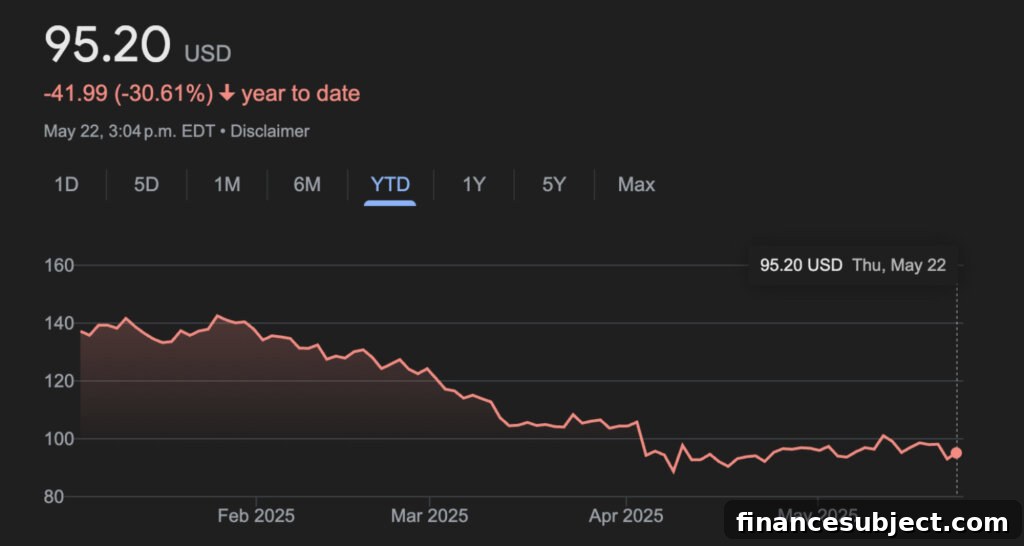
In March, Target outlined plans to renew the “Tarzhay” appeal—offering affordable, fashionable merchandise—by expanding private-label brands and compressing the product development cycle so trends reach shelves faster. Executives say those steps should help Target stay closer to customer tastes, but the strategy has proved difficult to execute amid tariff uncertainty and a competitive retail landscape. Over the past 52 weeks, Target’s share price has fallen more than 37%.
Walmart, by contrast, reported stronger quarterly sales and noted that it has already implemented price increases on some items due to tariffs, with more increases expected this summer. Target has not provided a detailed estimate of the tariffs’ impact on its prices but said it is exploring ways to offset those costs, including shifts in sourcing, and expects to mitigate a majority of tariff-related effects.
Adjusting sourcing and prices in a tariff environment
“We look at competition,” CEO Brian Cornell said. “We make adjustments literally each and every week, so we’re constantly adjusting pricing. Some are going up. Some will be reduced.”
After the May 12 announcement that previously threatened higher import taxes on Chinese goods were reduced, Target has continued to reassess its supply chain. The retailer has lowered the proportion of its private-label items sourced from China from roughly 60% in 2017 to about 30% today, and it aims to reach 25% by the end of next year. Target is shifting sourcing to countries including Guatemala and Honduras and is increasing domestic sourcing where feasible.
Because groceries make up about 60% of Walmart’s U.S. sales, Walmart has been somewhat insulated from tariff effects. Target, which derives less than a quarter of sales from groceries, relies more heavily on discretionary categories that are more directly exposed to import-cost pressures.
DEI pullback and its consequences
Target’s public stance on diversity, equity and inclusion has also become a flashpoint. In January, the company announced it would scale back several DEI initiatives, including a program designed to advance Black employees and promote Black-owned businesses. That decision followed criticism from conservative activists and prompted renewed backlash from some customers upset by reductions in LGBTQ+-themed merchandise during Pride Month in 2023.
A nationwide boycott led by a Georgia pastor earlier this year contributed to pressure on the brand, and proponents of stronger diversity commitments have continued to call for more support for Black-owned banks and businesses. Those reputation and customer-engagement issues add another layer of complexity as Target seeks to restore growth.
Target operates nearly 2,000 stores across the United States and employs more than 400,000 people.