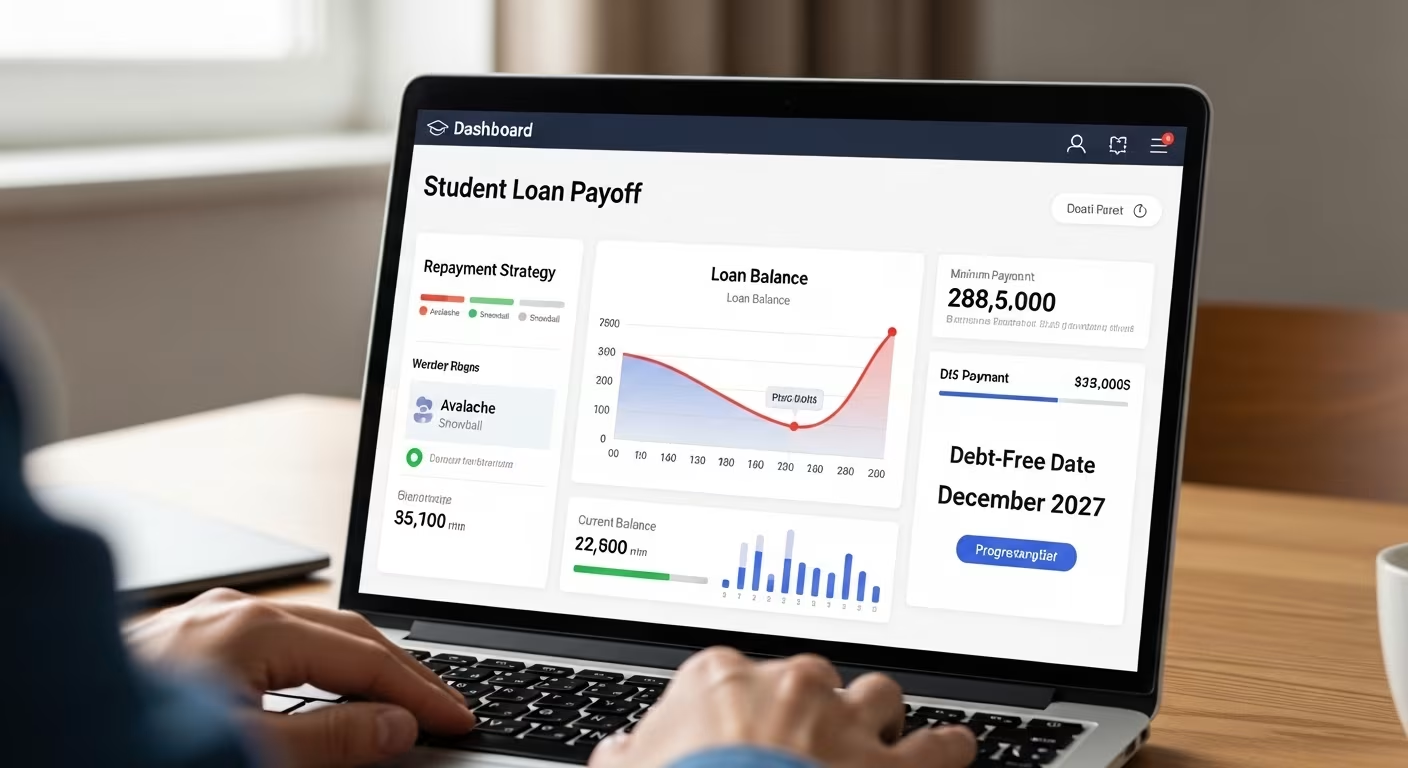
Student loan debt burdens millions of Americans, with the average borrower carrying roughly $30,000-$40,000 in educational debt. While the weight of student loans can feel overwhelming, strategic repayment can help you become debt-free faster and save thousands in interest. Here's how to tackle your student loans effectively.
For federal student loan decisions, use Federal Student Aid loan repayment resources before changing plans.
Student Loan Repayment Options Compared (2026)
| Plan | Monthly Payment | Total Interest | Forgiveness? | Best For |
|---|---|---|---|---|
| Standard (10 years) | Highest | Lowest | No | Can afford payments, want debt-free fastest |
| SAVE (income-driven) | 5-10% discretionary income | Higher | After 20-25 years | Low income relative to debt |
| PAYE | 10% discretionary income | Higher | After 20 years | Borrowed after 2007, high debt |
| IBR | 10-15% discretionary income | Higher | After 20-25 years | Older loans |
| PSLF | Income-driven payment | N/A | After 10 years (120 payments) | Public sector/nonprofit workers |
| Refinancing (private) | Varies | Potentially lowest | No | High income, strong credit, low rate |
Example: $50,000 Student Loan at 6.0%
| Strategy | Monthly Payment | Total Paid | Time to Payoff |
|---|---|---|---|
| Standard (10yr) | $555 | $66,600 | 10 years |
| SAVE (income $50K) | ~$200 | ~$72,000 | 20 years (forgiveness) |
| Aggressive payoff | $800 | $60,700 | 6 years |
| Refinance to 4.0% | $506 | $60,700 | 10 years |
The PSLF opportunity: If you work for a qualifying employer (government, 501(c)(3) nonprofit, military), PSLF forgives remaining federal loan balance after 120 qualifying payments. For someone with $100,000 in loans earning $60,000, this could mean $50,000-70,000 forgiven tax-free.
Understanding Your Loans
Federal vs. Private Loans
Federal loans:
- Government-backed
- Fixed interest rates
- Income-driven repayment options
- Potential forgiveness programs
- Deferment/forbearance options
Private loans:
- Bank or lender-originated
- Fixed or variable rates
- Limited flexibility
- No forgiveness programs
- Fewer hardship options
Know Your Loan Details
For each loan, know:
- Balance
- Interest rate
- Monthly payment
- Loan servicer
- Loan type (subsidized, unsubsidized, PLUS, private)
Where to find federal loan info: StudentAid.gov (National Student Loan Data System)
Standard Repayment Plans
10-Year Standard Plan (Federal)
How it works: Fixed payments over 10 years
Pros:
- Lowest total interest
- Predictable payments
- Fastest payoff
Cons:
- Highest monthly payment
- May strain budget
Extended Repayment (Federal)
How it works: 25-year repayment, fixed or graduated
Eligibility: $30,000+ in Direct Loans
Pros: Lower monthly payment Cons: Pay much more interest over time
Graduated Repayment (Federal)
How it works: Payments start low, increase every two years
Pros: Easier early-career Cons: Higher total cost, may not keep pace with income
Income-Driven Repayment Plans
Available Plans
SAVE (Saving on a Valuable Education) - Newest plan:
- Payments: 5-10% of discretionary income
- Interest subsidies if payment doesn't cover interest
- Forgiveness: 20-25 years
PAYE (Pay As You Earn):
- Payments: 10% of discretionary income
- Forgiveness: 20 years
- Must have been new borrower after Oct 2007
IBR (Income-Based Repayment):
- Payments: 10-15% of discretionary income
- Forgiveness: 20-25 years
ICR (Income-Contingent Repayment):
- Payments: 20% of discretionary income
- Forgiveness: 25 years
When Income-Driven Makes Sense
Good fit if:
- Income low relative to debt
- Pursuing Public Service Loan Forgiveness
- Need payment flexibility
- Can't afford standard payments
Caution: Lower payments mean more interest and longer repayment.
Accelerated Payoff Strategies
The Debt Avalanche
Strategy: Pay minimums on all loans, put extra money toward highest interest rate loan.
Process:
- List loans by interest rate (highest first)
- Pay minimums on all
- Apply extra payments to highest-rate loan
- When paid off, roll payment to next highest
Advantage: Mathematically optimal—saves most money
The Debt Snowball
Strategy: Pay minimums on all loans, put extra money toward smallest balance.
Process:
- List loans by balance (smallest first)
- Pay minimums on all
- Apply extra payments to smallest balance
- When paid off, roll payment to next smallest
Advantage: Quick wins build momentum
Which to Choose?
Avalanche: Best for math-focused, disciplined payers Snowball: Best for motivation-driven, those needing quick wins
Either works: The best method is the one you'll stick with.
Making Extra Payments
Specify application: Tell servicer to apply extra payments to principal, not future payments
Every little bit helps:
- Round up payments
- Apply windfalls (tax refunds, bonuses)
- Use side income
- Cut one expense and redirect to loans
Example: $50 extra/month on $30,000 at 6%:
- Standard payoff: 10 years, $9,967 interest
- With extra $50: 8 years, $7,600 interest
- Savings: $2,367 and 2 years
Refinancing Student Loans
What It Is
Replace existing loans with new private loan at (ideally) lower interest rate.
When to Refinance
Good candidate if:
- Strong credit score (700+)
- Stable income
- Private loans with high rates
- Won't need federal protections
Don't refinance federal loans if:
- Pursuing PSLF
- Need income-driven plans
- May need deferment/forbearance
- Income is uncertain
Potential Savings
Example:
- $50,000 at 7% over 10 years: $69,000 total
- Refinanced to 4% over 10 years: $60,600 total
- Savings: $8,400
Top Refinancing Lenders (2026)
Research current rates from:
- SoFi
- Earnest
- Laurel Road
- CommonBond
- Splash Financial
- Various credit unions
Shop around: Rates vary significantly by lender.
Public Service Loan Forgiveness (PSLF)
What It Is
Federal program forgiving remaining loan balance after 120 qualifying payments while working full-time for qualifying employer.
Qualifications
Eligible employment:
- Government (federal, state, local)
- 501(c)(3) nonprofits
- Other qualifying public service
Eligible loans: Direct Loans (consolidate others into Direct)
Eligible payments: Made under income-driven plan while working full-time for qualifying employer
Strategy
If pursuing PSLF:
- Ensure you have Direct Loans (consolidate if needed)
- Enroll in income-driven plan (SAVE, PAYE, or IBR)
- Submit employer certification annually
- Track payments toward 120
- Apply for forgiveness after 120 payments
DON'T refinance if pursuing PSLF—you'll lose eligibility.
Is PSLF Worth It?
Calculate:
- Total payments over 10 years under income-driven plan
- vs. Total payments under standard repayment
If forgiveness amount is substantial: PSLF is valuable
If forgiveness amount is small: May be worth paying faster
Employer Repayment Assistance
Growing Benefit
Many employers now offer student loan repayment assistance.
Common structures:
- Monthly contributions ($50-$200/month)
- Matching contributions
- Lump-sum payments
- Up to $5,250/year tax-free (through 2025, check current status)
Finding Employers That Offer It
- Ask during job interviews
- Check benefits packages
- Consider in total compensation
- May influence job choice
Other Strategies
Tax Deductions
Student loan interest deduction:
- Up to $2,500/year
- Phases out at higher incomes
- Above-the-line deduction (don't need to itemize)
Employer 401(k) Student Loan Match
Some employers match student loan payments with 401(k) contributions (SECURE 2.0 provision).
How it works: Pay loans, get retirement match
Income Boost
Increase income to pay loans faster:
- Side hustles
- Freelancing
- Overtime
- Job change for higher salary
- Apply all extra income to loans
Expense Reduction
Free up money for loan payments:
- Live with roommates
- Cut subscription services
- Cook at home
- Drive used car
- Track spending to find waste
Dealing with Difficulty
Temporary Hardship
Options:
- Deferment (interest may not accrue on subsidized loans)
- Forbearance (interest accrues)
- Income-driven plans (lower payments)
Use sparingly: Interest accumulates, extending debt.
When You Can't Pay
Steps:
- Contact servicer immediately
- Explore income-driven options
- Apply for deferment/forbearance if needed
- Never just stop paying
Default consequences: Credit damage, wage garnishment, tax refund seizure, legal action.
Rehabilitation After Default
Federal loans: Make 9 on-time, affordable payments to rehabilitate Private loans: Negotiate with lender or collection agency
Creating Your Repayment Plan
Step 1: Inventory Loans
List all loans with balance, rate, minimum payment, servicer.
Step 2: Choose Strategy
- Standard repayment if affordable
- Income-driven if needed
- PSLF track if qualifying employment
Step 3: Find Extra Money
- Review budget for cuts
- Add income sources
- Allocate windfalls
Step 4: Execute
- Set up autopay (often gets rate discount)
- Make extra payments consistently
- Specify principal application
- Track progress
Step 5: Adjust as Needed
- Refinance if rates drop significantly
- Reassess strategy as income changes
- Stay motivated with progress tracking
Taking Action
This Week
- Log into StudentAid.gov
- List all loans with details
- Identify highest interest rates
- Calculate total monthly payments
This Month
- Choose repayment strategy
- Set up autopay
- Find $50-$100/month extra
- Start extra payments
Quarterly
- Review progress
- Adjust budget for more payments
- Check refinance rates
- Celebrate milestones
Until Debt-Free
- Stay consistent
- Apply windfalls to loans
- Increase payments as income grows
- Keep end goal in sight
Student loans don't have to control your life for decades. With a clear strategy, consistent execution, and a commitment to becoming debt-free, you can eliminate your student loans faster than you might think. Every extra dollar paid now is dollars saved on interest later—and one step closer to financial freedom.
The Student Loan Forgiveness Landscape (2026)
Public Service Loan Forgiveness (PSLF)
- Who qualifies: Government employees, 501(c)(3) nonprofit workers, military
- Requirements: 120 qualifying payments (10 years) on an income-driven plan
- Amount forgiven: Remaining balance (tax-free)
- Average forgiveness amount: $70,000-$150,000
Income-Driven Repayment Forgiveness
- Who qualifies: Anyone on IDR plan (SAVE, PAYE, IBR)
- Requirements: 20-25 years of payments
- Amount forgiven: Remaining balance
- Tax implications: Currently tax-free through 2025 (uncertain after)
Refinancing Warnings
- Never refinance federal loans if pursuing PSLF (refinancing converts to private, disqualifying you)
- Only refinance if: You have stable income, do not need income-driven plans, and can get a significantly lower rate (2%+ reduction)
- Best time to refinance: When you have strong credit (740+), stable employment, and low debt-to-income ratio
The $50,000 loan at 6% decision tree: If pursuing PSLF (10 years, ~$200/month payments), total paid: ~$24,000, forgiven: ~$30,000. If aggressive payoff ($800/month): paid off in 6 years, total interest: $10,000. If refinanced to 4% (10 years): total interest: $11,000 (saves $5,000 vs. federal rate). The right choice depends entirely on your career path.
The most important student loan rule: Never ignore your loans. Missed payments damage your credit score, trigger penalty interest rates, and can lead to wage garnishment for federal loans. If you cannot afford payments, contact your servicer immediately and switch to an income-driven plan—your payment could drop to $0/month if your income is low enough. There is always an option better than defaulting.
Comments (0)
No comments yet. Be the first to share your thoughts!
Leave a Comment