

Kyle Prevost, creator of 4 Steps to a Worry-Free Retirement —Canada’s DIY retirement planning course—provides a roundup of recent financial headlines and context for Canadian investors.
We’re building more houses — and prices are falling
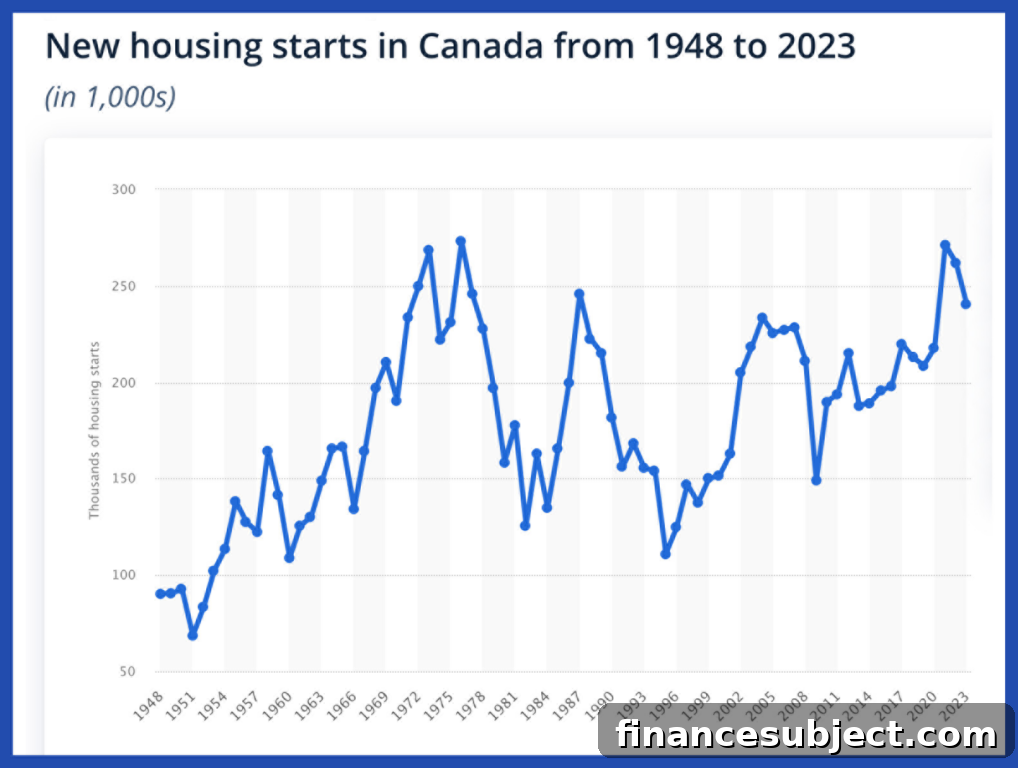
On Monday, the Canada Mortgage and Housing Corporation reported that housing starts rose from 241,111 units in April to 264,506 units in May, a roughly 10% increase. The momentum was strongest in Montreal, where starts surged about 104%, and in Toronto, which saw approximately a 47% rise. That’s a notable pace given the elevated interest rate environment.
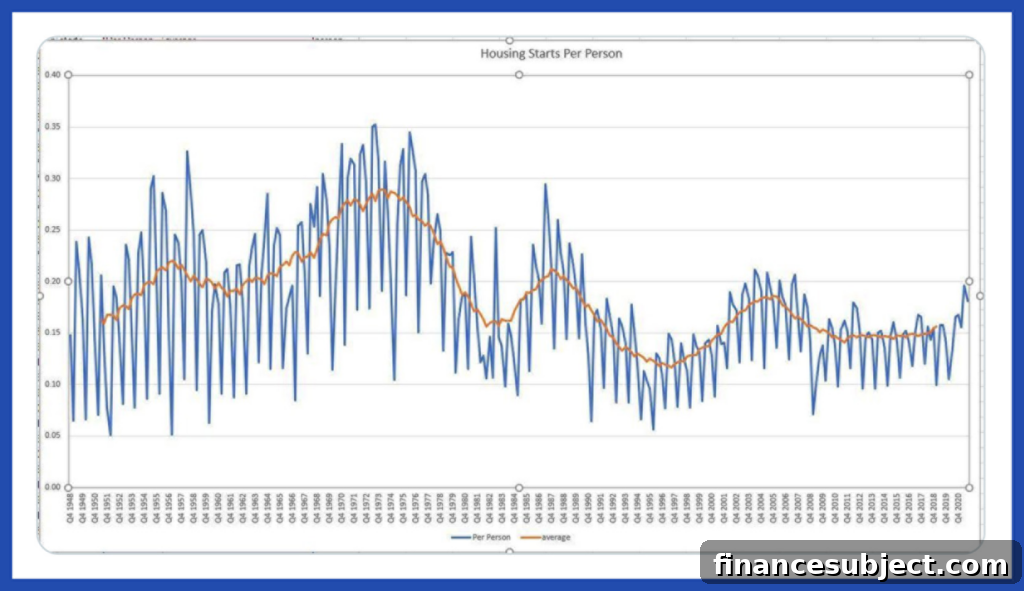
Although total housing starts are near historically high levels in absolute terms, that view doesn’t account for population growth. A clearer picture comes from looking at housing starts per capita: with a larger population comes greater demand for labour, materials and capital, so starts per person tell a different story.
Adjusted for population, Canada still needs a substantial increase in housing starts to match the per-person construction rates seen during the boom years of the 1970s. Many young Canadians are hoping recent government incentives will accelerate new development and ease the housing shortage sooner rather than later.
While more supply is on the way, high interest rates still influence the current market. The Canadian Real Estate Association’s latest data showed total Canadian home sales down almost 6% year over year in May, and the average home price slipped to about $699,117 — roughly 4% below May 2023 and about 14% below the February 2022 peak. Seasonally adjusted benchmark prices have softened across many regions.
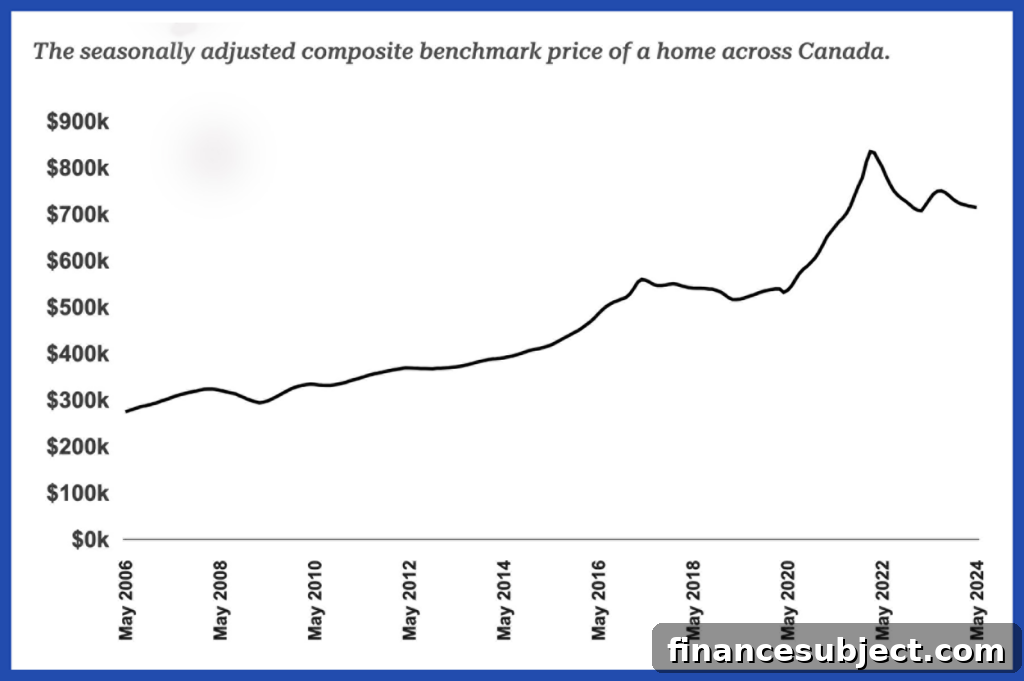
Even though a small rate cut earlier this month could stimulate demand, new listings have jumped — more than 28% year over year — as some homeowners list properties they can no longer afford and as builders add new units. The coming months will reveal which force wins out: rising demand as mortgage costs ease, or ongoing price pressure from higher inventory.
Newsletter
Get free MoneySense financial tips, news & advice in your inbox.
What does the average Canadian buy?
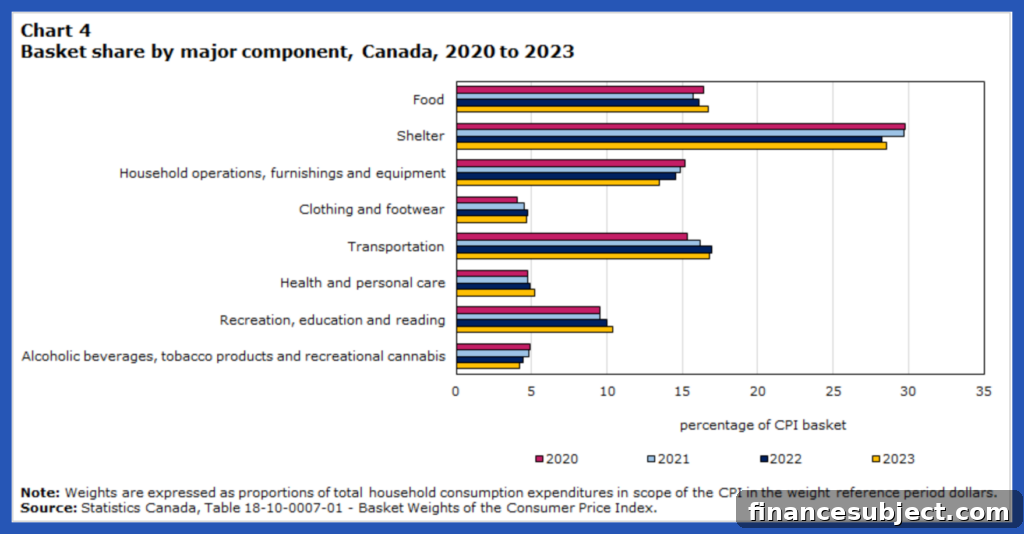
Statistics Canada publishes the consumer price index (CPI) each month to track inflation using a representative “basket” of goods and services across categories such as food, shelter and transportation. The CPI’s basket is updated annually to reflect changing consumption habits; the latest review used data from the 2023 National Household Final Consumption Expenditure Survey and the Survey of Household Spending, along with many administrative and industry data sources.
The CPI weights were adjusted this year to better reflect current spending patterns. Notable shifts include:
- Food rose to 16.72% of the CPI basket, up from 16.13%.
- Recreation, education and reading increased to 10.42% from 9.98%.
- Shelter’s share inched up to 28.57% from 28.22%.
- Household operations and furnishings declined to 13.46% from 14.57%.
- Alcohol, tobacco and cannabis dropped to 4.17% from 4.47%.
The CPI update also relies on many supplementary data sets: retail scanner data, monthly retail trade surveys, housing price and real estate statistics, vehicle sales, transit surveys, tourism indicators, streaming usage reports, tuition enrollments, fuel statistics and more. Taken together, these inputs make the CPI a robust, though necessarily generalized, estimate of average Canadian spending patterns. Your own inflation experience may differ depending on personal habits — for example, someone who prioritizes travel will feel price changes differently than someone whose budget focuses on household goods.
Read article
Did National Bank overpay?
National Bank of Canada recently announced a plan to acquire Edmonton-based Canadian Western Bank for about $5 billion. The market reaction was muted-to-negative; National Bank’s shares fell more than 5% following the announcement.
The deal values Canadian Western Bank at roughly a 110% premium for its shareholders and implies a price-to-earnings multiple in the mid-teens, which has led some observers to conclude the buyer paid a steep price. Premiums are common in takeovers — the acquiring bank must offer a compelling incentive for shareholders to sell — but the magnitude here is notable.
Still, there are strategic reasons National Bank might see value beyond the headline multiple. National Bank has a strong track record managing regional banks and has built expertise in commercial lending and cross-selling business services. Canadian Western Bank is based in one of Canada’s fastest-growing regions and has a loan book concentrated in commercial lending, where National Bank excels.
Effectively, National Bank is betting on the advantages of scale within the concentrated Canadian banking sector. By buying the country’s eighth-largest bank, it aims to move the industry’s competitive dynamics and extract more value from combined operations than it might achieve by expanding internationally. The deal structure uses relatively little debt and rests on a management team that has delivered consistent results over recent years, so the long-term outcome will depend on execution. If management can translate the acquisition into higher earnings and efficiency gains, the price paid today may look justified over time.
What’s Buffett buying now?
Berkshire Hathaway has had a strong year and is up over 12% since January 1. Visual Capitalist’s review of Berkshire’s public equity holdings highlights several trends that define Warren Buffett’s portfolio.
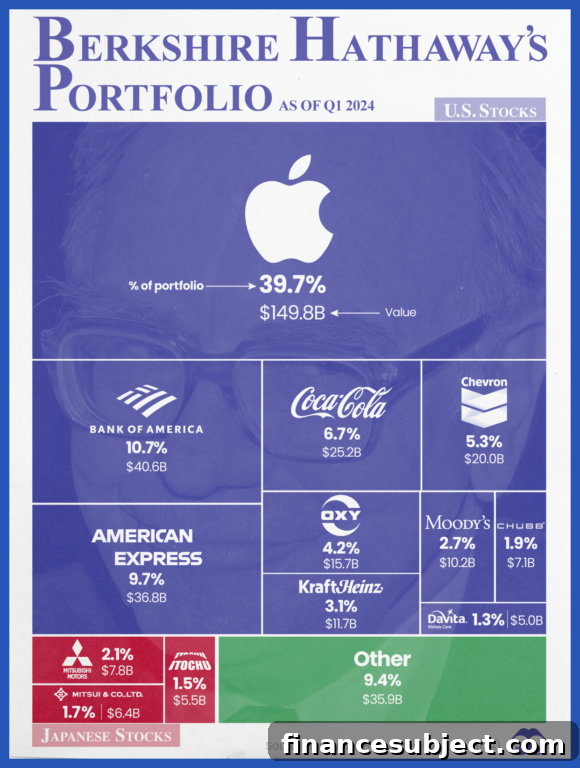
- Apple is a massive weighting in the portfolio — nearly 40% of Berkshire’s public equity exposure — meaning a large portion of Berkshire’s performance depends on Apple’s share price. Even after trimming some holdings, Berkshire remains a significant Apple shareholder.
- Buffett’s preference for established, “boring” businesses persists: beverage, banking, oil and payments companies continue to form core holdings.
- His earlier investment in Japan has also delivered strong gains, reflecting outperformance by the Nikkei over recent years.
Beyond public stocks, Berkshire owns many private operating businesses — insurance firms, railways, restaurants, supply-chain companies and manufacturing businesses — which together form a diversified, cash-generating enterprise. Notably, Berkshire also holds very large cash and cash-equivalent positions, including U.S. Treasury bills; recent estimates suggest a meaningful share of the market sits in Berkshire’s portfolio. Those Treasury holdings generate substantial interest income and serve as dry powder for future acquisitions.
Canadian investors seeking a hedged way to access Berkshire can do so through Canadian depository receipts that provide CAD-hedged exposure on Canadian exchanges.
Updates: Nvidia and Trump Media
Nvidia’s share price has continued its rapid rise and briefly became the world’s most valuable company, surpassing Microsoft at times. The company recently completed a stock split, which has prompted renewed interest from investors worldwide.
On the other hand, the social-media company associated with Donald Trump posted a sizable first-quarter loss and has seen its stock value decline significantly since the former president’s legal developments earlier this year. These contrasting stories underline the market’s current split between speculative high-growth tech winners and troubled, headline-driven names.
Kyle Prevost is a financial educator, author and speaker. When he’s not on a basketball court or in a boxing ring trying to recapture his youth, you can find him helping Canadians with their finances at MillionDollarJourney.com and the Canadian Financial Summit.
Tools
MoneySense’s ETF Screener Tool
Read more about investing:
- Best ETFs in Canada
- National Bank to buy Canadian Western Bank at $5 billion valuation
- Buying your first stocks in Canada
- How much is capital gains tax and other questions answered
- Will the AI “gold rush” last?