

This week, Cut the Crap Investing founder Dale Roberts reviews the key financial headlines and provides perspective for Canadian investors.
What’s up with inflation?
Inflation remains the dominant force shaping stock markets, bond yields and the broader economy. Central bankers are effectively steering using past data while inflation continues to unfold, making policy decisions react to what has already happened rather than what’s immediately ahead.
Canada’s consumer price index (CPI) for May came in at 3.4%, a meaningful slowdown but not yet within the Bank of Canada’s 2% target. A large part of the decline reflected a sharp year-over-year drop in gasoline prices (-18.3%) driven by base-year effects: when prices spiked a year earlier, the comparison a year later looks substantially lower. Excluding gasoline, CPI rose 4.4% in May, down from 4.9% in April.
There’s an important irony: the policy response to inflation—higher interest rates—is itself generating inflationary pressure in the form of higher mortgage costs. Mortgage-interest and related housing costs rose about 29.9% year-over-year and are now the single largest contributor to headline inflation. If you strip out mortgage-cost inflation, headline CPI would be roughly 2.5% year-over-year.
Despite the moderation in some areas of inflation, core measures—particularly services inflation such as travel and restaurants—are cooling more slowly. For that reason, the Bank of Canada is likely to keep policy tight and may raise rates again in July. Canadians should not expect a sustained easing of interest rates until 2024 at the earliest. For months I’ve warned that inflation could remain in the 3–4% range for a while and high interest rates may become the new normal.
There is good news for savers: many high-interest savings accounts and guaranteed investment certificates (GICs) now offer attractive returns. For retirees, it makes sense to consider putting several years’ worth of spending needs into high-interest savings or short-term GICs. Ultra short-term bonds and T-bill ETFs are also delivering solid yields—new offerings such as Horizons CBIL (and its U.S. equivalent UBIL.U) are highly liquid treasury-bill ETFs, with CBIL targeting a yield around 4.23%.
Nike just does it, Carnival is cruisin’, and more
Earnings highlights this week
All figures are in U.S. dollars.
- Carnival (CCL/NYSE): EPS -$0.31, beat by $0.02; revenue $4.9 billion, up 104.2% year-over-year and beat expectations by about $130 million.
- Nike (NKE/NYSE): Q4 GAAP EPS $0.66, missed by $0.02; revenue $12.83 billion, up 4.9% year-over-year and beat expectations by roughly $250 million.
- McCormick (MKC/NYSE): Non-GAAP EPS $0.60, beat by $0.03; revenue $1.66 billion, up 7.8% year-over-year and roughly in line with estimates.
- General Mills (GIS/NYSE): Non-GAAP EPS $1.12, beat by $0.05; revenue $5.03 billion, up 2.9% year-over-year and missed expectations by about $150 million.
(GAAP means generally accepted accounting principles; non-GAAP excludes certain one-time or non-cash items.)
Carnival reported strong demand: bookings during the quarter reached a new record for future sailings and second-quarter booking volumes exceeded the previous quarter’s record. The company also raised guidance for the coming quarter on both revenue and earnings, reflecting continued travel recovery.
Nike’s growth continues to be driven by direct online sales, though foreign exchange was a headwind. NIKE Direct grew about 15% year-over-year, or 18% on a currency-neutral basis, while wholesale was down 2% but up 2% on a currency-neutral basis. Nike is a high-quality business, but at current valuations investors should consider valuation risk. I hold a position in my wife’s retirement account and modestly trimmed near all-time highs—an example of harvesting gains to create income from growth holdings.
Consumer staples remain a reliable defensive sector. Companies like McCormick and General Mills show resilient demand, and General Mills expects adjusted diluted EPS to rise 4–6% in constant currency for the next year.
What Canadian investors need to know about the fake coup in Russia
On June 24 the Wagner Group’s march toward Moscow appeared to be an unprecedented political crisis, and many observers compared the moment to historic events such as the Russian revolutions of the past. In the days that followed, the episode looked increasingly like a staged confrontation or an orchestrated retreat rather than a conventional coup—Prigozhin and other leaders ultimately agreed to step aside and relocate instead of seizing power or being removed by force.
Whether the episode was staged or not, it highlights that political risk is always present and can surprise markets. Historically, geopolitical spikes often push oil and safe-haven assets higher. Analysts have estimated that geopolitical disruptions in major oil-producing nations can add several percentage points to oil prices in the immediate aftermath of an event.
If instability in Russia were to escalate or impair oil production and exports, global oil supplies could be disrupted and prices would likely spike, as seen during other recent geopolitical shocks. Gold tends to rally in such moments as investors seek safe assets. Russia’s status as a nuclear power also introduces an elevated tail risk: any accident or escalation would be unprecedented and would likely send investors towards gold and high-quality bonds.
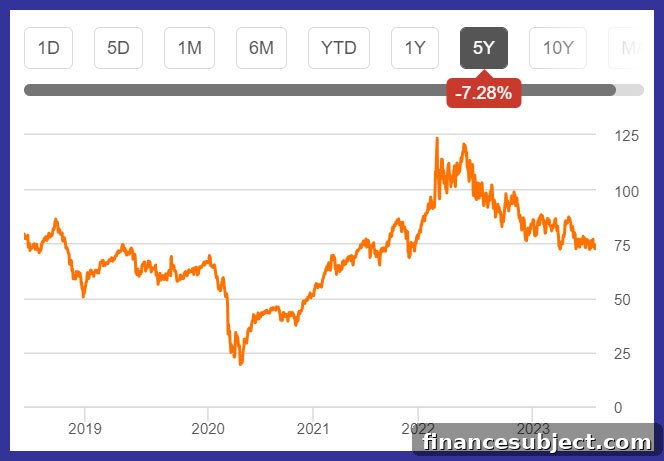
For long-term investors, the lesson is to expect surprises and to structure portfolios with resilience in mind. That may include allocations to defensive sectors, some exposure to precious metals, and a thoughtful bond allocation—approaches I discuss for a balanced, all-weather portfolio.
Will emerging markets outgrow the U.S.?
Investors who follow Wayne Gretzky’s advice—“skate to where the puck is going to be, not where it has been”—are increasingly considering higher exposure to emerging markets (EM). After years of underperformance, many forecasts now project that EM will capture a substantially larger share of global equity market capitalization over the coming decades.
Goldman Sachs projects that emerging markets’ share of the global equity market could rise from about 27% today to roughly 35% by 2030, then to 47% by 2050 and 55% by 2075. By contrast, the U.S. share is expected to fall from about 42% in 2022 to 35% in 2030 and continue declining thereafter.
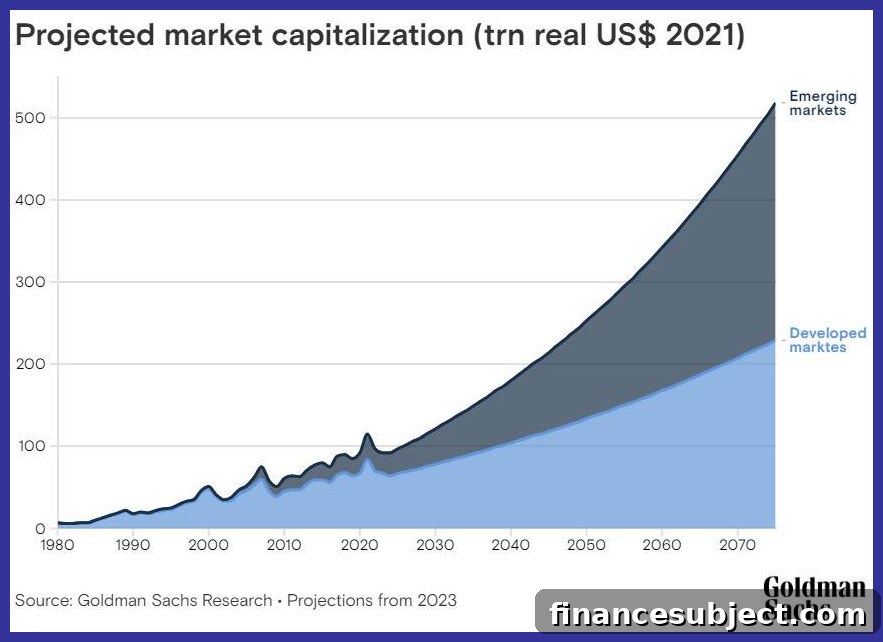
Emerging markets—especially countries in Asia such as China and India—are important drivers of future global growth. China’s leadership has reiterated a target of around 5% annual growth, and India’s markets are hitting new highs as its economy expands. For Canadian self-directed investors, international and emerging-market exposure remains underowned and can be an important source of long‑term portfolio growth.
In my own advanced couch potato portfolios I use equal-weighted international exposure to balance domestic biases. Investors should consider EM ETFs or diversified international funds as part of a long-term allocation, while remembering that these regions can be more volatile and require a longer investment horizon.
After a difficult 2022, the balanced portfolio approach—mixing stocks and bonds—has regained traction as investors seek stability and diversification. As always, tailor any allocation to your goals, risk tolerance and time horizon.