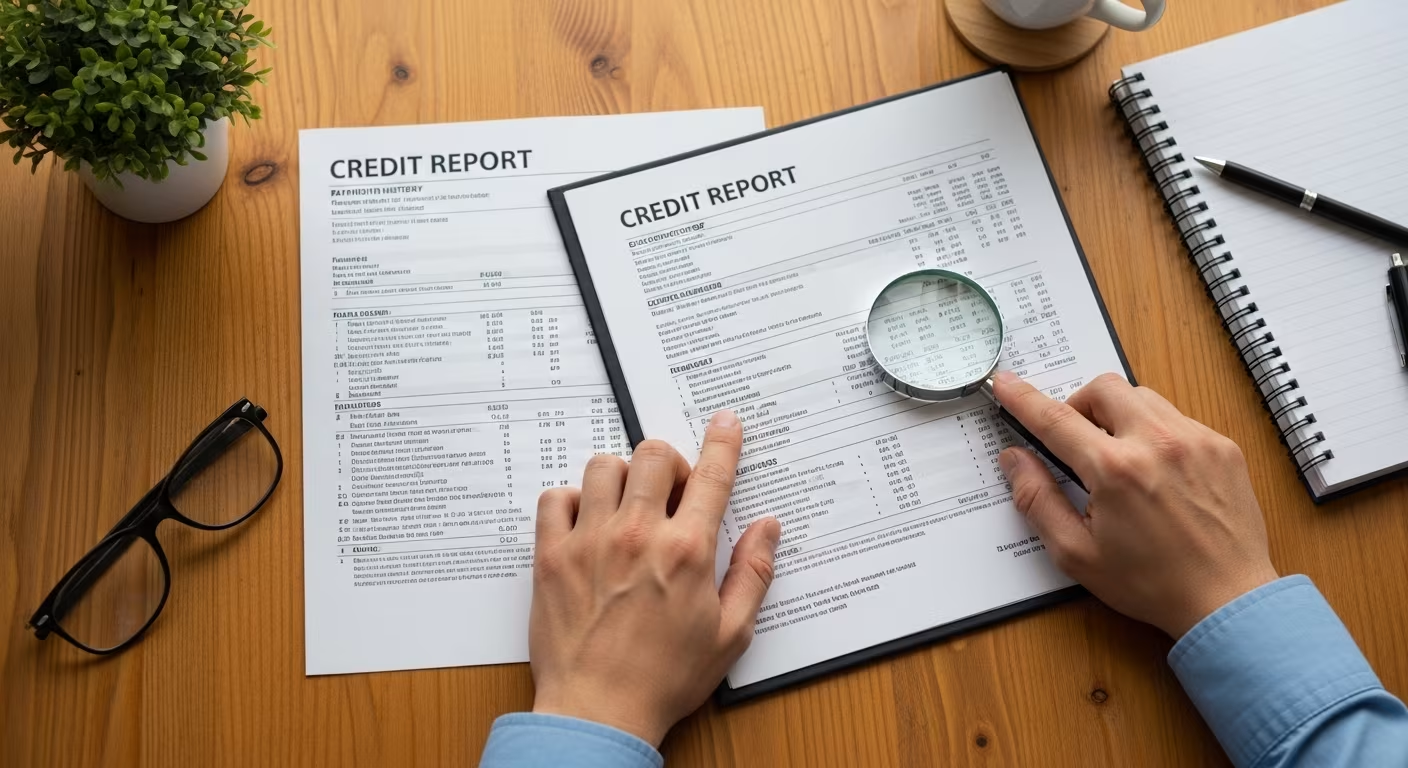
Your credit report is the foundation of your financial reputation. It determines whether you qualify for loans, what interest rates you pay, and sometimes even whether you get a job or apartment. Yet most people have never carefully reviewed their credit report. Errors are common—affecting roughly 25% of consumers—and they can cost you thousands. Here's how to read your report and fix any mistakes.
What Is a Credit Report?
A credit report is a detailed record of your credit history, compiled by credit bureaus.
The three major bureaus:
- Equifax
- Experian
- TransUnion
Each bureau independently collects information, so reports may differ between bureaus.
Credit Report vs. Credit Score
Credit report: The detailed history (accounts, payments, inquiries) Credit score: A three-digit number calculated FROM the report data
Think of your credit report as a report card with all your grades, and your credit score as your GPA calculated from those grades.
How to Get Your Free Credit Reports
AnnualCreditReport.com
The only official source for free reports mandated by federal law.
What you get:
- One free report from each bureau per year
- Additional free reports after fraud alerts or identity theft
- Free weekly reports available through 2026
Access: AnnualCreditReport.com (not other sites with similar names)
Other Free Sources
Credit Karma: Free TransUnion and Equifax reports (updated weekly) Experian: Free Experian report through their app Bank/credit card apps: Many provide free score and report access
When to Pull Reports
Recommended schedule:
- At least once per year from each bureau
- Before major applications (mortgage, car loan, apartment)
- After identity theft concerns
- When building credit (check progress)
Sections of a Credit Report
1. Personal Information
What's included:
- Full name (and any variations/misspellings)
- Current and previous addresses
- Date of birth
- Social Security number (partial)
- Phone numbers
- Employers (current and previous)
What to check:
- Name spelled correctly
- Addresses are places you've actually lived
- No unfamiliar names or addresses (possible fraud indicator)
- Employment history is accurate
Note: Personal information errors don't directly affect your score but may indicate mixed files or fraud.
2. Credit Accounts (Trade Lines)
This section lists all your credit accounts.
For each account:
- Creditor name
- Account type (credit card, mortgage, auto loan, etc.)
- Account number (partial)
- Date opened
- Credit limit or original loan amount
- Current balance
- Payment history
- Account status (open, closed, in collections)
What to check:
- All accounts are yours (no fraudulent accounts)
- Balances are correct
- Payment history is accurate
- Closed accounts show as closed
- Account types are correct
3. Payment History
The most detailed section, showing payment record for each account.
Symbols/codes:
- "OK" or "Current": Paid on time
- "30": 30 days late
- "60": 60 days late
- "90": 90 days late
- "120": 120 days late
- "CO": Charged off
- "BK": Bankruptcy
What to check:
- No late payments you actually made on time
- Late payments you did make are accurately reported
- Corrected late payments were updated
4. Credit Inquiries
Lists every time someone accessed your credit.
Two types:
Hard inquiries (affect score):
- Credit applications
- Loan applications
- New credit cards
- Remain on report 2 years
Soft inquiries (don't affect score):
- Your own credit checks
- Pre-approval offers
- Background checks
- Existing creditor reviews
What to check:
- All hard inquiries are from applications you made
- Unfamiliar hard inquiries could indicate fraud
5. Public Records
Legal information related to your credit.
May include:
- Bankruptcies (remain 7-10 years)
- Civil judgments (some states)
- Tax liens (federal tax liens no longer appear)
What to check:
- Any bankruptcies are yours
- Information is accurate
- Old records have been removed after time limits
6. Collections
Accounts sold to or handled by collection agencies.
Information shown:
- Original creditor
- Collection agency
- Amount owed
- Date of first delinquency
What to check:
- You recognize the original debt
- Amount is correct
- Paid collections are marked as paid
- Time-barred debt has been removed (after 7 years)
Common Credit Report Errors
Identity Errors
- Misspelled name
- Wrong address
- Wrong Social Security number
- Accounts belonging to someone with similar name
Cause: Mixed files where another person's information appears on your report
Account Status Errors
- Closed accounts shown as open
- Paid accounts shown as unpaid
- Incorrect credit limit (lower than actual)
- Wrong account type
- Accounts incorrectly listed as in collections
Balance Errors
- Incorrect current balance
- Balance doesn't reflect recent payments
- Wrong original loan amount
- Credit limit incorrect
Payment History Errors
- On-time payments marked as late
- Incorrect late payment dates
- Payment amount errors
- Wrong number of late payments
Duplicate Entries
- Same account listed twice
- Same debt appearing from original creditor AND collection agency as two separate debts
Fraudulent Accounts
- Accounts you never opened
- Addresses you never lived at
- Inquiries from companies you didn't apply to
How to Dispute Credit Report Errors
Step 1: Document Everything
Before disputing:
- Get copies of reports from all three bureaus
- Highlight errors with specific details
- Gather supporting documentation
Supporting documents:
- Bank statements showing payments
- Cancelled checks
- Payment confirmation emails
- Account statements
- Correspondence with creditor
- Police reports (for fraud)
Step 2: Write a Dispute Letter
Include:
- Your full name and address
- Each error, specifically identified
- Why it's incorrect
- What correction you're requesting
- Copies (not originals) of supporting documents
- Request that corrected report be sent to anyone who received report in last 6 months
Sample dispute language: "The account [Account Number] with [Creditor Name] incorrectly shows a 30-day late payment for March 2025. Attached is my bank statement showing the payment was made on March 12, 2025, before the due date of March 15, 2025. Please correct this error and update my report to show this payment as on-time."
Step 3: Submit Your Dispute
Online (fastest):
- Equifax: equifax.com/personal/credit-report-services/credit-dispute/
- Experian: experian.com/disputes/main.html
- TransUnion: transunion.com/credit-disputes/dispute-your-credit
By mail (recommended for complex disputes):
- Equifax: P.O. Box 740256, Atlanta, GA 30374
- Experian: P.O. Box 4500, Allen, TX 75013
- TransUnion: P.O. Box 2000, Chester, PA 19016
Send certified mail with return receipt requested.
Step 4: Dispute with Creditor
Simultaneously dispute with the creditor reporting the error.
Why: The creditor can update information directly with bureaus, and they may be more responsive than bureaus.
How: Write to the creditor's dispute address (found on your statement or website). Include same documentation as bureau dispute.
Step 5: Wait for Investigation
Timeline:
- Bureaus must investigate within 30 days (45 if you provide additional info)
- Creditor notified of dispute
- Creditor investigates and responds
- Bureau updates report if error confirmed
Step 6: Review Results
Bureau sends written results of investigation.
If corrected: Request updated report and verify correction
If not corrected: You can:
- Provide additional documentation and re-dispute
- Add a 100-word consumer statement to your report
- Escalate to CFPB (Consumer Financial Protection Bureau)
- Consult with consumer rights attorney
What to Do About Fraud
If You Find Fraudulent Accounts
Immediate steps:
- Place fraud alert on all three bureau reports
- Consider credit freeze
- File identity theft report at IdentityTheft.gov
- File police report
- Dispute fraudulent accounts with bureaus
- Contact fraud departments of affected creditors
Fraud Alert vs. Credit Freeze
Fraud alert (free):
- Requires creditors to verify identity before opening accounts
- Lasts 1 year (7 years for identity theft victims)
- Only need to contact one bureau (they notify others)
Credit freeze (free):
- Completely blocks access to your credit report
- Must be lifted before you apply for credit
- Contact each bureau separately
How Long Negative Items Stay on Reports
| Item | Time on Report |
|---|---|
| Late payments | 7 years |
| Collections | 7 years from first delinquency |
| Chapter 7 bankruptcy | 10 years |
| Chapter 13 bankruptcy | 7 years |
| Hard inquiries | 2 years |
| Closed accounts (good standing) | 10 years |
Items must be removed after these periods. If not, dispute for removal.
Ongoing Credit Monitoring
Free Monitoring Options
- Credit Karma (TransUnion, Equifax)
- Experian (Experian)
- Bank/credit card monitoring
- AnnualCreditReport.com (weekly through 2026)
What to Monitor For
- New accounts you didn't open
- Address changes
- Sudden score drops
- Hard inquiries you didn't initiate
- Balances that don't match your records
Set Up Alerts
Most monitoring services offer alerts for:
- New accounts
- Balance changes
- Credit inquiries
- Score changes
Enable all alerts for real-time fraud detection.
The Three Credit Bureaus: Are They All the Same?
| Bureau | Market Share | Free Report | Score Model |
|---|---|---|---|
| Experian | Largest | AnnualCreditReport.com (weekly) | FICO, VantageScore |
| Equifax | Second | AnnualCreditReport.com (weekly) | FICO, VantageScore |
| TransUnion | Third | AnnualCreditReport.com (weekly) | FICO, VantageScore |
Important: Your scores may differ across bureaus because not all creditors report to all three. Check all three reports at least annually via AnnualCreditReport.com (the only federally authorized free source).
2026 update: Since 2023, all three bureaus provide free weekly reports (previously annual). Medical debt under $500 is no longer included on credit reports, and paid medical collections are removed immediately rather than remaining for 7 years.
Taking Action
This Week
- Pull credit reports from all three bureaus at AnnualCreditReport.com
- Review each section systematically
- Note any errors or unfamiliar information
- Gather supporting documentation for errors
This Month
- Submit disputes for any errors (all three bureaus if error appears on multiple)
- Dispute directly with creditors reporting errors
- Set up free credit monitoring
- Consider fraud alert or freeze if you found fraudulent activity
Ongoing
- Check reports at least annually
- Review monitoring alerts promptly
- Keep financial documents organized for potential disputes
- Monitor before major financial applications
Your credit report tells your financial story. Make sure it's telling the truth. Regular review catches errors and fraud before they cost you thousands in higher interest rates or denied applications. Take control of your credit report—it's too important to ignore.
Building the Habit of Credit Monitoring
Free credit monitoring tools (2026):
- Credit Karma: Free VantageScore from TransUnion and Equifax, updated weekly
- Experian app: Free FICO Score 8 from Experian, updated monthly
- Most bank/card apps: Many now show FICO scores for free (Discover, Capital One, Chase)
- AnnualCreditReport.com: Full detailed reports from all 3 bureaus, free weekly
Set up alerts: Most free monitoring services offer alerts for new accounts, hard inquiries, and significant score changes. Enable all of them—identity theft is often caught first through credit monitoring alerts.
Comments (0)
No comments yet. Be the first to share your thoughts!
Leave a Comment