
How to Cut Your Grocery Bill in Half Without Couponing
Millions of Americans feel the squeeze every time they walk through the grocery store. If you want to cut your grocery bill without spending hours clipping coupons, you are not alone — and the good news is that it is entirely possible. A few strategic habit changes can slash what you spend on food by 30%, 40%, or even 50% without sacrificing nutrition or spending your weekends hunting deals.
This guide covers proven, practical methods that do not require coupon apps, loyalty card gymnastics, or extreme frugality. Just smarter systems.
Why Your Grocery Bill Is Probably Too High
Most households overspend on groceries not because food is expensive per se, but because of invisible waste and unplanned buying. Studies from the USDA estimate that American families throw away between 30% and 40% of the food they purchase. That means if your grocery budget is $800 a month, you may be literally throwing $240 to $320 in the trash.
The culprits are predictable: impulse purchases, no meal plan, buying more fresh produce than you can realistically eat, and shopping hungry. None of these require coupons to fix — they require systems.
Beyond waste, most people are also paying a "convenience tax" without realizing it. Pre-cut vegetables, single-serving snacks, marinated proteins, and pre-assembled meal kits all carry massive markups. A head of broccoli costs a fraction of broccoli florets in a bag. The markup on convenience is often 200% to 400%.
The Meal Planning Method That Actually Works
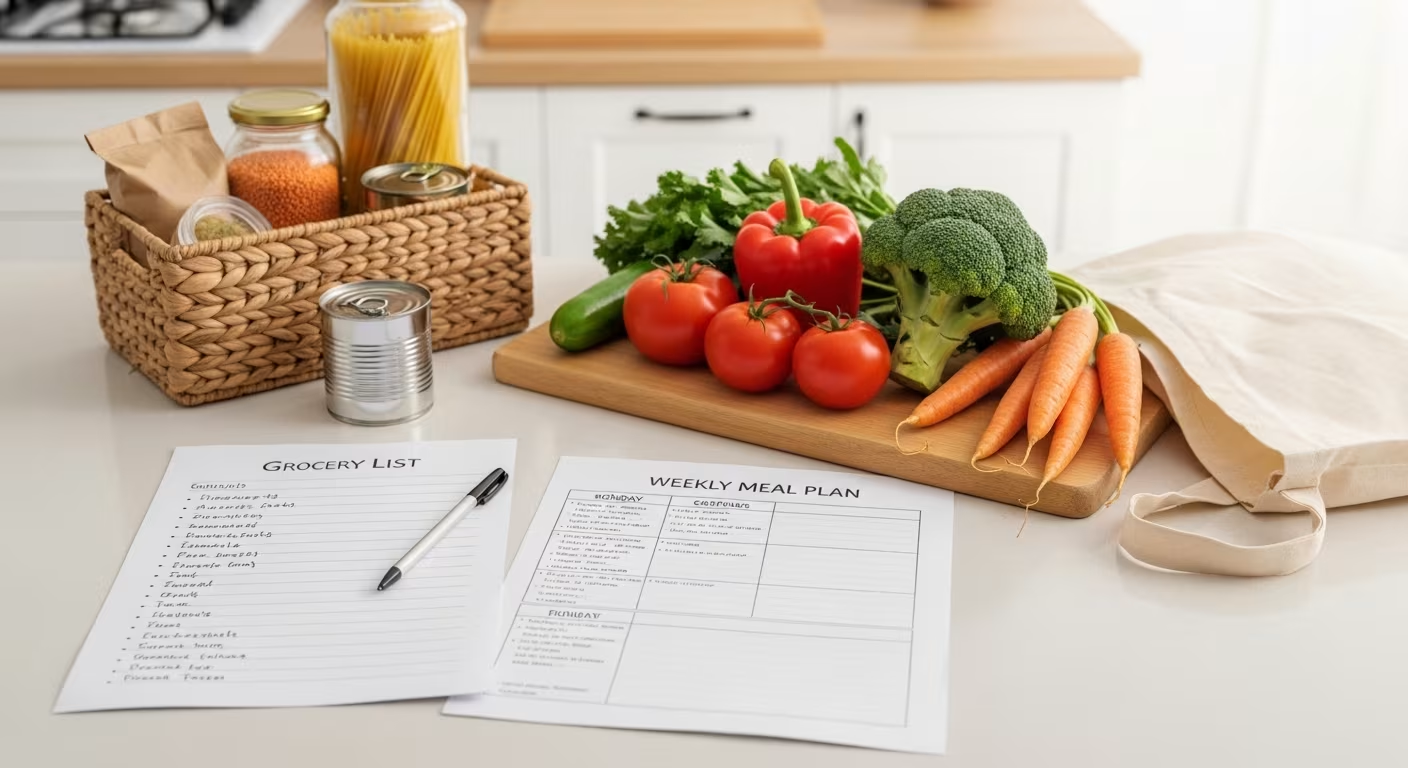
Meal planning sounds tedious, but the version that saves the most money is surprisingly low-effort. You do not need to plan seven unique dinners. You need a framework.
The weekly template approach:
- Pick 2 proteins for the week (chicken thighs, ground beef, canned tuna, eggs, beans)
- Pick 3 vegetables (whatever is on sale or in season)
- Pick 2 starches (rice, pasta, potatoes, bread)
- Build meals by rotating combinations
This gives you roughly 10 to 15 possible meals from a small shopping list. You shop once, buy in quantity, and rotate meals throughout the week. Leftovers become lunch. Nothing sits in the fridge long enough to spoil.
The key insight: you are not planning meals for the sake of variety. You are planning purchases to eliminate waste. Variety comes from how you season and cook the same core ingredients.
Store Strategy: The Rules That Cut Spending Fast
Where and how you shop matters as much as what you buy. These rules apply across most grocery chains and markets.
Shop the perimeter first. Whole foods — produce, meat, dairy, eggs — live on the outer edges of the store. Processed foods with high margins line the interior aisles. Starting at the perimeter fills your cart with real food before you ever encounter the tempting center aisles.
Buy store brands for everything you can. Store-brand products are manufactured by the same companies that make name-brand goods in many cases. The USDA and FDA set the same food safety standards regardless of the label. Switching from name brand to store brand on staples like flour, sugar, canned goods, frozen vegetables, and cooking oils can cut those line items by 20% to 40% instantly.
Avoid eye-level shelves. Products placed at eye level are there because they have the highest margins. Retailers pay slotting fees to get products placed where shoppers grab first. Look up and down — the store-brand and value alternatives are typically on lower or higher shelves.
Shop alone with a list. Research consistently shows that shoppers buy more when accompanied by children or partners and when shopping without a list. A list is not about rigidity — it is a commitment device that short-circuits impulse buying.
Buying in Bulk — When It Helps and When It Hurts
Bulk buying is one of the most misunderstood money-saving strategies. Done right, it dramatically reduces per-unit costs. Done wrong, it just produces more waste.
Buy in bulk only for non-perishables or things you will use before they expire:
- Dried beans, lentils, rice, oats, pasta
- Cooking oil, soy sauce, vinegar, spices
- Toilet paper, paper towels, cleaning supplies
- Frozen meat (if you have freezer space)
- Canned tomatoes, canned fish, broth
Do not buy in bulk:
- Fresh produce you cannot eat in 5 to 7 days
- Anything you are trying for the first time
- Items that are only marginally cheaper per unit
- Specialty ingredients you use rarely
A membership warehouse store like Costco can be worth it for families, but only if you actually use what you buy. Run the math on what you realistically consume. For many households, a Costco membership pays for itself in toilet paper and cooking oil alone — but it is easy to offset those savings with impulse purchases of giant quantities of food that goes bad.
The Freezer Is Your Best Savings Tool
Most people under-use their freezers. Almost everything freezes well: bread, cheese, cooked rice, cooked beans, meat, most cooked leftovers, butter, sliced fruit, broth, and most vegetables after blanching.
The freezer strategy works like this:
- When chicken thighs go on sale, buy enough for 3 to 4 weeks and freeze portions in meal-sized bags
- When bread is about to expire, freeze it — it toasts perfectly from frozen
- Cook a big batch of beans or rice, portion into freezer bags, and thaw as needed
- When you have herbs about to turn, chop them, add olive oil, and freeze in ice cube trays
This creates a personal pantry of cheap ingredients that you bought at the right price. You stop shopping out of desperation and start shopping strategically.
Shoppers who actively use their freezers report spending 15% to 25% less per month on groceries without changing what they eat — simply because they are no longer paying full price for convenience or last-minute purchases.
Produce Hacks: Eating Fresh Without Paying Fresh Prices
Fresh produce is where most grocery budgets blow up. Here is how to navigate it.
Eat seasonally. Berries in January are expensive because they are shipped thousands of miles. Berries in June are cheap because they are local. Broccoli is cheap in the fall. Tomatoes are cheapest in August. Eating with the season can cut your produce spending by 30% to 50%.
Embrace frozen produce. Frozen vegetables are harvested at peak ripeness and frozen immediately, often making them nutritionally equivalent or superior to "fresh" vegetables that have been sitting in a cold chain for weeks. Frozen peas, corn, broccoli, spinach, and mixed vegetables are almost always cheaper than fresh and generate zero waste.
Buy the "ugly" produce. Many grocery chains now offer discounted produce sections for items that are cosmetically imperfect but nutritionally identical. Misshapen apples, small potatoes, and spotted bananas taste the same. Apps like Misfits Market and Imperfect Foods also ship irregular produce at a discount.
Use the whole vegetable. Broccoli stems are edible and delicious sautéed. Carrot tops make excellent pesto. Potato skins are nutritious. Onion skins can flavor broth. Watermelon rinds can be pickled. Learning to use the whole vegetable effectively cuts waste in half.
Protein Without Premium: Shifting Your Shopping Habits
Meat is the most expensive line item in most grocery carts. Small shifts here create outsized savings.
Choose cheaper cuts: Chicken thighs cost half what chicken breasts cost and are arguably more flavorful. Pork shoulder and pork butt are far cheaper than pork chops. Ground beef is versatile and economical. Chuck roast becomes tender with long, slow cooking.
Add plant-based proteins: Dried lentils, canned chickpeas, black beans, and eggs are some of the cheapest proteins available. You do not need to go vegetarian — simply replacing two or three meat-based meals per week with bean or egg-based meals can save $40 to $80 a month for a family of four.
Buy whole and break it down yourself: A whole chicken costs significantly less per pound than pre-cut pieces. Learning to break down a chicken takes 5 minutes and yields breasts, thighs, drumsticks, and a carcass for broth.
Watch the markdown section: Most grocery stores mark down proteins that are approaching their sell-by date, typically in the morning or late afternoon. These are safe to cook the same day or freeze immediately. Buying markdown meat and freezing it can save 30% to 50% on protein costs.
Reducing Food Waste: Where the Real Money Hides
The average American household throws away approximately $1,500 worth of food per year. Cutting food waste in half would be equivalent to a significant pay raise for your grocery budget.
The FIFO rule: "First in, first out." When you unpack groceries, move older items to the front of the fridge or pantry and put new items behind them. This simple habit prevents things from being buried and forgotten until they spoil.
Weekly fridge audit: Before shopping, look at what is actually in your fridge and plan meals around it. The goal is to enter the store knowing exactly what you need to use up what you already have.
The "clean out the fridge" dinner: Once a week, make a meal that uses up whatever odds and ends are left. Frittatas, soups, stir-fries, and grain bowls are perfect for this. This single habit can eliminate a significant amount of weekly waste.
Proper storage: Many foods spoil prematurely because of improper storage. Herbs last longer in a glass of water in the fridge. Berries should not be washed until you eat them. Potatoes and onions should not be stored together. Cheese keeps better wrapped in paper than in plastic wrap. Small storage adjustments extend the life of your ingredients.
How to Cut Your Grocery Bill With a Simple System
The households that consistently spend 30% to 50% less on groceries are not doing anything extreme. They have built a system:
- Meal template — a loose weekly framework so shopping is purposeful
- Master shopping list — organized by store section so you move efficiently
- Freezer inventory — a simple list of what is in the freezer so you use it
- Fridge audit habit — 5 minutes before shopping to plan around what you have
- Price anchors — knowing what you usually pay for staples so you recognize a real deal
You do not need all five at once. Pick one and run it for a month. Once it is automatic, add another. Behavior change works best incrementally.
For additional guidance on household budgeting strategies, the Consumer Financial Protection Bureau's money management resources offer free tools and frameworks.
A more detailed breakdown of food waste economics is available from the USDA Economic Research Service.
Most families discover that the first month of intentional grocery management is the hardest — and the most revealing. Habits that seemed fixed turn out to be highly flexible once you are paying attention. The second month is easier. By month three, you are buying better food for less money almost automatically, without thinking about it. Small, consistent changes in behavior add up to hundreds of dollars recovered every year — money that belongs in your savings account, not in food waste.
What to Expect When You Start
Week one feels effortful. You are building new habits against old defaults. Most people see a noticeable drop in their grocery bill within the first two to three weeks of applying even a few of these strategies consistently.
By month two, the habits become automatic. Shopping feels faster, not slower, because you know exactly what you need. Waste drops. Meals get more reliable. The budget becomes predictable.
The goal is not to spend the least money possible on food — it is to spend wisely, waste nothing, and eat well. Those goals are completely compatible.
None of this is financial advice. Your situation depends on variables this article can't see — taxes, risk tolerance, time horizon, dependents. A fiduciary advisor can model your specific case.
Comments (0)
No comments yet. Be the first to share your thoughts!
Leave a Comment