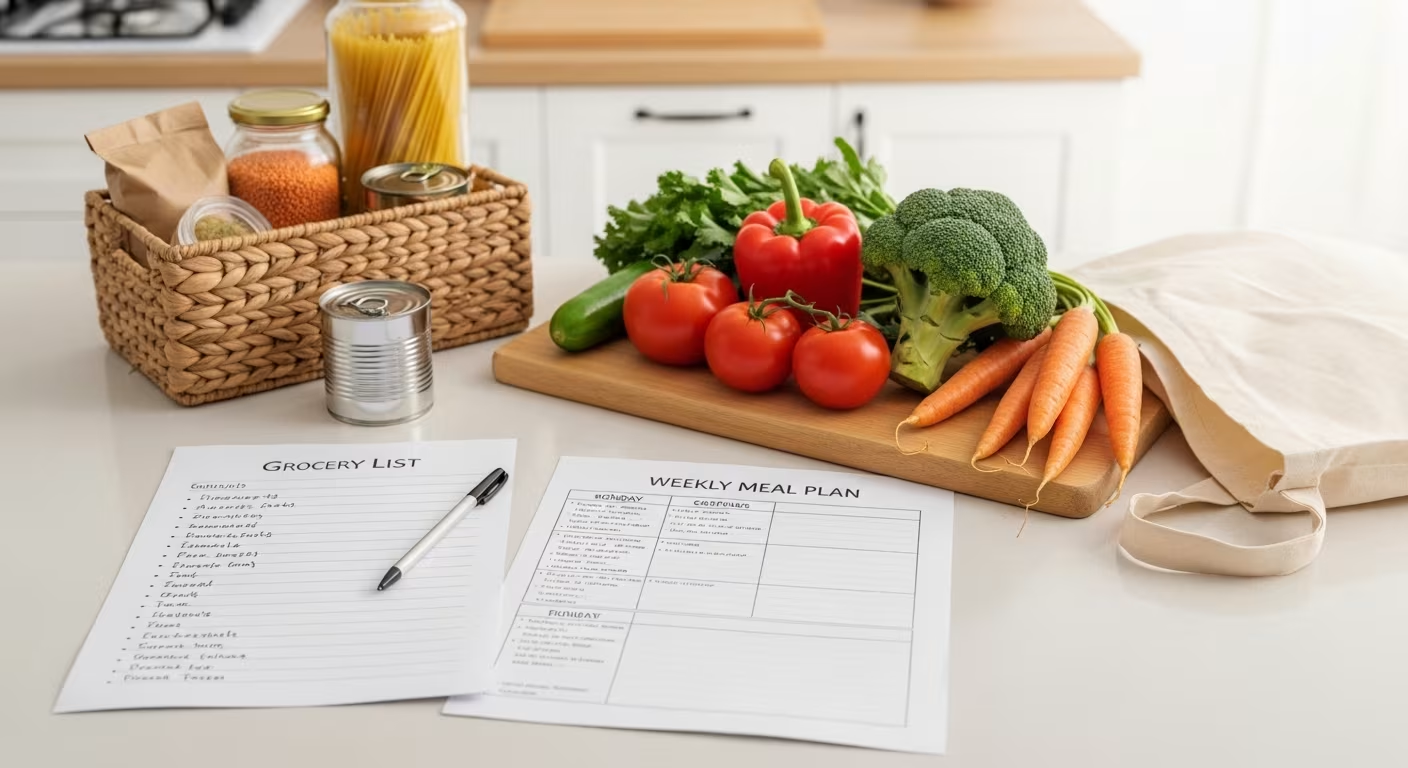
Groceries are one of the most flexible categories in any budget. The average American household spends $600-$900 monthly on food—and much of that spending is habit-driven rather than intentional. With strategic planning and smarter shopping habits, cutting your grocery bill by 30-50% is achievable without sacrificing nutrition or satisfaction.
The 2026 Grocery Reality
Americans spent an average of $475/month per person on food in 2025 (Bureau of Labor Statistics), with grocery store spending averaging $270/month. For a family of four, that is roughly $1,080/month on groceries alone.
The USDA four food plans for a family of four in 2026: | Plan | Monthly Cost | Per Meal | |------|-------------|----------| | Thrifty | $780 | $2.17 | | Low-Cost | $950 | $2.64 | | Moderate | $1,150 | $3.19 | | Liberal | $1,450 | $4.03 |
Most families can realistically move from the Moderate plan to the Thrifty plan—saving roughly $370/month or $4,440/year—without sacrificing nutrition or satisfaction. Here is how.
Understanding Where Grocery Money Goes
Before cutting spending, understand the problem:
Common Grocery Budget Killers
No plan, no list: Shopping hungry without a list leads to impulse purchases.
Convenience foods: Pre-cut vegetables, pre-made meals, and snack packs cost 2-5× more than raw ingredients.
Brand loyalty: Name brands often cost 25-50% more than identical store brands.
Food waste: The average household throws away 30% of food purchased.
Dining out disguised as groceries: Rotisserie chickens and deli items blur the grocery/restaurant line.
Shopping frequency: More trips = more impulse purchases.
Strategy 1: Plan Your Meals
Meal planning prevents the 5 PM "What's for dinner?" panic that leads to takeout or random purchases.
Weekly Meal Planning
- Check calendar for busy nights (plan simple meals)
- Review what's already in fridge/pantry
- Plan 5-7 dinners (with intentional leftovers)
- Plan breakfasts and lunches
- Create grocery list from meal plan
- Stick to the list
Meal Planning Tips
Build around sales: Check weekly flyers, plan meals using discounted items.
Theme nights: Taco Tuesday, Soup Sunday—reduce decision fatigue.
Batch cook: Make double portions; freeze or refrigerate half.
Overlap ingredients: If buying cilantro for tacos, use remainder in another dish.
Include "lazy" meals: Frozen pizza night or breakfast-for-dinner when energy is low.
Meal Planning Tools
- Pen and paper: Simple, no tech required
- Paprika app: Recipe management with meal planning
- Mealime: Free meal plans with automatic shopping lists
- Budget Bytes: Recipes designed for budget-conscious cooks
Strategy 2: Shop Smarter
Store Selection
Different stores offer different advantages:
Discount grocers (Aldi, Lidl): 30-50% cheaper than traditional supermarkets. Limited selection but great prices.
Warehouse clubs (Costco, Sam's Club): Best for non-perishables and household items. Requires bulk purchasing and membership fee ($60-$120/year).
Traditional supermarkets (Kroger, Safeway): Convenient but expensive. Use for sales only.
Ethnic markets: Often cheaper produce, spices, and specialty items.
Online grocery: Can reduce impulse purchases but watch delivery fees.
Shopping Frequency
Once per week: Optimal for most households
- Reduces impulse purchases
- Forces better planning
- Saves time and gas
Quick mid-week trip: For perishables only (milk, bread)—get in and out fast.
Shopping Tactics
Never shop hungry: Eat before shopping. Studies show hungry shoppers spend 60% more.
Shop the perimeter first: Fresh items around edges, processed items in center aisles.
Look up and down: Most expensive items at eye level. Cheaper options on top/bottom shelves.
Check unit prices: Compare cost per ounce, not package price.
Ignore endcaps: End-of-aisle displays aren't always deals.
Avoid checkout impulse buys: Candy, magazines, "last-minute" items.
Strategy 3: Buy Generic and Store Brands
Store brands are often identical to name brands—made in the same factories, with the same ingredients.
Best Items to Buy Generic
- Pantry staples (flour, sugar, rice, pasta)
- Canned goods
- Frozen vegetables
- Cleaning supplies
- Over-the-counter medications
- Dairy (milk, cheese, butter)
- Cooking oils
Items Where Brand May Matter
- Products with specific formulas you prefer (certain cereals, condiments)
- Items with clear quality differences (some paper products)
The test: Try generic once. If you can't tell the difference, keep buying it.
Savings Example
| Item | Brand | Store Brand | Savings |
|---|---|---|---|
| Cereal | $4.50 | $2.50 | $2.00 |
| Pasta | $2.00 | $1.00 | $1.00 |
| Canned tomatoes | $1.80 | $0.80 | $1.00 |
| Cheese (block) | $6.00 | $4.00 | $2.00 |
| Cooking oil | $8.00 | $5.00 | $3.00 |
| Weekly savings | $9.00 | ||
| Annual savings | $468 |
Strategy 4: Reduce Food Waste
Throwing away food is throwing away money.
Storage Best Practices
Refrigerator organization:
- Keep "use first" items at eye level
- Store dairy in coldest area (back)
- Vegetables in crisper drawers
- Fruits separate (some release ethylene gas)
Freezer essentials:
- Freeze bread, meat, and meals you won't use immediately
- Label with dates
- Use frozen-in-order system
Pantry management:
- FIFO: First in, first out
- Check expiration dates regularly
- Store properly (airtight containers)
Reducing Waste
Shop your fridge first: Use what you have before buying more.
"Ugly" produce: Still tastes the same. Often discounted.
Understand dates: "Sell by" and "Best by" aren't safety dates—food is usually good beyond them.
Use scraps: Vegetable ends make stock. Overripe bananas make bread.
Leftover transformations: Turn tonight's chicken into tomorrow's tacos.
Strategy 5: Eat Less Meat
Meat is typically the most expensive category in grocery budgets. Reducing (not eliminating) meat consumption saves significantly.
Meat-Saving Strategies
Meatless Mondays: One vegetarian dinner per week saves $10-$20/week.
Stretch meat: Add beans to taco meat, use less meat in casseroles.
Choose cheaper cuts: Chicken thighs over breasts, pork over beef.
Buy whole chickens: $1-$2/lb vs. $4-$5/lb for parts. Learn to break down.
Batch cook and freeze: Buy meat on sale, cook in bulk.
Plant-Based Protein (Cheaper Alternatives)
| Protein | Cost per serving |
|---|---|
| Dried beans | $0.15-$0.25 |
| Lentils | $0.20-$0.30 |
| Eggs | $0.30-$0.50 |
| Tofu | $0.50-$0.75 |
| Canned beans | $0.40-$0.60 |
| Chicken (thighs) | $0.80-$1.20 |
| Ground beef | $1.00-$1.50 |
| Steak | $3.00-$6.00 |
Strategy 6: Use Coupons and Apps Strategically
Traditional Coupons
Where to find:
- Sunday newspaper inserts
- Store apps
- Manufacturer websites
- Coupons.com
Rules for success:
- Only use coupons for items you'd buy anyway
- Compare coupon price to store brand price
- Stack manufacturer + store coupons when allowed
Cashback Apps
Ibotta: Scan receipt, earn cashback on purchases Fetch: Scan any receipt, earn points Checkout 51: Weekly cashback offers Shopkick: Points for walking into stores and scanning items
Realistic expectations: $5-$20/month for average user. Worth the 2-3 minutes per shopping trip.
Store Loyalty Programs
Most grocery stores offer free loyalty programs with:
- Member pricing (often significant)
- Digital coupons
- Fuel points
- Personalized offers
Sign up for every store you visit regularly.
Strategy 7: Buy in Bulk (Wisely)
Bulk buying saves money when done correctly.
Good Bulk Buys
- Non-perishables (rice, pasta, canned goods)
- Frozen items (if freezer space available)
- Items you use constantly
- Sale items with long shelf life
Bad Bulk Buys
- Perishables you can't use quickly
- Items you've never tried
- "Deals" requiring you to buy more than needed
- Items that will go stale
Warehouse Club Math
Costco membership ($65/year basic) pays for itself if you save $5.50/month.
Worth it for: Household items, diapers, paper products, gas, rotisserie chicken, some pantry staples.
Not worth it for: Perishables (unless large family), items you buy rarely.
Strategy 8: Prep at Home
Pre-made convenience costs significantly more.
Do It Yourself
| Item | Pre-Made | DIY | Savings |
|---|---|---|---|
| Pre-cut vegetables | $4.00/lb | $1.50/lb | 63% |
| Shredded cheese | $5.00/bag | $3.50 (block) | 30% |
| Salad kits | $4.50 | $2.00 (head + dressing) | 56% |
| Overnight oats | $3.00 | $0.50 | 83% |
| Hummus | $4.50 | $1.00 | 78% |
Weekend prep: Spend 1-2 hours Sunday prepping for the week:
- Wash and cut vegetables
- Cook grains (rice, quinoa)
- Prep proteins
- Make sauces and dressings
Sample Budget Grocery List (Family of Four)
Monthly budget: $600 (down from $900)
Weekly allocation: $150
| Category | Amount |
|---|---|
| Produce | $30 |
| Meat/protein | $35 |
| Dairy | $20 |
| Grains/bread | $15 |
| Canned goods | $10 |
| Frozen | $15 |
| Snacks | $10 |
| Household (paper, cleaning) | $15 |
Rules:
- Stick to list
- Use coupons/apps
- Buy generic when possible
- One protein-free dinner per week
- No convenience pre-made items
Best Grocery Savings Apps in 2026
| App | How It Works | Avg Monthly Savings |
|---|---|---|
| Ibotta | Cash back on specific items (scan receipt) | $30-50 |
| Fetch Rewards | Points for any receipt (no specific items needed) | $10-20 |
| Flashfood | Discounted near-expiry items from local stores | 50-75% off items |
| Too Good To Go | Surprise bags from restaurants/bakeries at close | $5 bags worth $15+ |
| Checkout 51 | Weekly cash-back offers on groceries | $10-15 |
| Store apps (Kroger, Target Circle) | Digital coupons and personalized deals | Varies |
Stacking strategy: Use the store app coupon + Ibotta cashback + credit card cashback (2-5% on groceries) on the same purchase. A $100 grocery trip can effectively cost $80-85 with minimal effort.
Taking Action
This Week
- Track all grocery spending
- List the 10 items you buy most frequently
- Find generic versions of those items
- Make a meal plan for next week
This Month
- Switch primary shopping to discount grocer
- Reduce shopping trips to once weekly
- Download cashback apps
- Plan one meatless dinner per week
Expected Results
Month 1: 15-20% reduction (new habits forming) Month 3: 30-40% reduction (systems working) Month 6: 40-50% reduction (optimized)
Cutting your grocery bill in half requires strategy, not deprivation. Plan meals, shop intentionally, buy store brands, reduce waste, and use available savings tools. The money saved can fund emergency funds, pay off debt, or build toward financial goals—all without sacrificing nutrition or satisfaction.
Annual impact: If you currently spend $1,000/month on groceries and cut that to $650/month, you save $4,200/year. Over 10 years, that $4,200/year invested at 7% return grows to approximately $58,000. Cutting your grocery bill is not just about saving money this month—it is about building long-term wealth from everyday decisions that compound over time.
Comments (0)
No comments yet. Be the first to share your thoughts!
Leave a Comment