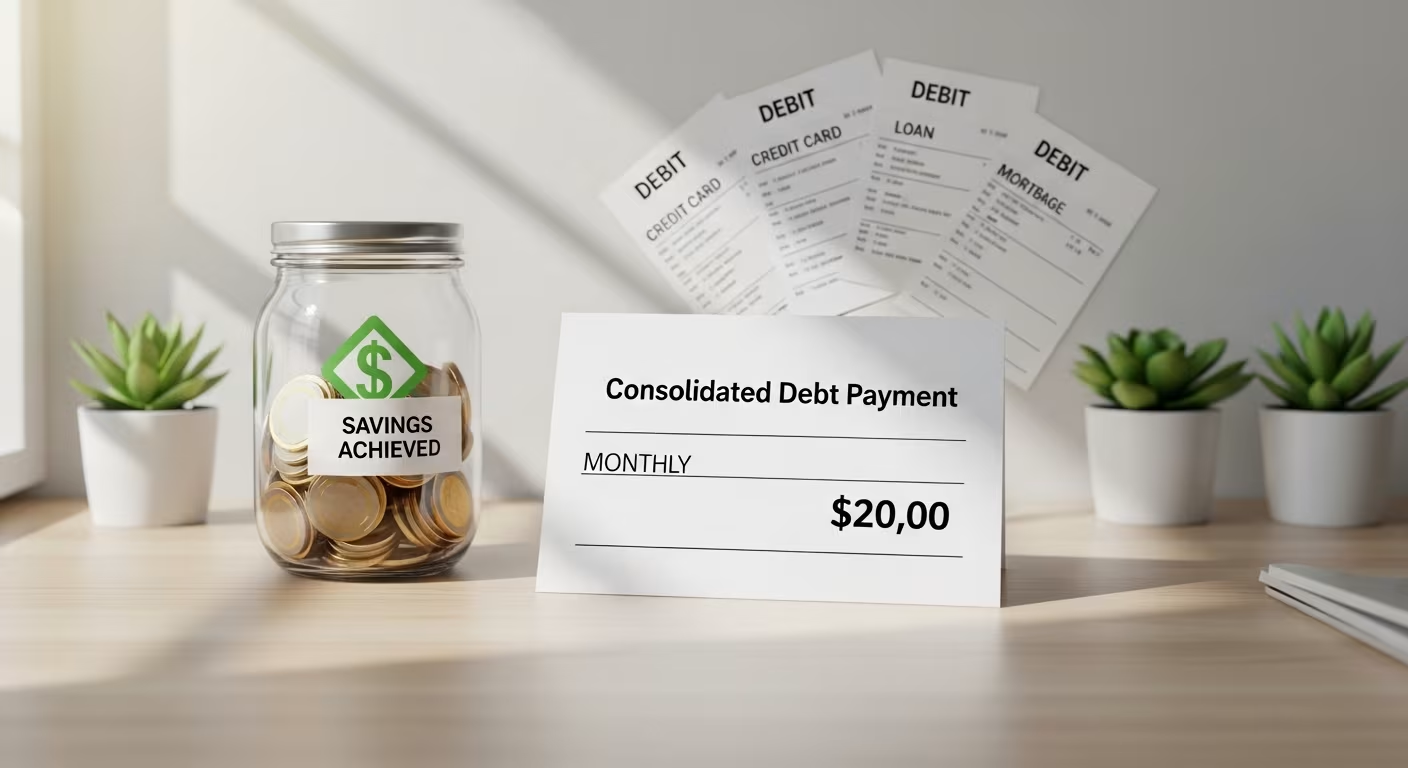
Debt consolidation promises simplicity and savings—combine multiple debts into one, lower your interest rate, and escape faster. But consolidation isn't magic, and it doesn't work for everyone. Understanding when consolidation helps (and when it hurts) is crucial before you sign any paperwork.
What Is Debt Consolidation?
Debt consolidation means combining multiple debts into a single new debt, ideally with a lower interest rate or better terms.
Example:
- Credit Card 1: $5,000 at 24% APR
- Credit Card 2: $3,000 at 22% APR
- Credit Card 3: $2,000 at 26% APR
- Total: $10,000 at average 23.6% APR
After consolidation:
- Personal loan: $10,000 at 12% APR
- One monthly payment instead of three
- Lower interest = faster payoff
Types of Debt Consolidation
Personal Loans
Borrow a lump sum, pay off existing debts, repay the loan over fixed term.
Typical terms in 2026:
- APR: 8-36% (based on credit)
- Term: 2-7 years
- Loan amounts: $1,000-$100,000
Best for: Good to excellent credit (lower rates), high-interest credit card debt
Pros:
- Fixed rate and payment
- Set payoff date
- Often lower than credit card APR
Cons:
- Requires credit check
- May have origination fee (1-8%)
- Fixed payment could strain budget
Balance Transfer Credit Cards
Move high-interest balances to a new card with 0% introductory APR.
Typical terms in 2026:
- Intro APR: 0% for 12-21 months
- Transfer fee: 3-5% of balance
- Regular APR after promo: 18-28%
Best for: Those who can pay off balance during intro period
Pros:
- 0% interest during promo
- Simple if you already use credit cards
- Can save significant interest
Cons:
- Balance transfer fee adds to debt
- High rate if not paid by promo end
- Requires good credit (670+)
- Temptation to use old cards
Home Equity Loans/HELOCs
Borrow against home equity to pay off unsecured debt.
Typical terms in 2026:
- APR: 7-9% (home equity loan), 8-10% (HELOC variable)
- Term: 5-30 years
- Amount: Up to 80-85% of home equity
Best for: Homeowners with significant equity, large debt amounts
Pros:
- Lowest interest rates available
- Potential tax deduction (if used for home improvement)
- Large borrowing capacity
Cons:
- Your home is collateral (foreclosure risk)
- Closing costs
- Turns unsecured debt into secured debt
- Long approval process
401(k) Loans
Borrow from your retirement account.
Typical terms:
- APR: Prime + 1-2% (you pay interest to yourself)
- Term: 5 years (or until you leave employer)
- Amount: Up to $50,000 or 50% of vested balance
Best for: Generally NOT recommended
Pros:
- No credit check
- Pay interest to yourself
- Low rate
Cons:
- Lose investment growth
- Full repayment due if you leave job
- 10% penalty + taxes if not repaid
- Depletes retirement savings
Debt Management Plans
Work with nonprofit credit counseling agency to negotiate lower rates and consolidate payments.
How it works:
- Agency negotiates with creditors
- You make one monthly payment to agency
- Agency distributes to creditors
- Creditors may lower rates or waive fees
Best for: Those struggling to manage payments, multiple creditors
Pros:
- Lower interest rates (often 6-10%)
- Single monthly payment
- Credit counseling support
- Structured repayment (3-5 years)
Cons:
- May close credit cards
- Fees ($25-50/month typical)
- Accounts noted as in debt management plan
- Must stick to strict budget
When Debt Consolidation HELPS
You Qualify for Lower Interest Rate
The math must work:
- Current weighted average rate: 22%
- Consolidation loan rate: 12%
- Savings: 10 percentage points of interest
This only works if your credit is good enough to qualify for significantly lower rates.
You Have Multiple Accounts to Track
Managing 5 credit card payments with different due dates leads to mistakes. One payment is simpler.
You Need a Fixed Payoff Date
Credit cards have no end date—minimum payments stretch debt for decades. A consolidation loan with a 3-year term guarantees debt freedom in 36 months.
You've Addressed Spending Habits
Consolidation only works if you don't rack up new debt on emptied cards. If spending habits haven't changed, consolidation makes things worse.
The Total Cost Is Lower
Calculate total interest paid under both scenarios:
Without consolidation: $10,000 at 23% over 3 years = ~$3,900 interest
With consolidation: $10,000 at 12% over 3 years + 3% fee = ~$1,950 interest + $300 fee = $2,250 total
Savings: $1,650
When Debt Consolidation HURTS
You Can't Get a Lower Rate
If your credit is poor, consolidation loans may have rates as high as credit cards. Paying fees to shuffle debt around at the same rate wastes money.
Example:
- Current rate: 24%
- Consolidation rate offered: 28%
- Result: Paying more, not less
You Extend the Term Significantly
Trap: Lower monthly payment feels like a win, but longer term costs more.
Example: $10,000 at 12%:
- 3-year term: $332/month, $1,960 total interest
- 7-year term: $179/month, $5,032 total interest
Lower payment = $3,072 MORE in interest paid.
You Use Freed-Up Credit Cards
The most common consolidation failure:
- Consolidate $10,000 credit card debt into loan
- Credit cards now have $10,000 available
- Over time, run up credit cards again
- Now have $10,000 loan PLUS new credit card debt
- Debt doubled instead of eliminated
If you consolidate, cut up or freeze the cards.
You're Using Home Equity for Unsecured Debt
Converting credit card debt (unsecured) to home equity debt (secured by your house) is risky.
Worst case: Financial hardship leads to missed payments, and you lose your home over credit card debt you could have discharged in bankruptcy.
You're Paying High Fees
Some consolidation options come with excessive fees:
- Origination fees over 5%
- Balance transfer fees + annual fees
- Debt settlement company fees (15-25% of debt)
Calculate total cost including all fees.
Your Debt Isn't That High
If you have $3,000 in credit card debt, the hassle and fees of consolidation may not be worth it. Aggressive payments on your current debt might be faster and cheaper.
How to Decide: The Consolidation Checklist
Questions to Ask
1. Can I get a significantly lower rate?
- Pre-qualify for personal loans (soft inquiry)
- Compare to current weighted average rate
- Factor in all fees
2. Can I afford the new payment?
- Don't extend term just for lower payment
- Ensure payment fits budget
3. Will I stop using credit cards?
- Be honest with yourself
- Plan to close or freeze cards
- Address underlying spending issues
4. Is the total cost lower?
- Calculate total interest + fees both ways
- Don't just compare monthly payments
5. Do I have a reasonable debt amount?
- Consolidation makes sense for $5,000-$50,000
- Very small amounts: just pay aggressively
- Very large amounts: may need other solutions
Debt Consolidation Alternatives: Overview
Debt Avalanche/Snowball Methods
Pay off debts systematically without new loans.
Avalanche: Pay highest interest first Snowball: Pay smallest balance first
Best when: You can make more than minimum payments, don't want new debt, rates aren't drastically different.
Negotiate with Current Creditors
Call credit card companies and ask for:
- Lower interest rates
- Hardship programs
- Payment plans
Success rate is surprisingly high, especially for long-time customers.
Bankruptcy
For unmanageable debt, bankruptcy may be better than struggling with consolidation.
Chapter 7: Discharge most unsecured debt, keep exempt assets Chapter 13: Structured repayment plan over 3-5 years
Consult a bankruptcy attorney for severe debt situations.
Step-by-Step Consolidation Process
Step 1: Inventory Your Debt
List all debts with:
- Current balance
- Interest rate
- Minimum payment
- Account status
Calculate total debt and weighted average interest rate.
Step 2: Check Your Credit
Your credit score determines available options:
- 740+: Best personal loan rates
- 670-739: Good rates, most options available
- 580-669: Limited options, higher rates
- Below 580: May need secured loan or debt management plan
Step 3: Compare Options
Get quotes from:
- Banks (existing relationship helps)
- Credit unions (often lower rates)
- Online lenders (Discover, Marcus, SoFi, etc.)
- Balance transfer card pre-qualification
Step 4: Calculate Total Cost
For each option, calculate:
- Total interest over life of loan
- All fees (origination, balance transfer, etc.)
- Monthly payment
- Compare to current trajectory
Step 5: Apply and Transfer
Once you've chosen the best option:
- Complete application
- Use funds to pay off existing debts
- Confirm zero balances on old accounts
- Set up autopay on new loan/card
Step 6: Prevent Re-Accumulation
- Close or lock credit card accounts
- Cut up cards
- Address spending habits
- Build emergency fund to avoid future debt
Debt Consolidation Alternatives Worth Considering
If consolidation does not fit your situation, consider:
Debt Management Plan (DMP): Work with a nonprofit credit counseling agency (NFCC-certified). They negotiate lower interest rates (often 0-8%) and create a structured repayment plan. Cost: $25-75/month setup + maintenance fee. Timeline: 3-5 years. No impact on credit score (unlike debt settlement).
Balance transfer cards: Transfer high-interest balances to a 0% APR card for 15-21 months. Best for balances under $10,000 that you can pay off during the promotional period.
401(k) loan: Borrow from your own retirement account at low interest (prime + 1%). No credit check, but risky—if you leave your job, the full balance is due within 60 days or becomes a taxable distribution with a 10% penalty. Only consider as a last resort.
Do NOT use debt settlement companies that promise to negotiate your debt down to 40-60%. They charge 15-25% fees, destroy your credit score, and the IRS considers forgiven debt as taxable income.
Taking Action
This Week
- List all debts with balances and rates
- Calculate total debt and average interest rate
- Check your credit score
- Research consolidation options
This Month
- Pre-qualify for personal loans (soft inquiry)
- Calculate total cost comparisons
- Make decision based on math
- Apply if consolidation makes sense
After Consolidating
- Pay off all existing debts immediately
- Set up autopay on new payment
- Close or freeze credit cards
- Build emergency fund to prevent future debt
Debt consolidation can save thousands and simplify your financial life—but only when done right. Focus on lower rates, shorter terms, and changed behavior. If the math doesn't work or you haven't addressed spending habits, consolidation will make things worse, not better. Do the math, be honest with yourself, and make the decision that truly serves your financial future.
The bottom line: Debt consolidation is a tool—not a solution. It simplifies your payments and can reduce interest costs, but it does not address the spending habits that created the debt. Successful consolidation requires a firm commitment to not accumulating new debt while paying off the consolidated loan. Otherwise, you end up with the consolidation loan AND new credit card balances—a situation that is twice as bad as where you started.
Comments (0)
No comments yet. Be the first to share your thoughts!
Leave a Comment