
Content Creation Side Hustle: YouTube, Blogs, and Podcasts
Building a content creation side hustle sounds straightforward until you realize most guides skip the part where nothing earns money for the first several months. The content creation side hustle is a real income path — but it operates on a delayed-return model that breaks most people before they break through. YouTube ad revenue, blog display ads, and podcast sponsorships all require audience volume before the numbers become meaningful. This article maps what that timeline actually looks like, what each platform pays and why, and where the real leverage points are for someone treating this as a business rather than a hobby.
This is not a motivational piece. The goal is to give you an accurate picture of how each channel works mechanically so you can choose the right one for your time budget, your existing skills, and your income timeline.
How the content creation side hustle actually makes money
The content creation side hustle has four distinct income streams, and most creators don't reach profitability until they combine at least two of them. Understanding each mechanism separately matters because each has a different volume threshold.
Ad revenue is the most visible income type, but it arrives last. YouTube pays through its Partner Program, which requires 1,000 subscribers and 4,000 watch hours in the past 12 months before you can even apply — and approval is not automatic. Blog display ads through networks like Mediavine require a minimum of 50,000 monthly sessions, while the entry-level ad networks that accept new blogs typically pay rates that amount to a few dollars per thousand pageviews. Podcast ad revenue via host-read spots is negotiated per campaign, and most sponsors set minimum download thresholds — confirm current minimums directly with ad networks since these thresholds shift.
Affiliate marketing scales with audience trust rather than raw audience size, which makes it accessible earlier. A blog post ranking on page one for a buying-intent keyword can generate affiliate commissions from the first month it ranks, even with modest traffic.
Digital products — courses, templates, ebooks, preset packs — are where the math often shifts from marginal to meaningful. The upfront creation cost is fixed; distribution cost approaches zero. A $49 course sold to 100 people generates the same revenue as 500,000 ad impressions on most blog networks.
Sponsorships and brand deals are the premium layer. They pay the most per engagement but require a demonstrated audience and, typically, a media kit with audience demographic data.
YouTube: the slowest ramp with the highest ceiling
YouTube is the hardest platform to start on and the most defensible once established. A video that ranks well in YouTube search continues attracting views for years — the same compounding dynamic that makes SEO blogs attractive, but with the added barrier of video production.
The algorithm rewards watch time and engagement signals rather than raw upload frequency. A channel posting two well-researched, genuinely useful 12-minute videos per month will generally outperform one posting daily 3-minute filler. The mistake most new creators make is confusing activity with output quality.
Income trajectory is non-linear. Channels typically spend 12 to 24 months below the Partner Program threshold, then reach a point where a single video can compress months of growth into weeks. The creators who survive this window treat the early phase as product development: refining the format, testing topic angles, and building a library that compounds.
Beyond ad revenue, YouTube's key leverage point is the subscriber relationship. Subscribers receive notification of new uploads, creating a direct re-engagement channel that no algorithm change can fully sever. Email list combined with a YouTube subscriber base is a more durable asset than either alone.
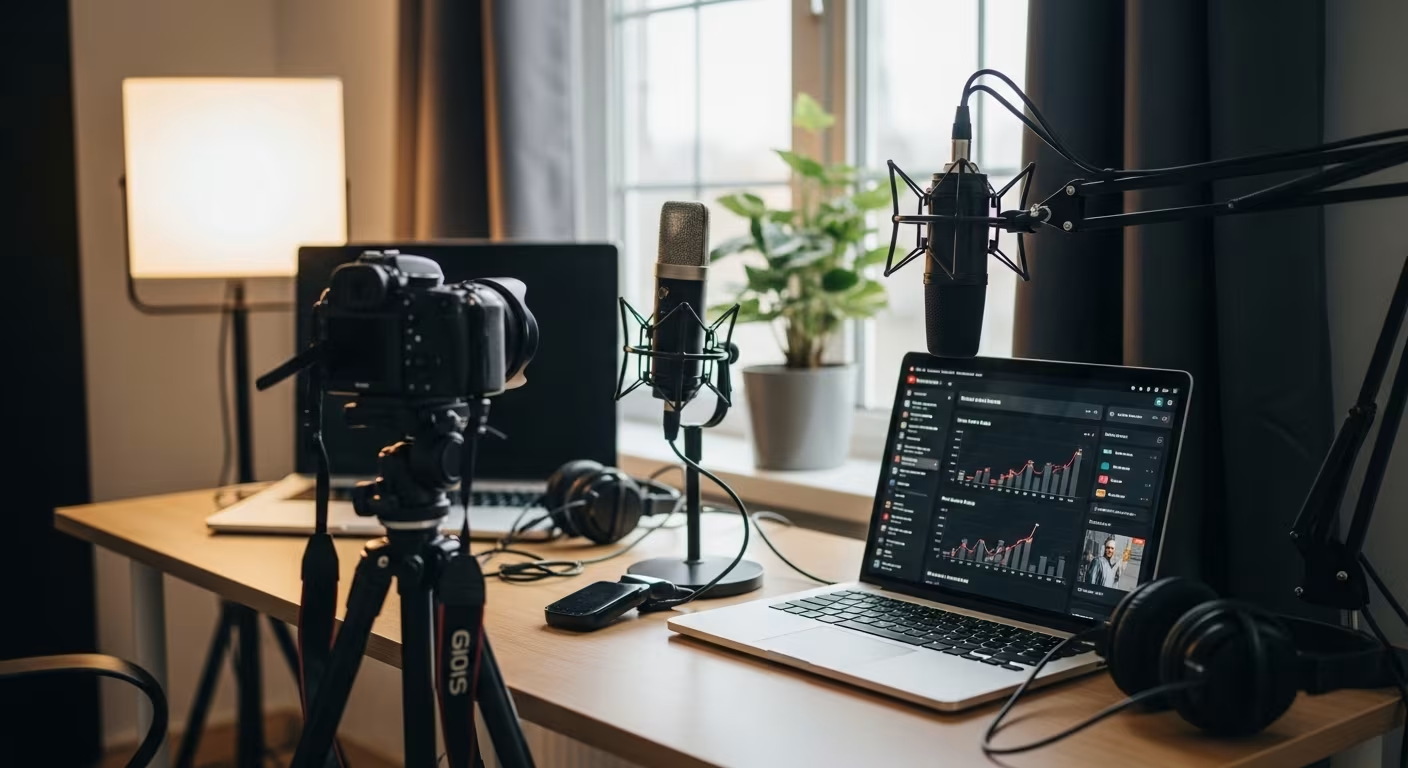
Equipment floor: a modern smartphone, a budget clip-on lavalier microphone, and natural window light are sufficient for publishable quality in most tutorial or commentary formats. The production gap between a decent mid-tier camera setup and a smartphone is smaller than the gap between a clear audio recording and a poor one. Sound quality is the first thing viewers cite when abandoning a video.
Blogging: the fastest path to search-driven income
A well-structured blog targeting specific long-tail search queries can generate affiliate and ad income faster than video or audio, primarily because the production cycle is shorter and the path from content to Google ranking is more direct.
The mechanism is simple but the execution is not: a blog post targeting a specific query can rank in Google within weeks to months if the competition is manageable. That same post can then earn affiliate commissions every time a reader clicks through to purchase — without the creator doing any additional work after the initial writing and optimization.
The trap most new bloggers fall into is writing about topics they find interesting rather than topics with demonstrable search demand. A post that nobody searches for earns nothing regardless of quality. Keyword research tools (free tier options include Google Search Console and Ubersuggest's limited free queries) help identify queries with real traffic potential before spending time writing.
Monetization progression for a blog typically looks like this:
- Months 1-6: building content library, minimal traffic, affiliate earnings measured in dollars
- Months 6-12: early search rankings, first consistent affiliate income
- Months 12-24: reaching ad network thresholds if traffic grows consistently, income diversification
- Year 2+: compounding returns as older posts mature in search rankings
The IRS treats blog income as self-employment income, which means you file a Schedule C and pay self-employment tax on net profit. The upside is that hosting costs, software subscriptions, equipment, and a portion of your home internet can be deductible business expenses. See IRS self-employment guidance for specifics on estimated quarterly tax payments, which apply once net earnings exceed $400.
Podcasting: the slowest to monetize, strongest for community
Podcasting sits at an interesting position in the content creation side hustle landscape: it has the lowest discovery surface (podcasts don't rank in Google the way blogs do, and podcast search is fragmented across Spotify, Apple Podcasts, and smaller platforms) but the highest engagement per listener. Podcast listeners who stick with a show often develop a stronger relationship with the host than YouTube viewers do.
This engagement dynamic makes podcasting excellent for selling high-ticket products, building consulting pipelines, or growing a mastermind community — but less suited to volume-based ad revenue in the early stages.
The production stack for a decent audio podcast is more accessible than it looks. A USB condenser microphone in the $80-$150 range, free recording software like Audacity, and a hosting platform that distributes to major directories are the three components needed. Video podcasts recorded on a decent webcam or camera add a YouTube presence simultaneously, which addresses the discovery problem.
Sponsorships before reaching volume thresholds are still possible through affiliate-style arrangements, where sponsors pay per conversion rather than per download. This aligns the economics for small shows while building the audience track record needed for CPM-based deals later.
Which platform fits your situation
The right platform depends on three variables: your production capacity, your income timeline, and the knowledge domain you're working in.
| Variable | YouTube | Blog | Podcast |
|---|---|---|---|
| Upfront time per piece | High (filming, editing) | Medium (writing, formatting) | Medium-Low (recording, editing) |
| Discovery mechanism | YouTube search + algorithm | Google search | Platform search + word of mouth |
| Time to first income | 12-24 months (typical) | 3-12 months (SEO-dependent) | 6-18 months |
| Best monetization | Ad revenue + products | Affiliate + ads | Sponsorship + premium community |
| Equipment cost floor | Low-Medium | Very low | Low |
A useful frame: if you have existing writing skills and a limited production budget, starting with a blog captures the compounding benefits of search traffic soonest. If you're camera-comfortable and willing to play a longer game, YouTube's subscriber retention creates more durable income once established. Podcasting makes sense when your goal is to build a high-trust community around a niche rather than to maximize passive ad income.
Many successful creators start with one platform and add a second after the first shows signs of traction — cross-posting content between a blog and a YouTube channel, for example, or turning podcast episodes into blog transcripts that can rank in search.
The knowledge domain you're covering also shapes the platform choice in ways the production discussion misses. Visual and tutorial content performs disproportionately well on YouTube — cooking techniques, software walkthroughs, gear reviews, and anything where watching someone do the thing carries more value than reading about it. Text-first topics — personal finance, legal explanations, industry analysis, how-to guides with lots of steps — tend to rank more readily in search, which favors the blog's discovery model.
Niche depth matters as much as niche breadth. A channel or blog covering "fitness" competes in one of the most crowded content categories online. The same creator covering "strength training for people over 50 with bad knees" has a smaller total audience but a far more addressable one — and sponsors in the physical therapy, supplement, and ergonomic equipment space pay premiums to reach exactly that demographic. The narrower the focus, the less competition for attention, and the more valuable each engaged reader, viewer, or listener tends to be to advertisers and sponsors.
When to consider a second platform
Adding a second platform makes the most sense when the first has demonstrated a minimum viable audience. The threshold isn't a specific subscriber count — it's evidence that your content is finding its audience and producing consistent engagement signals, however small.
Adding a second platform before reaching this threshold typically splits already scarce time and energy without proportional benefit. The audience on Platform A isn't large enough to meaningfully seed Platform B, and you're essentially starting from zero in two places simultaneously while doing neither well.
The most natural second-platform moves are:
- Blog articles converted into YouTube scripts (same research, different format)
- YouTube videos transcribed and expanded into blog posts (captures search traffic the video alone can't)
- Podcast interviews excerpted into short-form video for social discovery
- Email newsletter as the connective tissue that captures audience from all platforms
The email list deserves specific mention because it's the one owned channel in the creator toolkit. Your YouTube subscribers exist on YouTube's terms. Your blog's search traffic exists on Google's terms. An email list is portable, algorithm-independent, and remains yours regardless of what any platform decides to do with its distribution model.
The tax reality of content creator income
All income from a content creation side hustle is taxable, regardless of the source. Ad revenue, affiliate commissions, brand deal payments, and digital product sales all count as self-employment income if you're operating as an individual.
The self-employment tax applies to net earnings above $400 per year, covering Social Security and Medicare contributions that an employer would otherwise split with you. On a W-2 job, you pay half and your employer pays half; as a self-employed creator, you pay both halves — though you can deduct the employer-equivalent portion when calculating your adjusted gross income.
Quarterly estimated tax payments are required once you expect to owe more than a threshold amount in taxes for the year. The IRS Form 1040-ES covers the calculation. If this is your first year with meaningful side income, setting aside roughly 25-30% of net content revenue in a separate account and paying quarterly is the practical approach most self-employed creators use.
Building the library that pays you later
The compounding nature of content creation is real but misunderstood. A single well-targeted blog post, YouTube video, or podcast episode doesn't produce compounding returns — a library of them does. Each piece is an additional entry point for a new reader, viewer, or listener to discover the rest.
This means the early months of building a content creation side hustle function more like capital investment than labor income. You are creating assets — not earning hourly wages — and those assets appreciate in audience value over time as search algorithms reward consistent publishing histories and as social proof accumulates.
The failure mode for most aspiring creators is abandoning the library before it reaches critical mass. The typical visible result of publishing consistently for six months looks like failure: small numbers, thin income, no viral moments. The invisible result is a body of work that starts pulling in organic traffic, compounding subscriber counts, and building a searchable archive that a brand partner or course-buyer can evaluate when deciding to work with you.
Pick one primary platform. Commit to a realistic publishing cadence you can sustain for 18 months without burning out. Treat the income timeline as multi-year rather than immediate. That discipline separates the creators who eventually earn meaningful income from those who quit at month four with a half-built library and conclude the whole model doesn't work.
None of this is financial advice. Your situation depends on variables this article can't see — taxes, risk tolerance, time horizon, dependents. A fiduciary advisor can model your specific case.
Comments (0)
No comments yet. Be the first to share your thoughts!
Leave a Comment