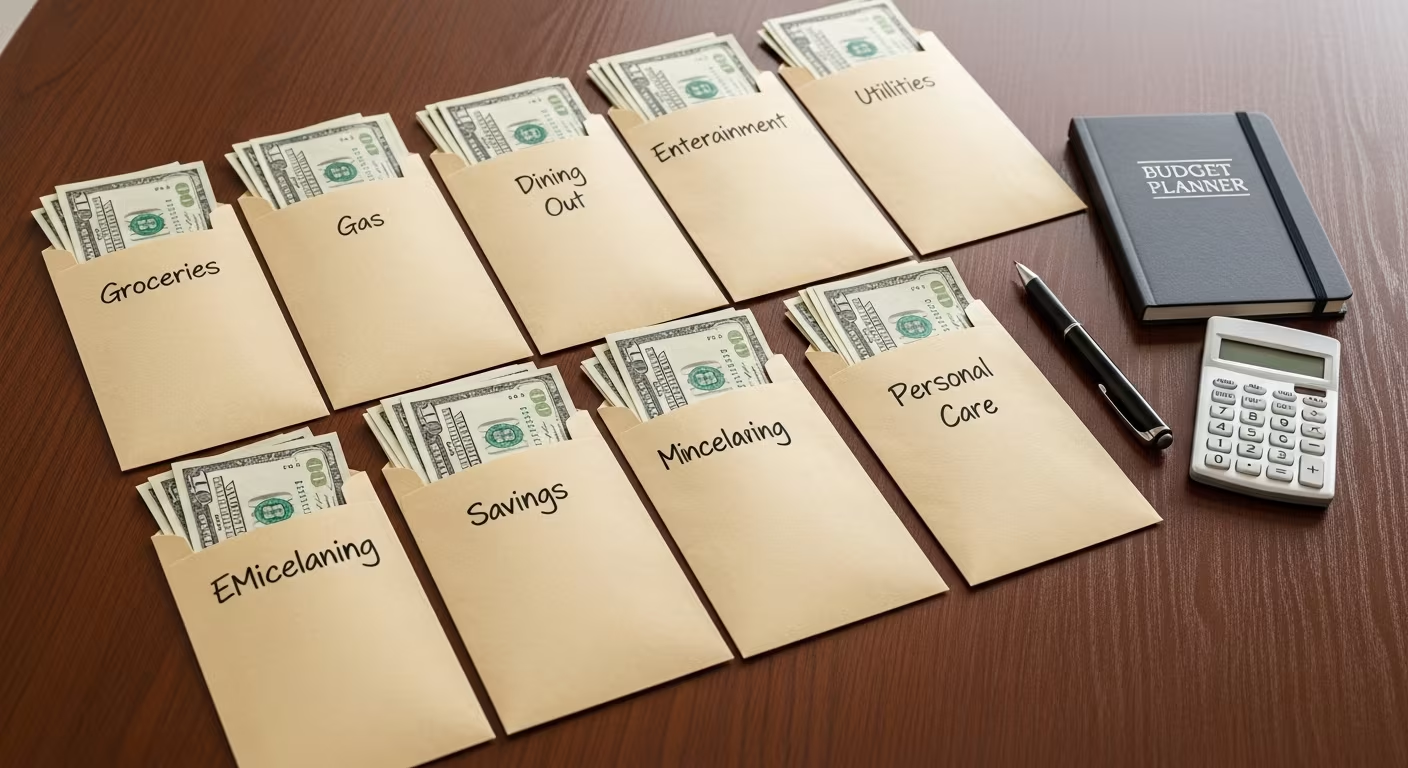
In an age of digital payments and tap-to-pay, the cash envelope system seems almost quaint. Yet this old-school budgeting method remains one of the most effective ways to control spending. By using physical cash divided into labeled envelopes, you create tangible spending limits that are impossible to ignore.
What Is the Cash Envelope System?
The cash envelope system divides your discretionary spending into categories, each represented by a physical envelope filled with cash. When the envelope is empty, spending in that category stops until the next budget period.
How it works:
- Identify spending categories (groceries, dining out, entertainment, etc.)
- Assign a cash budget to each category
- Withdraw cash and divide it into labeled envelopes
- Spend only from the appropriate envelope
- When an envelope is empty, that category is done for the month
This system forces intentional spending because you physically see and feel money leaving your hands.
Why Cash Works Better Than Cards
Research consistently shows people spend less when using cash versus cards:
The pain of paying: Handing over physical cash activates the brain's pain centers. Swiping a card doesn't trigger the same response.
Tangible limits: When you see $200 in your grocery envelope, that's your limit. Credit cards have no visible limit.
No debt risk: You can't overspend cash you don't have. Credit cards allow spending beyond your means.
Immediate feedback: Watch your envelope thin as the month progresses. Cards provide no visual feedback until statements arrive.
Setting Up Your Envelope System
Step 1: Track Current Spending
Before creating envelopes, understand where money currently goes. Track spending for 30 days across categories:
- Groceries
- Dining out/coffee
- Entertainment
- Personal care
- Clothing
- Gas/transportation
- Household items
- Miscellaneous
Step 2: Create Your Budget
Based on tracking, assign realistic amounts to each category. Be honest—if you spent $600 on groceries last month, budgeting $300 will fail.
Example monthly envelope budget:
| Category | Amount |
|---|---|
| Groceries | $500 |
| Dining out | $150 |
| Entertainment | $100 |
| Gas | $200 |
| Personal care | $75 |
| Household | $100 |
| Clothing | $100 |
| Miscellaneous | $75 |
| Total | $1,300 |
Step 3: Withdraw Cash
On payday, withdraw your total envelope budget in cash. Request specific denominations for easy division.
Step 4: Fill Your Envelopes
Divide cash into labeled envelopes. Some people use actual paper envelopes; others prefer:
- Accordion file folders
- Zippered pouches
- Specialized cash envelope wallets
- Plastic dividers in a binder
Step 5: Spend From Envelopes Only
When you shop for groceries, take the grocery envelope. When you go out to dinner, take the dining envelope. Leave cards at home to remove temptation.
Which Categories Use Cash Envelopes?
Not all expenses work with cash envelopes. Use envelopes for variable, discretionary spending:
Good envelope categories:
- Groceries
- Dining out
- Entertainment
- Coffee/drinks
- Personal care
- Clothing
- Gas (if paying inside)
- Gifts
- Household supplies
Don't use envelopes for:
- Rent/mortgage (autopay)
- Utilities (autopay)
- Insurance (autopay)
- Subscriptions
- Online purchases
Fixed bills should remain on autopay to avoid late fees and ensure consistency.
Handling Common Situations
Running Out Early
When an envelope empties mid-month, you have options:
- Stop spending: Wait until next month (teaches discipline)
- Borrow from another envelope: Move money from entertainment to groceries
- Adjust next month: If consistently running out, increase that category's budget
Leftover Money
When the month ends with cash remaining:
- Roll it over: Add to next month's envelope
- Reward yourself: Small treat for staying under budget
- Transfer to savings: Put excess in emergency fund
- Pay extra on debt: Apply to credit card or loan
Large Purchases
For purchases exceeding a single envelope's amount:
- Save across months: Set aside $100/month in a "big purchase" envelope
- Combine envelopes: Use clothing + miscellaneous for new shoes
- Use a sinking fund: Separate envelope for known future expenses
When Cash Isn't Accepted
Some situations require cards. Options:
- Track digitally: Deduct card purchases from the appropriate envelope's cash
- Set a card limit: Allow one card purchase per category monthly
- Move cash to card: Transfer equivalent cash to savings when using card
The Digital Envelope Alternative
If physical cash feels impractical, digital envelope systems exist:
YNAB (You Need A Budget): $14.99/month. Digital envelope methodology with bank syncing.
Goodbudget: Free (basic) or $8/month. Virtual envelopes without bank linking.
Mvelopes: $5.97/month. Combines envelope budgeting with bill management.
EveryDollar: Free (basic) or $17.99/month. Dave Ramsey's digital envelope app.
These apps assign every dollar to a "virtual envelope" category. While convenient, they lack the tactile spending friction of physical cash.
Pros and Cons of Cash Envelopes
Advantages
Forces discipline: Can't overspend what you don't have
Creates awareness: Physical money makes spending real
Prevents debt: No credit card charges, no interest
Simple to understand: No apps, no syncing, no technology issues
Works for any income: Effective whether you earn $30,000 or $300,000
Disadvantages
Inconvenient: Requires cash withdrawals and envelope management
No purchase protection: Credit cards offer fraud protection, extended warranties
Loses card rewards: Forgo 1-5% cashback on purchases
Security risk: Carrying cash involves theft risk
Not for online shopping: Can't use cash for digital purchases
Who Should Use Cash Envelopes?
Ideal for:
- Chronic overspenders
- People who've tried and failed other budgeting methods
- Those with credit card debt they can't stop accumulating
- Visual and tactile learners
- Anyone who loses track of card spending
Less ideal for:
- Heavy online shoppers
- People who maximize credit card rewards
- Those with strong digital budgeting habits already
- Anyone uncomfortable carrying cash
Hybrid Approaches
Many people combine cash envelopes with digital tools:
Cash for problem categories only: Use envelopes for categories where you overspend (dining out, entertainment) while using cards for controlled categories.
Weekly cash allowances: Instead of monthly envelopes, withdraw weekly amounts to prevent early-month overspending.
Cash for wants, cards for needs: Groceries, gas, and necessities go on card; discretionary spending uses cash.
Making It Stick
Week 1-2: The Adjustment Period
The first two weeks feel restrictive. You'll want to quit. Push through—it gets easier.
Month 1: Building Habits
By month's end, you'll understand your spending patterns better than ever before.
Month 3: Autopilot
Cash envelopes become routine. You'll intuitively know which envelopes have room and which are tight.
Month 6+: Financial Transformation
Long-term envelope users report reduced financial stress, eliminated debt, and increased savings.
Tips for Success
Keep envelopes organized: A designated spot (wallet, drawer, purse) prevents lost envelopes.
Track spending within envelopes: Note purchases on the envelope itself to see where money went.
Review weekly: Check envelope levels every Sunday to gauge the month's pace.
Start with fewer categories: 5-6 envelopes initially; add complexity later.
Include buffer money: A small "oops" envelope for forgotten expenses.
Involve your partner: Both partners must commit for household success.
Digital Envelope Alternatives for 2026
While the original cash envelope system uses physical cash, most transactions in 2026 are digital. Modern alternatives preserve the envelope philosophy without requiring cash:
Goodbudget: A free app that mimics physical envelopes digitally. Create virtual envelopes for each spending category and manually enter transactions. The free version supports 10 envelopes; premium ($10/month) offers unlimited envelopes and bank syncing.
YNAB: While primarily a zero-based budgeting tool, YNAB functions as a sophisticated digital envelope system. Each category acts as an envelope, and you can only spend what you have assigned.
Multiple bank accounts: Some budgeters open 3-5 checking accounts and use each as a spending envelope. Direct deposit splitting sends predetermined amounts to each account automatically.
Prepaid debit cards: Load specific amounts onto separate prepaid cards for each spending category. When the card runs out, spending stops — identical to the physical envelope principle.
When Cash Envelopes Still Win
Despite digital alternatives, physical cash remains superior in specific situations:
Grocery spending: Research consistently shows that paying with cash reduces grocery spending by 12-18% compared to card payments. The physical act of handing over bills creates psychological friction that makes you evaluate each purchase more carefully.
Dining out and entertainment: These discretionary categories are where overspending happens most frequently. A cash envelope creates a hard spending ceiling that no amount of rationalization can override.
Teaching children about money: Physical cash provides tangible, visual money lessons that apps cannot replicate. Children who learn with real money develop stronger spending awareness.
The Hybrid Approach
The most practical 2026 approach combines cash and digital: use cash envelopes for your 2-3 biggest overspending categories (typically groceries, dining out, and personal spending) and digital tracking for fixed expenses and bills. This targets the intervention where it matters most without the inconvenience of carrying cash for everything.
The Gamification Effect: Why Envelopes Work Psychologically
The envelope system works because of three psychological principles:
Loss aversion: Physically handing over cash activates the pain of paying more than swiping a card. Neuroimaging studies show that cash payments activate brain regions associated with loss, creating a natural spending brake.
Tangible scarcity: Seeing a thin envelope creates urgency and thoughtfulness. Abstract numbers in a banking app do not produce the same effect. The visual feedback of watching cash deplete forces real-time budget awareness.
Bright-line rules: The envelope system creates an absolute boundary — when the cash is gone, spending stops. No negotiations, no rationalizations, no we will make it up next month. This bright-line rule eliminates decision fatigue around discretionary spending.
Who Should NOT Use the Envelope System
The envelope system is not universal. It is a poor fit if: you make most purchases online where cash cannot be used, you receive income via direct deposit and would need extra ATM trips to get cash, you travel frequently for work, or you share finances with a partner who resists the system. In these cases, a digital envelope alternative or the 50/30/20 rule may be more practical while still providing spending boundaries.
Starting point: If the envelope system interests you, start with just two envelopes for one month — groceries and dining out. These are the categories where most overspending occurs. Once you see results, expand to additional categories. Starting small prevents overwhelm and builds confidence in the system before committing fully.
Getting Started This Week
- Today: Track all spending for the next 7 days
- Day 7: Create your category list and budget amounts
- Day 8: Withdraw cash and prepare envelopes
- Day 9: Start using cash for every discretionary purchase
- Day 30: Evaluate and adjust for next month
The cash envelope system works because it's impossible to cheat. When the cash is gone, it's gone. For anyone struggling with overspending, this tangible approach to budgeting can be the breakthrough that finally creates financial control.
Comments (0)
No comments yet. Be the first to share your thoughts!
Leave a Comment