
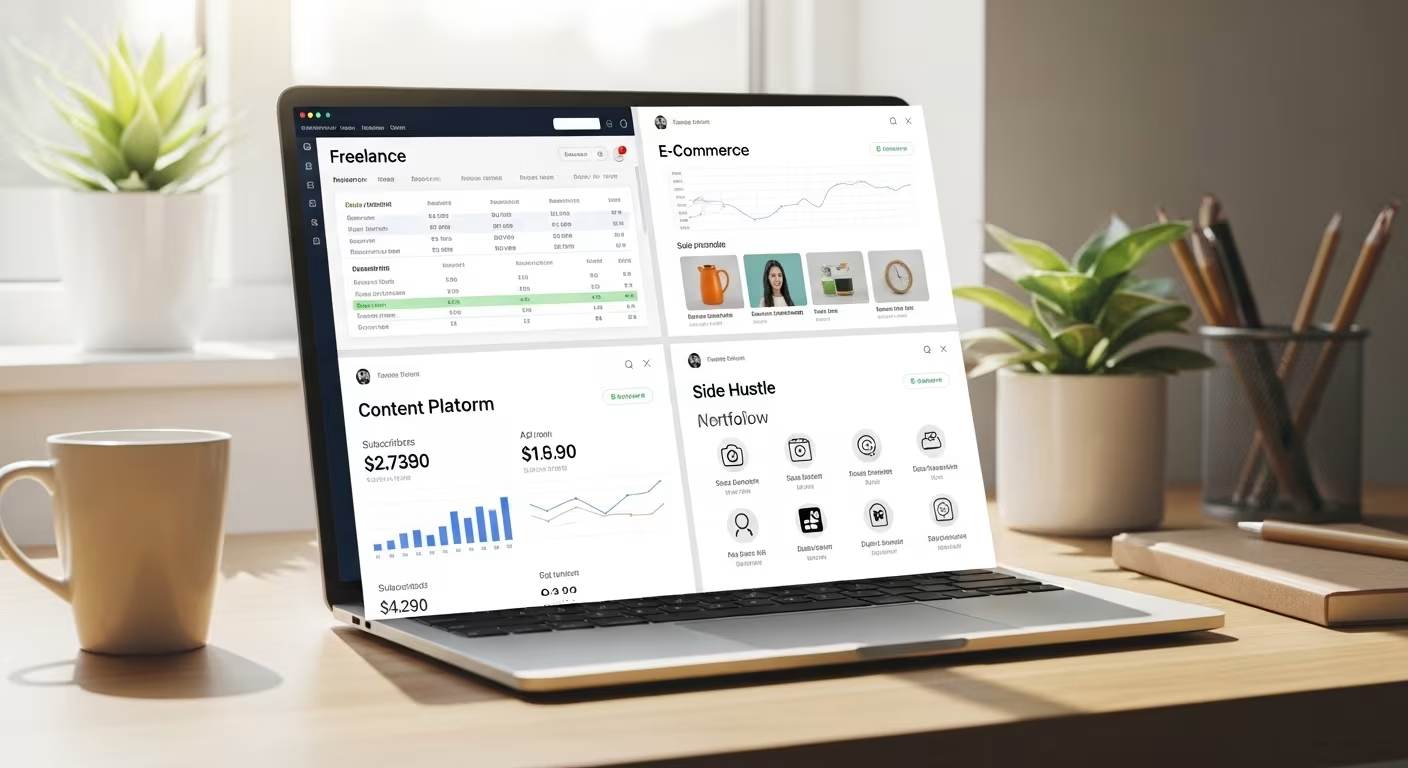
Best Side Hustles That Actually Make Money in 2026
The phrase "side hustles" gets thrown around a lot, but most articles about them waste your time on theoretical possibilities. This guide focuses on what is actually working right now — verified income sources that real people are using to generate $500 to $5,000 per month alongside their primary income.
Whether you are trying to pay off debt, build an emergency fund, save for a house, or simply want more financial flexibility, a well-chosen side hustle can meaningfully change your financial trajectory. The key is picking one that matches your skills, schedule, and risk tolerance — and then actually starting.
Why Side Hustles Matter More Now
The economics of full-time employment have shifted. Wages in many sectors have not kept pace with housing costs, food inflation, or healthcare expenses. A second income stream — even a modest one — provides a buffer that a single income simply cannot.
Beyond financial resilience, side hustles often develop skills, build networks, and create options that a conventional job cannot provide. Many people who started freelancing or consulting on the side eventually turned it into their primary income — not because they planned to, but because the opportunity grew faster than expected.
In 2026, the barriers to starting are lower than at any point in history. Remote work infrastructure, digital payment tools, and global freelance platforms mean you can start earning within days of deciding to try.
Freelance Skills: The Highest-Earning Category
For most people with a marketable professional skill, freelancing is the fastest path to meaningful side income. The ceiling is high and the startup costs are essentially zero.
Writing and content creation: Businesses of all sizes need blog posts, website copy, email newsletters, case studies, and social media content. Competent writers charge $0.10 to $0.50 per word for general content; specialized writers (technical, medical, legal, finance) command $0.50 to $2.00 per word or more.
Starting platforms include Upwork, Freelancer, ProBlogger Job Board, and direct outreach to businesses. A portfolio of three to five samples, even unpublished ones you wrote for practice, is enough to get started.
Web design and development: Small business websites are an enormous ongoing need. A basic WordPress or Squarespace site can command $500 to $3,000. Custom development on platforms like Webflow, or full-stack development work, scales to $5,000 to $30,000+ per project.
Developers who specialize in a niche — e-commerce, restaurants, medical practices — often find it easier to get clients because they can speak the client's language.
Graphic design: Logo design, social media graphics, marketing materials, and brand identity work are in constant demand. Platforms like 99designs, Fiverr, and direct agency relationships all provide paths to clients. Experienced designers earn $50 to $150 per hour for freelance work.
Video editing: As video content consumption has exploded, so has demand for competent editors. YouTubers, course creators, social media teams, and businesses all need video edited regularly. Rates range from $25 to $100 per hour, with long-term client relationships providing predictable income.
Service-Based Local Hustles
Not every side hustle is digital. Skilled hands-on work often pays extremely well per hour, with low competition from automation.
Mobile detailing: A quality car detail costs $150 to $400 and takes two to four hours. The startup cost for professional supplies is roughly $200 to $500. A single booking on a Saturday or Sunday recovers that investment. Regular clients become recurring revenue — cars need detailing every three to four months.
Pressure washing: A basic pressure washer costs $200 to $600. Driveways, decks, and siding cleaning typically runs $150 to $400 per job, depending on size. A Saturday of pressure washing can generate $500 to $1,200 in a suburban market.
Lawn care and landscaping: Basic lawn maintenance — mowing, edging, blowing — generates $40 to $80 per visit per lawn. With 10 regular clients on a bi-weekly schedule, that is $400 to $800 per month. Add seasonal services like leaf cleanup, mulching, or snow removal for additional revenue.
Handyman services: People who can hang shelves, patch drywall, fix leaky faucets, install light fixtures, and handle basic home repairs are in constant demand. Handyman rates range from $50 to $100 per hour in most markets. Building a reputation in a neighborhood generates word-of-mouth referrals that sustain the business with minimal marketing.
Online Income: Platforms That Pay
Several platforms have created legitimate, scalable income opportunities that did not exist a decade ago.
Tutoring and teaching: Platforms like Wyzant, Tutor.com, and Varsity Tutors connect tutors with students for K-12 subjects, standardized test prep, and college-level coursework. Tutors earn $25 to $100 per hour depending on subject and level. Math, science, coding, and foreign languages command the highest rates.
Online teaching platforms like Outschool (for classes to young learners), Cambly (for English conversation practice), and Preply (for language instruction) offer flexible scheduling and immediate access to students globally.
Selling on Etsy or eBay: Handmade goods, vintage items, and curated resale all have viable markets on these platforms. Resellers who develop sourcing systems — thrift stores, estate sales, liquidation auctions — can build reliable monthly income of $500 to $2,000 or more. Physical goods require time for sourcing, photography, listing, and shipping, but the skills are learnable.
Print-on-demand: Platforms like Printify, Printful, and Redbubble allow designers to upload artwork that gets printed on T-shirts, mugs, phone cases, and other items. The platform handles production and shipping. You earn a margin on each sale. This model is passive once the designs are created, though building a catalog that sells consistently takes time and testing.
User research and surveys: While not a full income source, platforms like UserTesting.com, Respondent.io, and Prolific pay $10 to $200 per session for feedback on products, websites, and research studies. UserTesting pays $10 per 20-minute video session; Respondent.io hosts studies that pay $50 to $200 for 30 to 90-minute sessions. This works best as supplemental income alongside a primary hustle.
Knowledge-Based Hustles
If you have expertise in a field — whether from your career, education, or self-taught experience — you may be able to monetize it more directly than traditional freelancing allows.
Consulting: Consultants charge for expertise and advice rather than execution. A marketing professional, accountant, HR specialist, or operations manager can consult for small businesses at rates of $75 to $250 per hour. Even five consulting hours per month generates $375 to $1,250.
Finding consulting clients typically starts with your existing network — former colleagues, employers, and professional contacts who know your work. LinkedIn outreach and speaking at local business events also generate leads.
Online courses: If you have expertise in something teachable, platforms like Udemy, Teachable, and Kajabi allow you to package that knowledge into a course. A well-made course can generate passive income for years. The initial investment is significant — creating a quality course takes 20 to 100 hours — but the income can be truly passive once the course is built and marketed.
Coaching: Life coaching, career coaching, business coaching, fitness coaching, and financial coaching are all markets where credentialed and experienced practitioners can charge $100 to $500 per hour or more. Certification programs exist for most coaching niches, though your reputation and results matter more than credentials in most cases.
Delivery and Gig Economy Work
Delivery and transportation gig work has matured into a reliable, flexible income source for millions of people. The ceiling is lower than skilled freelancing, but the barrier to entry is extremely low.
Food and grocery delivery: DoorDash, Uber Eats, Instacart, and similar platforms allow you to work on your own schedule with no advance commitment. Earnings vary significantly by market and hours worked, but drivers in active urban and suburban markets often earn $15 to $25 per hour after factoring in tips, bonuses, and vehicle costs.
Understanding the actual economics requires accounting for gas, vehicle wear, and self-employment taxes. The effective net hourly rate after these costs is typically $10 to $18 — still meaningful for flexible, on-demand work.
Rideshare driving: Uber and Lyft offer higher earning potential per hour than food delivery in most markets, particularly during surge periods (Friday and Saturday nights, major events, airport rushes). Strategic drivers who work peak hours and understand surge patterns can earn $20 to $35 per hour gross.
Renting assets: Platforms like Turo (cars), Neighbor (storage space), Fat Llama (equipment), and Airbnb (rooms or entire homes) allow you to monetize assets you already own. Turo hosts with desirable vehicles in active markets can earn $500 to $2,000 per month with minimal time investment.
Choosing the Right Hustle for You
The best side hustle is one you will actually do consistently. A few questions to guide your decision:
What do you have that others need? Skills, time, equipment, or space — any of these can be monetized. Start with what you already have rather than what requires significant investment.
How much time can you realistically commit? A demanding primary job with family responsibilities leaves different room than a 9-to-5 with free evenings. Match the hustle to your actual available hours, not your aspirational schedule.
What is your income target and timeline? If you need $500 this month, gig work or local service businesses can deliver quickly. If you are willing to invest six months of building for scalable passive income, a course or print-on-demand catalog makes more sense.
Can you sustain it for 6 months? Most side hustles take two to six months to build momentum. If you are unlikely to sustain something through a slow early period, choose a hustle that generates income immediately.
For tax guidance on self-employment income from side hustles, the IRS Self-Employed Individuals Tax Center explains quarterly estimated taxes, the self-employment tax, and deductible business expenses.
Freelancer resources and community support are available through Freelancers Union, which also provides access to benefits typically unavailable to independent workers.
The Income You Are Not Using
Most people have more earning capacity than their current situation uses. A professional skill, an empty parking space, a car sitting idle on weekends, knowledge that others would pay to learn, or weekend hours with no committed plan — all of these represent latent income waiting to be activated.
The hardest part is not the hustle itself. It is deciding to start, picking something specific, and working through the awkward early period before income feels real. Every person earning $1,500 a month from a side hustle was once at $0 wondering if it would work.
A common mistake is waiting until conditions are perfect before starting. There is no perfect timing. The skills you develop, the clients you attract, and the systems you build all require time — and that time starts now, not after some threshold of readiness. People who earn substantial income from side hustles are not more talented than those who do not. They simply started earlier and kept going through the awkward early months when results were minimal.
Track your income and expenses from day one. Side hustle income is self-employment income and is taxable. Setting aside 25% to 30% of net earnings for taxes prevents a painful surprise at tax time. Many self-employed people make quarterly estimated tax payments to avoid underpayment penalties.
Start with one hour. Pick the option most obviously matched to your skills and situation. Make one offer, complete one gig, post one listing. Income from a side hustle is not theoretical — it is just a few decisions away for anyone.
The IRS requires self-employment income to be reported even if you do not receive a 1099. Keep a simple income log from day one — a spreadsheet with dates, clients, and amounts is sufficient. This simplifies tax filing and makes it easy to see whether your hustle is actually profitable after expenses.
None of this is financial advice. Your situation depends on variables this article can't see — taxes, risk tolerance, time horizon, dependents. A fiduciary advisor can model your specific case.
Comments (0)
No comments yet. Be the first to share your thoughts!
Leave a Comment