
Canada’s home insurance safety net is starting to show strain as the costs associated with extreme weather events increase. Although competition remains reasonably healthy and Canada has avoided the deep coverage deserts seen in parts of the United States, insurers are adjusting policies in a variety of ways to manage rising losses.
Insurers have commonly responded by raising premiums—often well above the rate of inflation—but they are also increasingly narrowing coverage, increasing deductibles, and reducing their footprint in higher-risk areas. These shifts reflect an industry adapting to mounting climate-related losses and the need to preserve financial resilience.
As Morningstar DBRS observed in a November report: “The Canadian market is showing early signs of coverage tightening.”
Insurers trim exposure in severe weather zones
Rather than leaving markets entirely, many insurers are rebalancing where they write new business. Some have reduced their concentration in neighbourhoods and regions that regularly face severe weather.
“We’ve rebalanced in some of the higher severe weather regions,” TD chief executive Raymond Chun said during the bank’s most recent earnings call. He explained that the company is targeting growth in areas with lower catastrophe risk after moderating its presence where losses tended to concentrate.
Ask MoneySense
Have a personal finance question? Submit it here.
Definity Financial Corp., which after a recent $3.3‑billion acquisition ranks as Canada’s fourth‑largest property and casualty insurer, has also shifted new business away from areas with higher catastrophe exposure. Chief executive Rowan Saunders described efforts to “churn the portfolio” by steering growth toward lower‑exposure regions and reducing concentration in high‑peril areas. He said the major changes have been implemented, though portfolio management remains an ongoing task.
Pressure to rebalance intensified after costly recent years, including record insured losses in 2024. Those losses highlighted how severe weather can concentrate risk for insurers and forced many to rethink where and how they underwrite residential policies.
What rising insurance losses mean for homeowners
TD’s analysis notes that average personal property losses from 2020 to 2024 were nearly double the previous comparable period, and catastrophic weather events averaged roughly 15 per year, compared with about two per year in the 1980s. Those trends put sustained pressure on insurers’ loss ratios.
“Growing insured personal property losses are placing considerable strain on Canada’s home insurance sector,” said economist Likeleli Seitlheko in TD’s report. The industry response has included higher deductibles for certain perils—sometimes reaching into the thousands of dollars—along with narrower coverage and, in some cases, the outright unavailability of insurance for particular risks.
For homeowners, that means higher out‑of‑pocket costs for common perils and fewer guarantees that all types of damage will be covered. In the most exposed areas, some perils may no longer be offered in standard policies at any price.
Coverage gaps persist despite growing flood risk
Flood coverage was introduced in Canada only about a decade ago and remains uneven, especially in higher‑risk locations. Public Safety Canada identifies Quebec as having the largest number of properties at risk of flooding, followed by Ontario and British Columbia.
The Insurance Bureau of Canada estimates as many as 1.5 million households—roughly 10% of Canadian households—cannot obtain flood insurance. For those who can, flood protection can be expensive, adding substantial amounts to annual premiums in some cases.
Researchers such as David Nickerson at Toronto Metropolitan University caution that industry availability claims can overstate what is effectively accessible. He argues that while insurers may claim flood insurance is available to a large share of Canadians, practical access can be far lower because underwriters avoid or limit coverage in specific high‑risk pockets.
Part of the problem is incomplete or outdated flood mapping, which makes it difficult to assess and price risk accurately. The federal government has begun investing in mapping upgrades to help address that data gap and guide better planning and underwriting decisions.
Industry absorbs shocks while consumers pay more
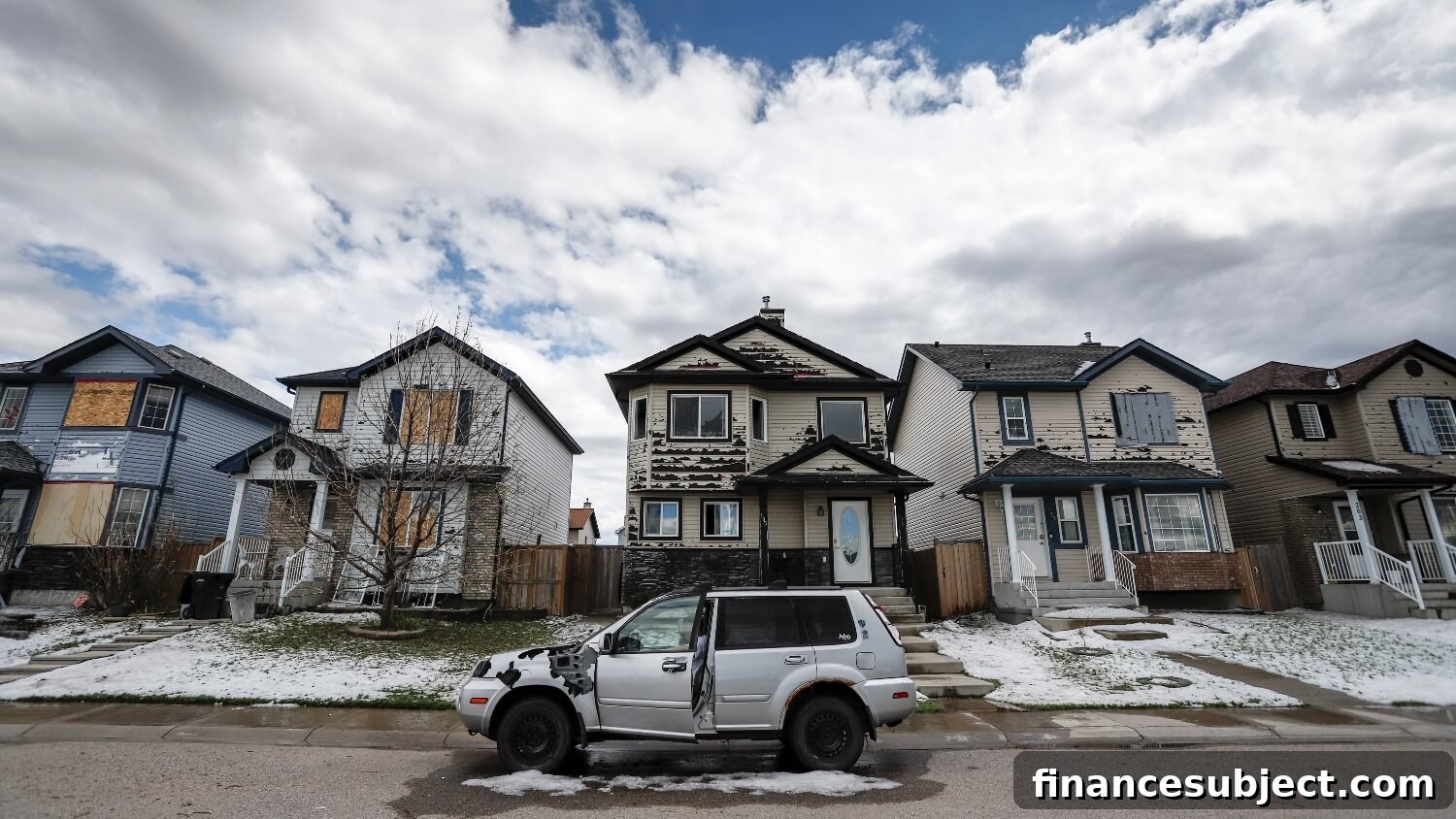
Even with multiple data sources, insurers can be surprised by concentrated events. TD’s analysis pointed to the 2024 Calgary hailstorm as an example of a single event driving very large losses and prompting insurers to pull back in affected markets to rebuild reserves.
Alberta was singled out for significant claims activity in 2024, where events such as a multi‑billion‑dollar hailstorm and a costly wildfire pushed industry operating costs well above premium income for the year. Those kinds of losses test insurers’ balance sheets and lead to corrective actions such as rate increases and underwriting tightening.
Nevertheless, industry observers say Canada’s insurance sector remains broadly stable. Nadja Dreff of Morningstar DBRS described 2024’s losses as a stress test that insurers largely managed, albeit by raising premiums and tightening personal lines coverage—measures that have direct consequences for consumers.
“From a consumer perspective, the picture is less encouraging,” Dreff said. “To absorb these losses, insurers have increased premiums on personal lines, and that trend is likely to continue.”
Rising premiums reflect mounting climate costs
Statistics Canada data show combined home and mortgage insurance costs rose 31% between 2021 and 2025, outpacing overall inflation. Regions that experienced higher claim volumes saw even steeper increases—for example, averages reported for British Columbia and Alberta were substantially higher than the national rate over that period.
Insurers face a difficult balance: they must remain financially viable while providing coverage that homeowners need. Many experts argue that broader societal investment in climate resilience—retrofitting homes, adopting resilient building codes, and avoiding construction in high‑risk flood zones—is the long‑term way to reduce costs and improve insurance availability.
The Insurance Bureau of Canada and industry stakeholders have urged stronger measures to build resilience. “We need to slow the worsening trend and take a serious approach to creating a more resilient country,” said Liam McGuinty, IBC’s vice‑president of federal affairs. That means not only avoiding development in flood‑prone areas but also building and repairing homes to withstand risks such as hail and wildfires.
As extreme weather becomes more frequent and severe, those costs are likely to continue rising, and the burden will largely fall on policyholders through higher premiums and reduced coverage unless broader mitigation and adaptation efforts are undertaken.
Newsletter
Get free MoneySense financial tips, news & advice in your inbox.
Read more about insurance:
- Term vs. permanent life insurance: How to choose what’s right for you
- 42% of Canadians don’t have life insurance—are you one of them?
- The biggest car insurance myths, according to experts
- Do you need long‑term care insurance?