
Because I receive many complimentary review copies of finance books, it’s rare that I order one from Amazon — let alone three. Yet I recently bought three new releases from influential authors who published books within weeks of one another, and I wanted to read each for different stages of the investing journey.
The first is essential reading for retirees and those approaching retirement: William Bengen’s A Richer Retirement, the long‑awaited update to his classic work on the widely cited 4% Rule, originally published for advisors as Conserving Client Portfolios During Retirement. Bengen coined the term SAFEMAX to describe the withdrawal rate that lets a retiree spend a stable percentage of their portfolio each year, adjusted for inflation, without depleting assets over a 30‑year horizon.
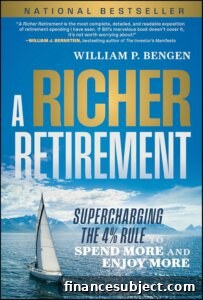
Technically, Bengen’s original “4% Rule” can be interpreted closer to 4.7% depending on assumptions, but his new book — at just under 250 pages including useful appendices — covers a range of refinements to reduce the risks of inflation, deep bear markets, and unexpectedly long lives. The book is aimed at ordinary investors but remains somewhat technical, with numerous charts and tables that financial professionals will appreciate.
After reading Bengen’s careful analysis, my takeaway is that the original 4% Rule remains a sound starting point for retirees planning annual withdrawals. Lower rates such as 3.5% or 3% increase safety for those who expect extreme longevity or who want to preserve a larger estate, and some very risk‑averse advisers have even proposed much lower rules for particular circumstances. Conversely, withdrawing 6% or 7% can be workable when markets and interest rates cooperate, and many retirees naturally adjust withdrawals by cutting back during downturns and spending more in strong markets.
It’s important to remember that any withdrawal guideline applies mainly to investment portfolios — whether held in tax‑deferred accounts, tax‑exempt accounts, or taxable accounts. Canadian retirees often have additional income sources such as the Canada Pension Plan (CPP), Old Age Security (OAS), and employer pensions. Those without large defined‑benefit plans but with significant savings in RRSPs or TFSAs can consider partially or fully converting savings into lifetime income by purchasing annuities — a strategy discussed in Moshe Milevsky’s book Pensionize Your Nest Egg and in practical articles about timing annuities.
Making money in any market
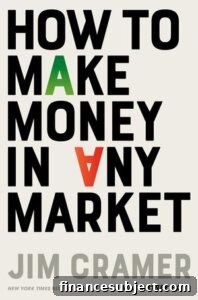
Jim Cramer’s How to Make Money in Any Market is more controversial. Cramer — known as the outspoken host of Mad Money and a stock‑picking personality on Squawk on the Street — draws both praise and scorn. I don’t watch his TV show, but I often listen to his podcasts while walking or at the gym. He’s entertaining, bullish on specific names at times, and unapologetic about spotlighting big winners like Nvidia.
True to form, Cramer devotes a chapter to that high‑profile call, and he shares success stories from listeners who profited handsomely. Yet his critics, often staunch indexers, argue that consistent stock picking to beat the market is nearly impossible over the long term. Cramer himself counsels caution: he recommends that new investors put their first $10,000 (US) into an S&P 500 index fund and suggests that at least half of a portfolio should be indexed.
Where I differ with Cramer is his advocacy for concentrating the active half of a portfolio into just five stocks. That degree of concentration — roughly 10% of total assets in each pick — exposes investors to significant single‑name risk. While the book offers practical guidance on finding secular growth stocks, including the use of modern AI tools to research companies, most retail investors should weigh concentration carefully and maintain diversification in their overall allocation.
Also read
Canada’s best dividend stocks
How not to invest
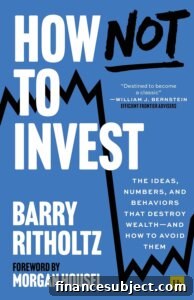
The third book I ordered — Barry Ritholtz’s How Not to Invest — is a nearly 500‑page examination of the common mistakes investors make. Readable and well‑organized, it’s arranged into four parts: Bad Ideas, Bad Numbers, Bad Behavior, and Good Advice. Ritholtz marshals examples of failed predictions, behavioral pitfalls, and the temptation to chase hot stocks or time the market.
Ritholtz is firmly pro‑index for the portfolio core. He lists five advantages of indexing — lower costs and taxes, ownership of all winners, superior long‑term performance, simplicity, and reduced harmful behavior — and recommends a core‑and‑satellite approach: a large, low‑cost index core (he suggests around 70%) complemented by a smaller satellite allocation for active bets (around 30%). He also recognizes the value of a modest “mad‑money” pocket of 3% to 5% for investors who want to experiment without jeopardizing long‑term results.
What resonated most was his practical emphasis on limiting costs, resisting sensational predictions, and using broad, market‑cap‑weighted ETFs so that growing companies naturally occupy a larger share of your portfolio over time. For many investors, especially those without the time or temperament to research individual names, indexing offers the best path to steady, long‑term results and fewer costly mistakes.
If you plan to read one of these three for yourself or as a gift, retirees should start with Bengen’s book for withdrawal and longevity planning, while those in mid‑career or building wealth may find Ritholtz’s lessons on behavior and indexing most useful. Cramer’s book suits readers who enjoy active idea generation and can tolerate concentrated positions as part of a diversified plan.
Finally, I recently received a review copy of David Chilton’s new edition of his classic financial novel, The Wealthy Barber. It remains an excellent primer for young investors just starting out, and I look forward to revisiting its timeless lessons on saving, budgeting, and the basics of investing.
Newsletter
Get free MoneySense financial tips, news & advice in your inbox.
Read more Retired Money:
- Why retirement planners are getting defensive
- How financial journalists plan their own retirement
- How to allocate a RRIF for secure income in retirement
- Why “unretirement” may be the fate of so many Canadians