
New regulations governing tipping prompts and price displays at grocery retailers came into force across Quebec on Wednesday, May 7. The provincial government says the changes are intended to make shopping simpler and more transparent for consumers.
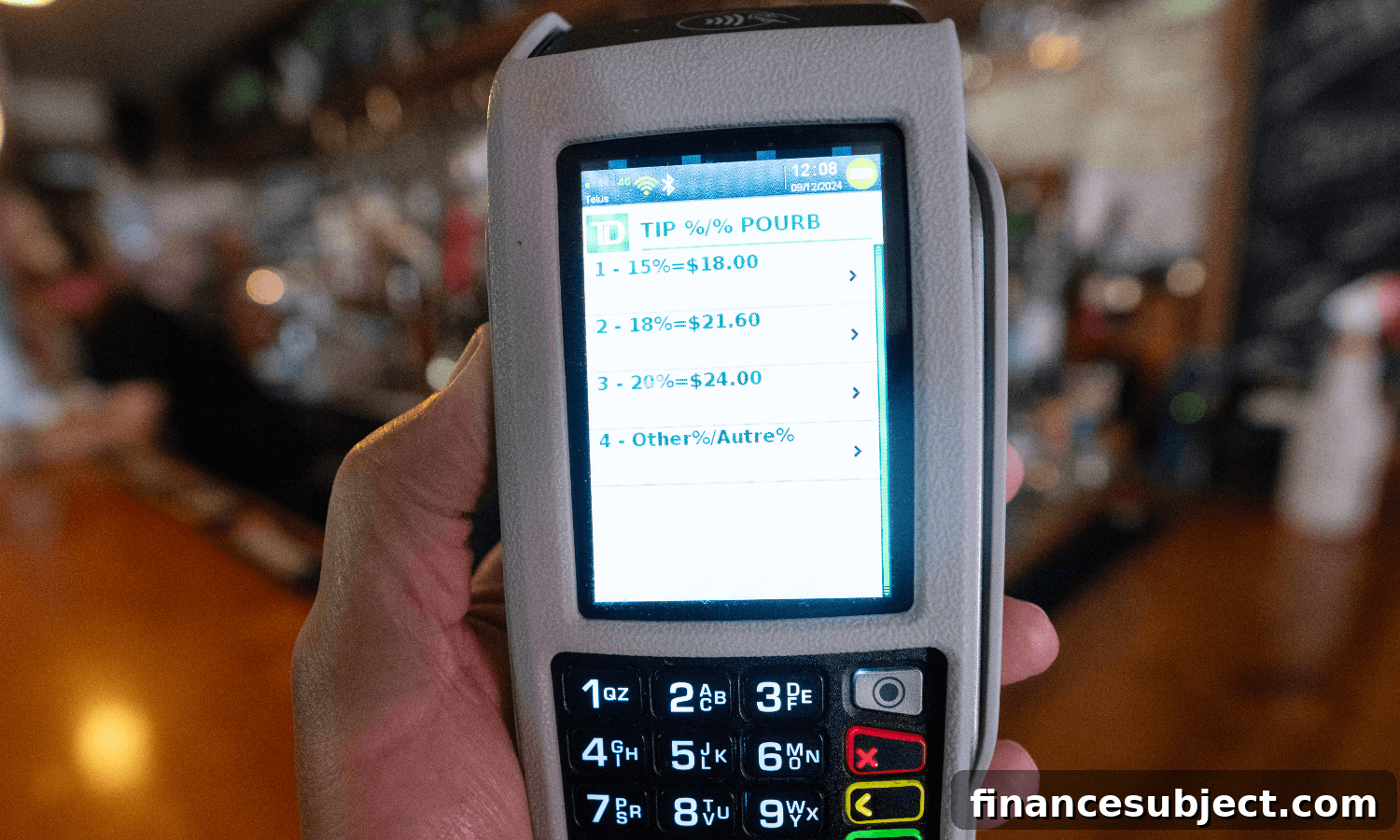
Under the new rules, any suggested tipping options displayed at point-of-sale terminals must be presented in a neutral and uniform way so customers are not prompted or pressured to leave larger tips. Terminals may no longer calculate suggested tip amounts based on the total including taxes; suggested tip percentages must be applied to the pre-tax purchase price.
For example, a 15% suggested tip on a $100 purchase must be calculated from $100, not from the taxed total such as $114.98 that includes federal and provincial sales taxes.
Justice Minister Simon Jolin‑Barrette, who is responsible for consumer protection, said the measures are designed to remove unnecessary annoyances for shoppers and to protect household budgets at a time when “every dollar counts for Quebec families.” “Our government is taking action to protect Quebecers’ wallets,” he added.
Rankings
Canada’s best credit cards for groceries
Food retailers must provide more details on store displays
In addition to the tipping changes, grocery stores and any retailer that sells food — including convenience stores — must provide clearer pricing information on product displays. Retailers are now required to show the unit price (such as price per 100 grams or per litre) and to clearly indicate the price that applies to customers who are not members of a store’s loyalty or rewards program.
The province has also adjusted an existing pricing accuracy policy: the threshold for receiving a free product when the checkout price exceeds the advertised price has been raised from $10 to $15. This pricing error policy, originally introduced in 2001, now applies to a broader range of transactions.
Michel Rochette, president of the Retail Council of Canada’s Quebec branch, said customers should notice relabelling in stores, but updating labels is a significant operational task. “In any given store you can have 30,000 to 40,000 different products, so changing labels is a major undertaking,” he said.
Officials with the province’s consumer protection agency have also introduced implementation criteria beyond the text of the law, extending the new display requirements to websites, mobile apps and printed flyers. Those additions will require retailers to update digital and printed advertising as well as in-store signage, a change retailers say will take additional time and effort.
Rochette noted the industry will need flexibility as it reprograms advertising systems and reconfigures communications to meet the expanded scope of the rules.
The onus is on restaurants to update payment terminals
The responsibility for complying with the tipping regulations falls to the merchant. In many cases, point-of-sale terminals must be reprogrammed or replaced so suggested tip calculations reflect pre-tax amounts. Quebec’s restaurant owners association has advised its members that they are responsible for ensuring their terminals conform to the new rules, even if an outside company manages their payment systems.
Some consumers welcomed the clarification. Nathalie Guy, on her lunch break in downtown Montreal, said tipping had escalated in recent years, particularly during the pandemic when debit and credit became the norm. She described occasions where she felt compelled to tip while making routine purchases and hopes the new rules will reduce pressure on customers.
“As long as it’s fair and left to the customer’s discretion, that’s what matters,” Guy said.
Karine Grondin, finishing a meal in a food court, said she supports the changes. “Now, everywhere you go you get asked for a tip,” she said. “It should be up to each person to decide, and it shouldn’t be calculated on an amount that includes taxes.”
Speaking to reporters in Quebec City, Minister Jolin‑Barrette said the goal of the revised display rules is to give shoppers clearer information so they can make informed purchasing decisions. He noted that in some stores the unit price was previously difficult to read, and that the new rules require retailers to show the regular price, the discounted price, the unit price and the price per measure in a straightforward way.
The legislative changes were introduced last fall and received unanimous approval in the National Assembly in November. Retailers will now work through the technical and logistical steps needed to update pricing labels, digital listings and point-of-sale terminals so consumers benefit from clearer, fairer pricing and tipping practices.
Newsletter
Get free MoneySense financial tips, news & advice in your inbox.
Read more about shopping:
- How much should you tip at restaurants in Canada?
- 5 inexpensive travel destinations while the Canadian dollar is weak
- If you want to buy Canadian, you’ll need to do your research
- The best rewards credit cards in Canada
- Best EVs in Canada