
Featured RRSP Accounts
EQ Bank Retirement Savings Plan

Build your retirement savings with 1.50% interest, tax-deferred contributions and no monthly fees.
Registered 1-Year GIC

Earn a guaranteed 2.75% in your RRSP when you lock in for one year.
Best RRSP rates

Check our ranking of the best RRSP accounts and rates available in Canada.
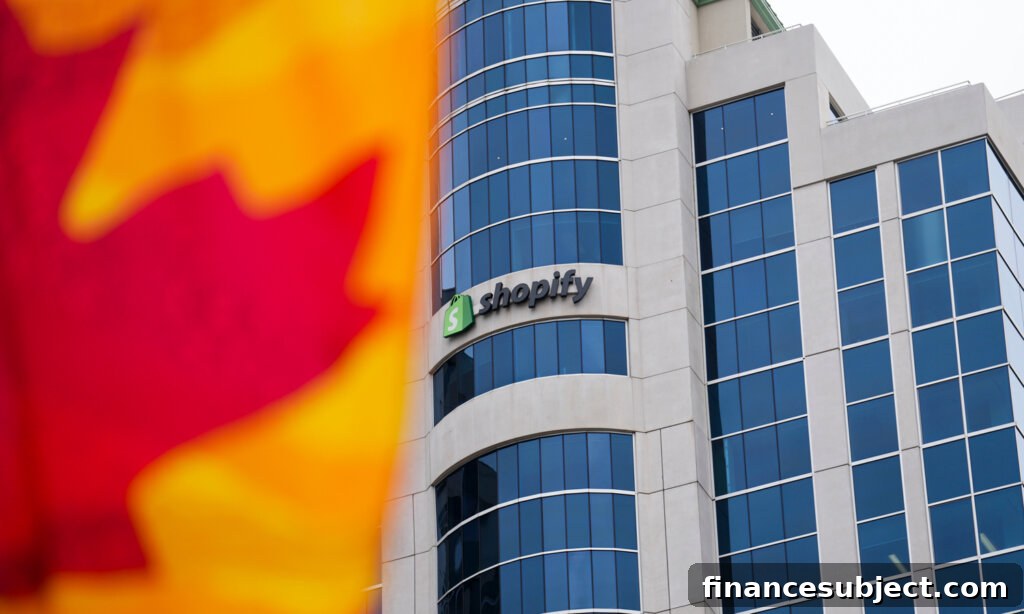
Shopify to move its U.S. listing from NYSE to Nasdaq
Shopify Inc. has announced it will move its U.S. stock listing from the New York Stock Exchange to the Nasdaq effective March 31. The company says this change will not affect its Toronto Stock Exchange listing and that its SHOP ticker will remain unchanged.
Shopify did not state a formal reason for the switch. Earlier regulatory filings showed Shopify added a U.S. address alongside its Canadian headquarters for the first time, and some analysts suggested the change could help the company qualify for additional U.S. indexes. Shopify described the update as aligning its disclosures with other software companies.
Return to menu.

Google agrees to buy cybersecurity startup Wiz for $32 billion
Google announced a proposed $32 billion acquisition of Israeli-born cybersecurity company Wiz, a move that would be the largest acquisition in Google’s history if it receives regulatory approval. The all-cash transaction would fold Wiz into Google Cloud, reinforcing Google’s push into cloud computing and cloud security amid rising demand driven by artificial intelligence workloads.
Why Wiz matters
Wiz, founded by four former colleagues who served together in the Israeli army, has quickly grown into a prominent cloud-security provider. The company, launched in 2020, is on track for roughly $1 billion in revenue and provides tools that protect data stored and processed in large cloud data centers. Wiz’s capabilities align closely with enterprise needs as organizations increasingly adopt cloud and AI technologies.
Google’s strategic rationale
For Google Cloud, acquiring Wiz would expand its security offerings and potentially reduce costs for customers, according to Google executives. The deal also signals intensified competition with Microsoft and Amazon for cloud-market share, particularly as companies race to provide the infrastructure and tools needed for large-scale AI projects.
Regulatory and market reaction
Investors reacted cautiously to the announcement, with Alphabet shares declining on the day the deal was announced. Regulators are expected to closely scrutinize the acquisition for antitrust implications, reflecting broader scrutiny of Big Tech deals in recent years. Google and Wiz expect the transaction to close in 2026 if they obtain the necessary approvals and meet the conditions outlined in the agreement.
Return to menu.

Telus and Nvidia plan a “sovereign AI factory” in Quebec
Telus and Nvidia announced plans to build a so-called “sovereign AI factory” in eastern Quebec that will provide Canadian businesses and researchers access to high-performance AI infrastructure while keeping data within national borders. The initiative aims to ensure secure, locally hosted AI compute resources for training and deploying models.
Infrastructure and energy
Telus plans to deploy Nvidia’s latest AI processors at a Rimouski, Quebec data center, with initial capacity to include roughly 500 GPUs. The company says the site will be powered almost entirely by renewable energy from Hydro-Québec and will use natural cooling to reduce water consumption compared with typical data centers.
Scale and intent
Telus envisions scaling GPU capacity to tens of thousands over time, depending on demand. The company also aims to become an official Nvidia cloud partner in North America, which would provide tighter integration with Nvidia’s software and engineering resources.
Return to menu.
Nvidia unveils Rubin AI chips and new tools at GTC 2025
Nvidia CEO Jensen Huang used the company’s GTC conference to preview the next generation of Nvidia chips, including the Rubin architecture and expanded toolsets for robotics and simulated training. The announcements underscore Nvidia’s central role in the fast-growing AI infrastructure market.
New architectures and timelines
Nvidia outlined plans for its Blackwell Ultra architecture in late 2025, followed by the Rubin AI chip family in late 2026 and Rubin Ultra in 2027. These chips are designed to accelerate the training and inference workloads powering advanced AI models.
Robotics, synthetic data, and developer tools
Huang emphasized the growing importance of physical, or robotics-focused, AI that requires realistic simulated environments. Nvidia introduced Isaac GR00T N1, an open-source foundation model to help develop humanoid robots, and new Cosmos models that generate synthetic, photo-realistic video for training. The company also announced open-source physics simulation engines to speed and scale reinforcement learning workflows.
Industry partnerships
Nvidia highlighted partnerships with companies such as General Motors to integrate its AI tools into autonomous vehicle development and manufacturing. The company also described new systems focused on automotive safety and verification, reflecting broad commercial interest in deploying AI-assisted systems safely at scale.
Return to menu.
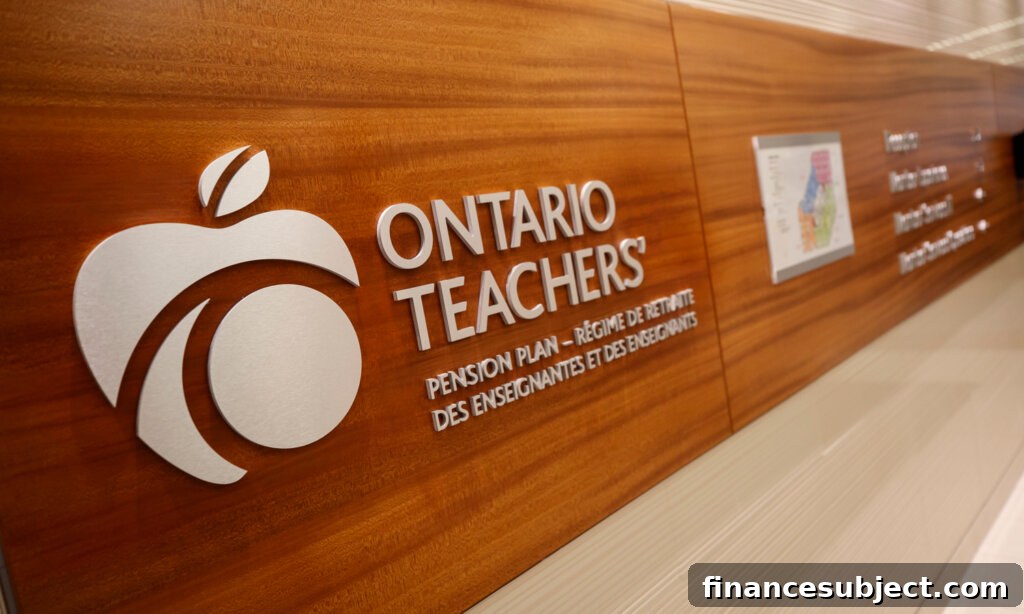
Ontario Teachers’ Fund posts 9.4% return in 2024, below benchmark
The Ontario Teachers’ Pension Plan reported a 9.4% return for 2024, up from 1.9% in 2023 but below the fund’s benchmark return of 12.9%. Strong performance in public equities, venture growth, credit and inflation-sensitive assets contributed to the gain, while private equity and real estate investments lagged their benchmarks.
Net assets reached $266.3 billion at year-end, up from $247.5 billion the prior year. The plan reported a preliminary funding surplus of $29.1 billion and said its portfolio is positioned to pursue risk-adjusted returns to meet long-term obligations.
Return to menu.