

Kyle Prevost, creator of 4 Steps to a Worry-Free Retirement, Canada’s DIY retirement planning course, shares financial headlines and context for Canadian investors.
Volatility is back
After several years of an unusually steady climb in U.S. stocks—and to a lesser extent in Canadian equities—markets experienced a sharp return of volatility. The steady uptrend that had become the expectation gave way to sudden swings that reminded many investors that market calm can be the exception, not the rule.
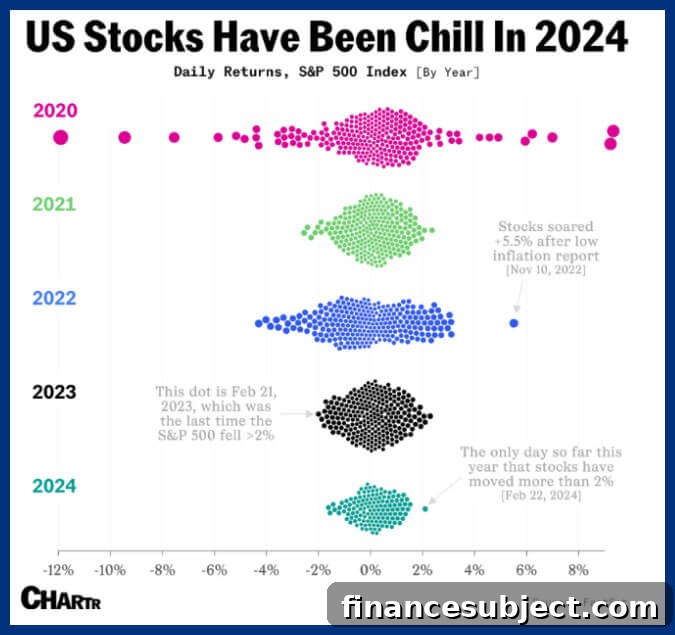
When compared with the historical average, recent years of muted volatility stand out as the outlier. Corrections and sharp moves have always been part of market history; what’s unusual is a long stretch without them.
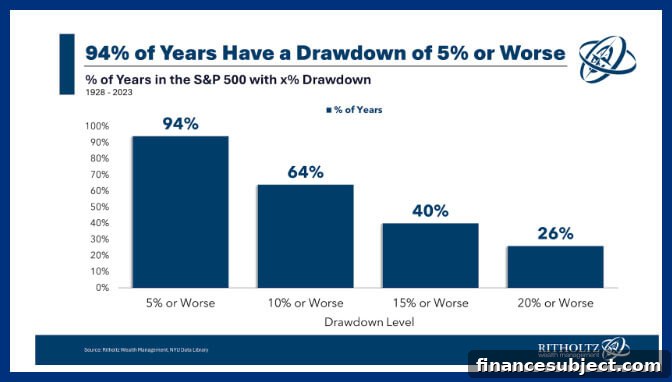
Understanding the broader context is useful whenever a short burst of selling happens. Below is a concise timeline of notable market events from August 2 to 8 that illustrate how quickly sentiment shifted.
| Day | What happened |
|---|---|
| Friday, August 2 | The S&P 500 fell 1.8% and the Nasdaq dropped 2.4%, pushing the Nasdaq roughly 10% off its July highs and into correction territory. |
| Monday, August 5 | Japan’s Nikkei 225 posted a large one-day decline. U.S. markets also fell sharply: the S&P 500 and Nasdaq declined around 3% and 3.4% respectively. Bitcoin plunged below USD 50,000 at one point, losing about 30% of its value over the prior week and erasing gains since February. |
| Tuesday–Wednesday, August 6–7 | The Nikkei recovered most of its losses. The S&P 500 traded mixed—up modestly one day and down the next—essentially treading water. |
| Thursday, August 8 | Equities rebounded: the S&P 500 posted its best day since 2022 and the Canadian TSX rose as well, reflecting renewed buying after the earlier sell-off. |
The rapid trading and swings triggered a spike in the CBOE Volatility Index (VIX), a commonly used gauge of investor fear and uncertainty. That jump in market stress did not immediately vanish, leaving traders and long-term investors alike wondering why it happened.
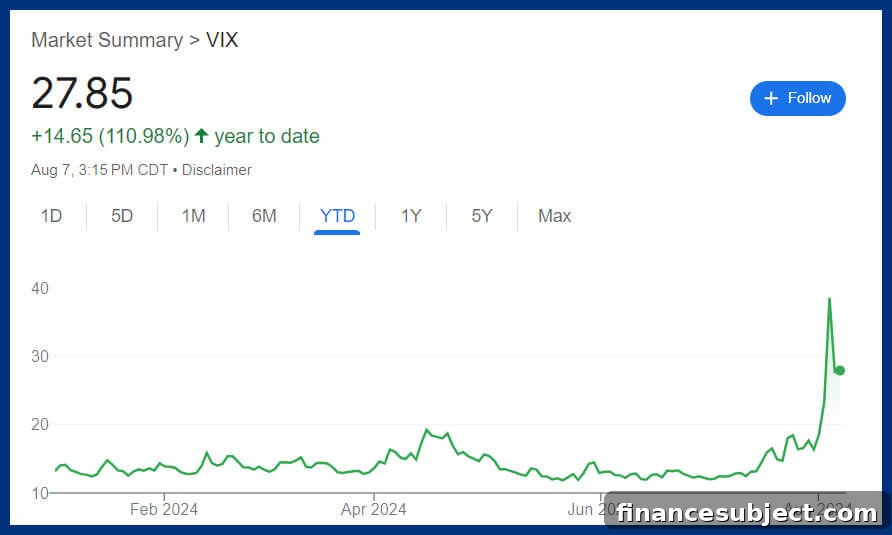
Attributing the spike to a single cause is difficult because many factors interacted at once. Here are the most commonly cited explanations for the sudden turbulence.
- A normal pullback—especially in tech stocks. After a strong run, some investors chose to lock in gains, and a wave of profit-taking can amplify downward moves.
- The yen carry trade unwinding. Investors had been borrowing in low-cost Japanese yen to fund investments elsewhere. As Japanese interest rates rose, that strategy became costly and triggered rapid position adjustments.
- Recession fears in the U.S. Concerns about the Federal Reserve’s policy stance combined with softer U.S. labor data led some investors to worry that tighter monetary conditions could tip the economy toward recession.
- Cautious signals from major investors. High-profile moves, such as a large reduction in a major fund’s position in a big tech stock and an accumulation of cash equivalents, were interpreted by some as signs that valuations may be stretched.
So what should investors do? For most long-term holders, the prudent answer is not to overreact. The U.S. economy at the time was still growing at a moderate pace, and Canadian stocks often appeared more reasonably valued than some U.S. tech-heavy indexes.
If recent volatility disturbed your sleep, it may be a good prompt to review your portfolio’s risk profile. Make sure your allocations match your time horizon and tolerance for drawdowns. A properly diversified, well-allocated portfolio can weather pullbacks without forcing hasty decisions.
Is Shopify back?
Amid the turbulence, Shopify posted a striking market move: its market capitalization jumped significantly in a single session, moving the company up several ranks among Canadian firms. The surge stood out given the broader weakness in U.S. tech stocks the prior week.
Shopify’s quarterly highlights
Key results from the quarterly report and call:
- Shopify (SHOP/TSX): Reported adjusted earnings per share of USD 0.26 versus USD 0.20 expected, and revenue of USD 2.05 billion versus USD 2.01 billion expected.
“I think that our merchants do seem to be, you know, outperforming and doing better than others… we simply have merchants across a ton of verticals and across a ton of geographies.”
– Harley Finkelstein, president, Shopify
The company reported a 22% increase in gross merchandise volume for the quarter and improved operating margins driven by subscription revenues. Shopify has also introduced new AI tools aimed at helping small and medium-sized merchants improve marketing and conversion—initiatives management expects will support future growth. Despite the strong quarter, the stock remained below its earlier highs for the year, suggesting room for further recovery.
Mixed U.S. earnings continue
The latest corporate reports painted a varied picture across sectors, with some companies beating expectations and others missing or warning of slower demand.
Selected U.S. earnings highlights
All figures in U.S. dollars.
- Airbnb (ABNB/NASDAQ): EPS of $0.86 versus $0.92 expected; revenue $2.75 billion versus $2.74 billion expected.
- Reddit (RDDT/NASDAQ): Loss per share of $0.06 versus a larger expected loss; revenue $281 million versus $254 million expected.
- Disney (DIS/NYSE): EPS of $1.39 versus $1.19 expected; revenue $23.16 billion versus $23.07 billion expected.
Airbnb’s miss sparked a sharp after-hours drop as management pointed to softer U.S. demand despite year-over-year revenue growth. Disney delivered a notable milestone: its combined streaming services—Disney+, Hulu and ESPN+—reported an operating profit for the period, a meaningful improvement from losses a year earlier. Nonetheless, the stock fell as investors weighed growth prospects and near-term demand trends.
“We’re seeing growth in consumption and the popularity of our offerings, which gives us the pricing leverage we believe we have… I feel very bullish about the future of this business.”
— Bob Iger, CEO, Disney
Reddit showed progress toward profitability, with a much smaller net loss than the prior year and strong revenue growth, though its shares faced pressure in the short term.
Oil and potash remain resilient
Despite concerns about slowing global growth, certain commodity-focused companies reported solid results, driven by ongoing demand and operational improvements.
Selected oil and potash earnings
Highlights for the period:
- Suncor Energy Inc. (SU/TSX): EPS of $1.27 versus $1.10 expected; revenue of $13.04 billion versus $12.33 billion estimated.
- Nutrien (NTR/TSX, NYSE): EPS of $2.34 versus $2.19 expected; revenue of $9.92 billion versus $10.73 billion estimated.
Suncor reported another strong quarter, with production increases and continued focus on cost control and operational efficiency. Management emphasized maintenance and uptime as priorities and expressed optimism for the second half of the year, provided crude prices remain supportive. Nutrien beat profit expectations despite lower revenue, helped by higher crop input margins and lower costs, while potash sales were pressured by weather and pricing headwinds.
Further reading about investing
- Best ETFs in Canada
- Buying your first stocks in Canada
- How capital gains tax works in Canada and related questions