
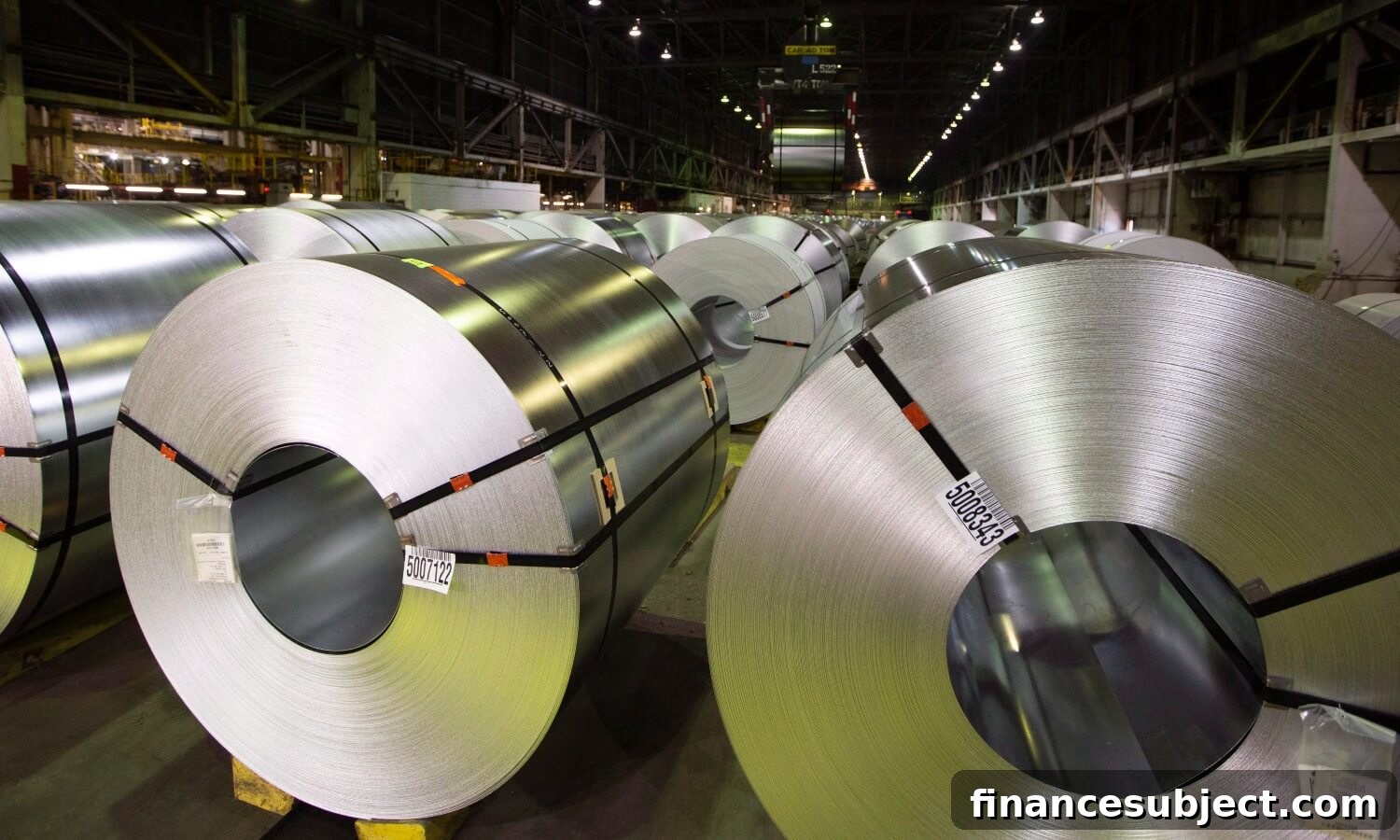
Seven years after emerging from creditor protection and undertaking a major turnaround, Stelco Holdings Inc. has agreed to be acquired by Cleveland-Cliffs Inc. in a transaction valued at approximately $3.4 billion.
In a Monday announcement, the Hamilton, Ontario–based steelmaker confirmed it will sell all issued and outstanding common shares to Cleveland-Cliffs, an Ohio-based leader in North American steel production, for $70 per share.
Stelco chief executive Alan Kestenbaum said the agreement preserves the company’s Canadian identity and operations. “I know that Cliffs will continue to build upon the excellent work and life environment we have created for all of our employees, and continue to be a reliable supplier to our valued customers, while maintaining Stelco’s stature and reputation in Canada and maintaining our Canadian national interests,” he said.
Under the terms of the deal, Stelco’s headquarters will remain in Hamilton, the company has committed to maintain significant employment levels across its Canadian operations, and Canadian representation will be included in the combined management team.
Cleveland-Cliffs CEO Lourenco Goncalves praised Stelco’s recent progress, noting that Kestenbaum transformed what had been an underperforming asset into “a very cost-efficient and profit-oriented company.” The transaction is expected to close in the fourth quarter of 2024.
Stelco’s ownership history
Stelco has previously been owned by foreign companies. In 2007, U.S. Steel acquired the 114-year-old firm, shortly before the global financial crisis precipitated a deep recession. By 2014, U.S. Steel placed its Canadian operations into creditor protection.
Kestenbaum returned to lead Stelco in 2017 (with a brief one-year absence around 2019) and oversaw significant investments, including upgrades to blast furnaces and acquisitions that shifted production toward higher volumes for the automotive sector.
The union voice has supported the sale. United Steelworkers international president David McCall endorsed the transaction to Cleveland-Cliffs, calling it “great for the resilience of manufacturing and union jobs” in North America and noting Cliffs’ track record of ensuring union representation in decision-making.
As of December, roughly 83% of Stelco’s approximately 2,400 employees were unionized, reflecting the company’s longstanding relationship with organized labour.
More deals on the horizon?
Industry consolidation has been a recurring theme as North American steel producers respond to low-cost imports from overseas. Earlier this year, Cleveland-Cliffs launched a hostile US$7.25-billion offer for U.S. Steel made up of cash and stock. U.S. Steel declined that bid and instead accepted a larger US$14.9-billion offer from Japan’s Nippon Steel—a deal that remains subject to review by the Committee on Foreign Investment in the United States (CFIUS).
There were also reports last year that Stelco, together with an unnamed partner, had explored the possibility of making an offer for U.S. Steel, underscoring the shifting strategic landscape among major producers.
Stelco operates two main facilities in Ontario: the steel mill at Lake Erie Works and the coke plant and finishing operations at Hamilton Works. Those sites form the operational backbone that Cleveland-Cliffs has agreed to preserve as part of the acquisition terms.
Analysts framed the transaction as a logical step within an already integrated North American supply chain. National Bank analyst Maxim Sytchev described the deal as “a logical industry development” and suggested regulatory review is likely but may be less fraught than other recent cross-border agreements, given existing trade ties and North American supply chain integration.
Newsletter
Get free MoneySense financial tips, news & advice in your inbox.
Read more company news:
- Couche-Tard looks at acquisitions, and reports earnings drop
- National Bank to buy Canadian Western Bank at $5-billion valuation
- Maple Leaf to spin off a publicly traded company
- What does Nvidia’s stock split mean for Canadian investors?