
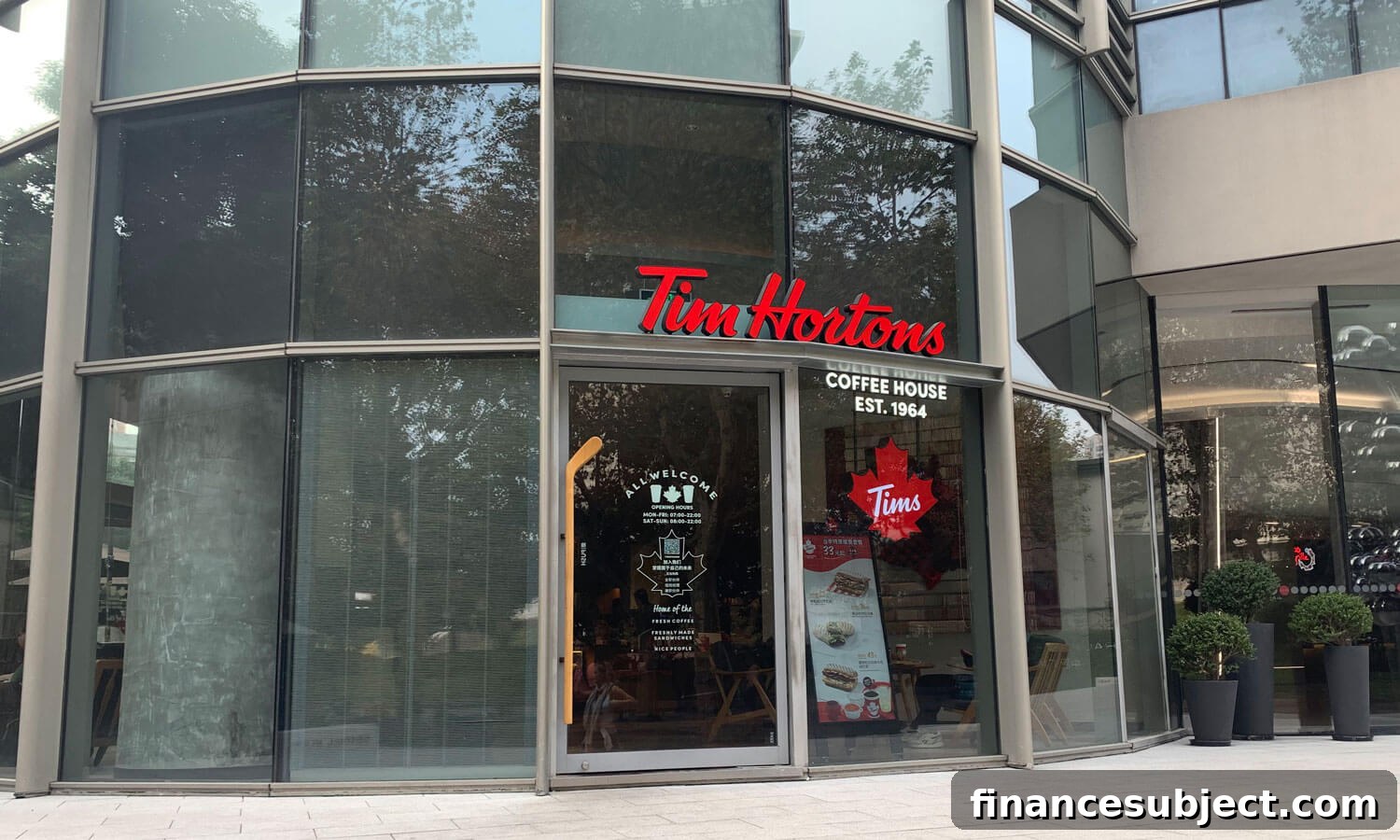
Restaurant Brands International (TSX: QSR) said it will invest up to $45 million in two transactions designed to strengthen its footprint in China and accelerate growth in a market the company describes as strategically important. The parent company of Tim Hortons, Burger King, Popeyes Louisiana Kitchen and Firehouse Subs said the first agreement transfers ownership of Popeyes China from Tims China, the operator of Tim Hortons franchises in the country.

Get up to 3.00% interest on your savings without any fees.

Lock in your deposit and earn a guaranteed interest rate of 3.50%.

Open a High Interest Savings Account and earn a promotional interest rate for a limited period on eligible deposits.
MoneySense is an award-winning publication that has guided Canadian readers on personal finance since 1999. Its editorial team works with trained journalists and leading personal finance experts to evaluate financial products across major institutions. We present information to help readers compare options and make informed choices.
Serving more than coffee
RBI valued the Popeyes China transaction at US$15 million and noted that Popeyes launched in Shanghai in August 2023 and has since opened 14 restaurants in the city. The company said it will pursue a “master franchisee” approach for Popeyes China, partnering with local operators to scale development in a manner consistent with its franchise structure in other international markets.
In parallel, RBI said it will partner with Cartesian Capital on a separate investment into Tims China using three-year convertible notes. That investment vehicle could total up to US$50 million, of which RBI would receive up to US$30 million in convertible notes. According to the company, this investment will also give RBI the right to appoint two directors to Tims China’s board and could increase RBI’s equity stake in the Tim Hortons business in China to as much as 18%.
Together, the two measures are intended to support local development efforts for both Popeyes and Tim Hortons, while providing RBI with greater influence and the option to convert debt into equity over time as the business in China grows. The company framed the moves as practical steps to sharpen focus on restaurant development, maintain product and service quality, and deliver Tim Hortons coffee and food offerings more widely across Chinese cities.
Executives emphasized that these actions reflect a longer-term commitment to China. “China is one of the most compelling long-term market opportunities for both our Popeyes and Tim Hortons brands,” Asia Pacific President Rafael Odorizzi said in a company statement. He described the recent openings for Popeyes as a promising start and said the agreements create a clearer path to expand the brand’s footprint.
Consolidating net restaurant growth
The company’s announcements follow an earlier, more cautious update about expansion in China. Five months ago, RBI used its fourth-quarter financial report to revise its outlook for the region, noting less certainty around the pace of restaurant openings than previously anticipated. At that time, management had reduced expectations for net unit additions in China for the current year.
Back then, RBI had targeted consolidated global net restaurant growth in the mid-4% range for the year, with plans to accelerate expansion in 2025. The company attributed the need to reassess expectations to slower-than-expected development in China and the challenging local consumer environment. A pullback in consumer spending in China—linked by many observers to pandemic-era disruptions, employment shifts, and weakness in the housing market—has reduced the pace of recovery for some consumer-facing industries.
Despite those headwinds, RBI has reiterated its belief that China represents a substantial long-term opportunity. CEO Joshua Kobza has said success in that market requires significant capital, a long-term horizon from partners, and a sustained commitment to grow the brands amid competition. The two recent transactions signal that RBI and its partners are prepared to make further investments and structural changes to support growth in China as conditions evolve.
Also read
Canada’s best dividend stocks
Read more about stocks:
- Couche-Tard looks at acquisitions, and reports earnings drop
- Buying your first stocks in Canada
- The Best Canadian ETFs
- Making sense of the markets this week
- What does Nvidia’s stock split mean for Canadian investors?