

Ellyce Fulmore brings a personal, human-centered approach to money. As the founder and face of Queerd Co., she provides shame-free financial education that looks beyond spreadsheets to consider how race, gender, sexuality, mental health, disability and other identities shape people’s financial lives. Queerd Co. intentionally treats personal finance through an intersectional lens, acknowledging how privilege and oppression influence money decisions and access.
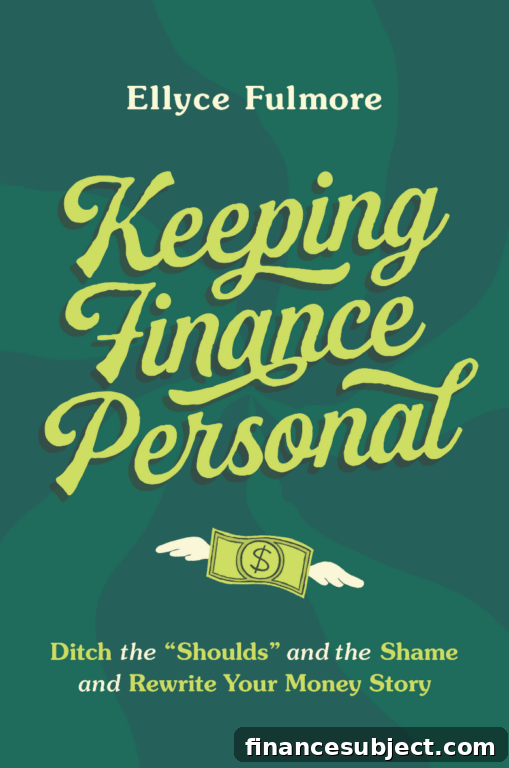
Fulmore, who identifies as queer and neurodivergent, discovered that conventional financial advice and standard tools didn’t address the impulse spending she experienced—an issue common among people with ADHD. In 2020 she began sharing how ADHD affected her finances on social media and launched Queerd Co. This year she published her first book, Keeping Finance Personal: Ditch the “Shoulds” and the Shame and Rewrite Your Money Story (Hachette Go, 2024), which expands on her identity-informed approach to money and financial well-being.
Based in Calgary, Fulmore is building a suite of courses and tools through Queerd Co. Her flagship program, the Neuro$picy Money Method, is a six-week course designed to help people work with—rather than against—their brains to better understand and manage finances. The program focuses on practical strategies that respect neurodiversity while offering structure and supports tailored to individual needs.
Who are your finance heroes?
I don’t have traditional “heroes,” but I deeply respect a number of people and organizations in the personal finance world. I admire Alyssa Davies and Bridget Casey for their podcast Money Feels; Edgar Villanueva for his work with the Decolonizing Wealth Project; and the educators behind Trauma of Money for centering emotional and historical contexts in financial education.
- Read: Canadians are financially stressed—is money trauma to blame?
- Read: Mixed Up Money’s Alyssa Davies on striving for CoastFIRE, the value of time, and more
How do you like to spend your free time?
Outside of teaching, writing and speaking about money, I enjoy exploring Calgary with my partner, reading, doing crosswords, thrifting and losing myself in my latest hyperfixation. These activities recharge me and inform the creative work I do for Queerd Co.
If money were no object, what would you be doing right now?
I love the work I do, so I would continue running Queerd Co. but with more flexibility and resources. I would scale back hours, travel more with my partner and dedicate greater time and funds to community projects and mutual aid. Having financial stability would let me invest more in other people and causes I care about.
What was your first memory about money?
I discuss early money memories in Keeping Finance Personal. I don’t have a single vivid first memory—money wasn’t talked about in my household growing up, which taught me that finances were taboo. That silence led to shame and confusion later on. In university I struggled financially and assumed my peers had it together; only later did I learn many of them were struggling too. That realization motivates me to normalize conversations about money so people see they are not alone.
What’s the first thing you remember buying with your own money?
One early purchase I remember is saving my allowance to buy a Beanie Baby.
What was your first job?
My first official job was washing dishes at Boston Pizza. My parents told me I had to pay for my own cell phone, so my first paycheque went toward that. A few months later I was promoted to hostess.
What was the biggest money lesson you learned as an adult?
The biggest lesson was realizing how much identity shapes finances. Personal finance is intersectional: your race, gender, sexuality, mental health, disability, socioeconomic background and the systems around you influence how you earn, save, spend and invest. When I came out as queer and learned I had ADHD, many past money behaviours—like impulse spending—started to make sense. I had racked up $15,000 in high-interest debt, and learning that ADHD increases the likelihood of impulse spending shifted my perspective from shame to understanding.
That insight led me to start Queerd Co. and write a book that centers identity, trauma and lived experience in financial education. Our goal is financial equity through shame-free, identity-informed tools and courses that treat people as whole humans, not just numbers.
What’s the best money advice you’ve ever received?
That your financial situation is not entirely your fault and that the shame you feel doesn’t belong only to you. In the Trauma of Money certification program, we examined how financial behaviours are inherited and shaped by caregivers, policies and institutions. Asking “Whose shame is this?” helped me separate systemic responsibility from personal responsibility and reduced the weight of shame tied to past decisions.
What’s the worst money advice you’ve ever received?
I describe this in chapter one of my book: the first time I met a bank financial advisor, he told me, “When you have a husband, he will take care of this for you.” That comment was misogynistic and dangerous because it encouraged me not to take charge of my finances. Financial autonomy is crucial—especially if someone ever needs to leave an abusive situation, having access to one’s own money can be life-saving.
Would you rather receive a large sum of money all at once or a smaller amount regularly for life?
It depends on the numbers. If a steady payment covered my monthly expenses, I’d choose the smaller, reliable income for the emotional security it provides. If not, I’d take a lump sum and invest it to generate long-term returns. Emotionally, guaranteed monthly income feels safer; financially, a well-invested lump sum can grow more.
What do you think is the most underrated financial advice?
Make finances into a game. Gamifying money management can make budgeting and saving more enjoyable and sustainable—especially for neurodivergent people. Turning tasks into small wins increases follow-through and helps build consistent habits.
What is the biggest misconception people have about growing money?
That building wealth is purely a numbers problem. While math matters, the root causes of money struggles are emotional, social and structural. Perfect spreadsheets or strict formulas won’t fix underlying issues like trauma, values misalignment or systemic barriers. True financial health requires aligning habits with lived experience and goals.
Can you share a money regret?
A bank advisor once suggested I put $5,000 into a GIC. Given my financial goals at the time, that wasn’t the best move—I likely would have earned more in the stock market. Still, I don’t dwell on regret; past choices shaped my learning and my current approach to money.
What does the word “value” mean to you?
Values are the beliefs that guide priorities and choices. I practice values-based spending: I spend on services that free my time and energy, like grocery delivery and a cleaner, because they allow me to focus on work and relationships. For me, trading money for time and reduced mental load is a clear expression of values-based financial decisions.
What’s the first major purchase you made as an adult?
My first major adult purchase was a used 2008 Honda CRV.
What purchase took the longest for you to decide to buy?
When I was a child, convincing my parents and saving up to buy a pet tortoise took months of research, planning and saving.
What’s your take on debt?
Debt is morally neutral and often the product of systems beyond individual control. The idea that debt equals moral failure is harmful. Many people carry debt because of student loans, mortgages, medical needs or simply the high cost of living. Debt can be a useful tool for access and survival; it does not define a person’s worth or financial competence.
What was your most recent splurge?
I recently treated myself to two beautiful vintage gold rings at an estate sale for my birthday.
What is the last money-related book you read?
Because much of my time is spent writing about money, I don’t read many personal finance titles for leisure. I recently reread Rich Dad Poor Dad for a video comparison with my book; I wouldn’t recommend it as a modern guide—some advice is outdated and some tactics are problematic.
What is something you always have in your wallet?
I keep a Koho prepaid Mastercard that I use for my monthly fun-money allowance—it’s a helpful tool to limit overspending.
What is your favourite possession?
Right now it’s a two-foot-tall lava lamp that sits in my office and brings me daily joy.
What’s your next money goal?
I’m working to save six months of payroll for my business. Hitting that milestone will let me plan ahead, pay myself a steady salary and reduce stress while growing Queerd Co.
MoneySense quick questions
Rent or own?
Personally, I prefer renting. Renting is not “throwing money away,” and in many major Canadian cities it’s often a smarter financial decision. Homeownership is an emotional choice and may make sense for some, but it’s not the universal financial goal it’s often portrayed to be.
Buy or lease?
It depends on your situation, but for me, buying used is my preference.
Save or invest?
Both. Save for short-term goals and build a three- to six-month emergency fund, and start investing as soon as you can for long-term growth.
Budget or not?
Yes—budgeting is essential. A budget is simply a plan for your money and doesn’t have to be a complicated spreadsheet. The best budget is one you’ll actually use.
Newsletter
Get free MoneySense financial tips, news & advice in your inbox.
More from My MoneySense:
- “My take on debt has changed over time”: Eva Wong on saving and investing
- Taking risks and trusting your gut: Julie Barlow’s self-employment tips
- Why actor Isabel Kanaan says overnight success and wealth are similar
- Money tips from Jordan Heath-Rawlings: “Make sure you can afford a sudden expense”
- Saving on purchases and for emergency funds, Canada’s extreme couponer shares her secrets