
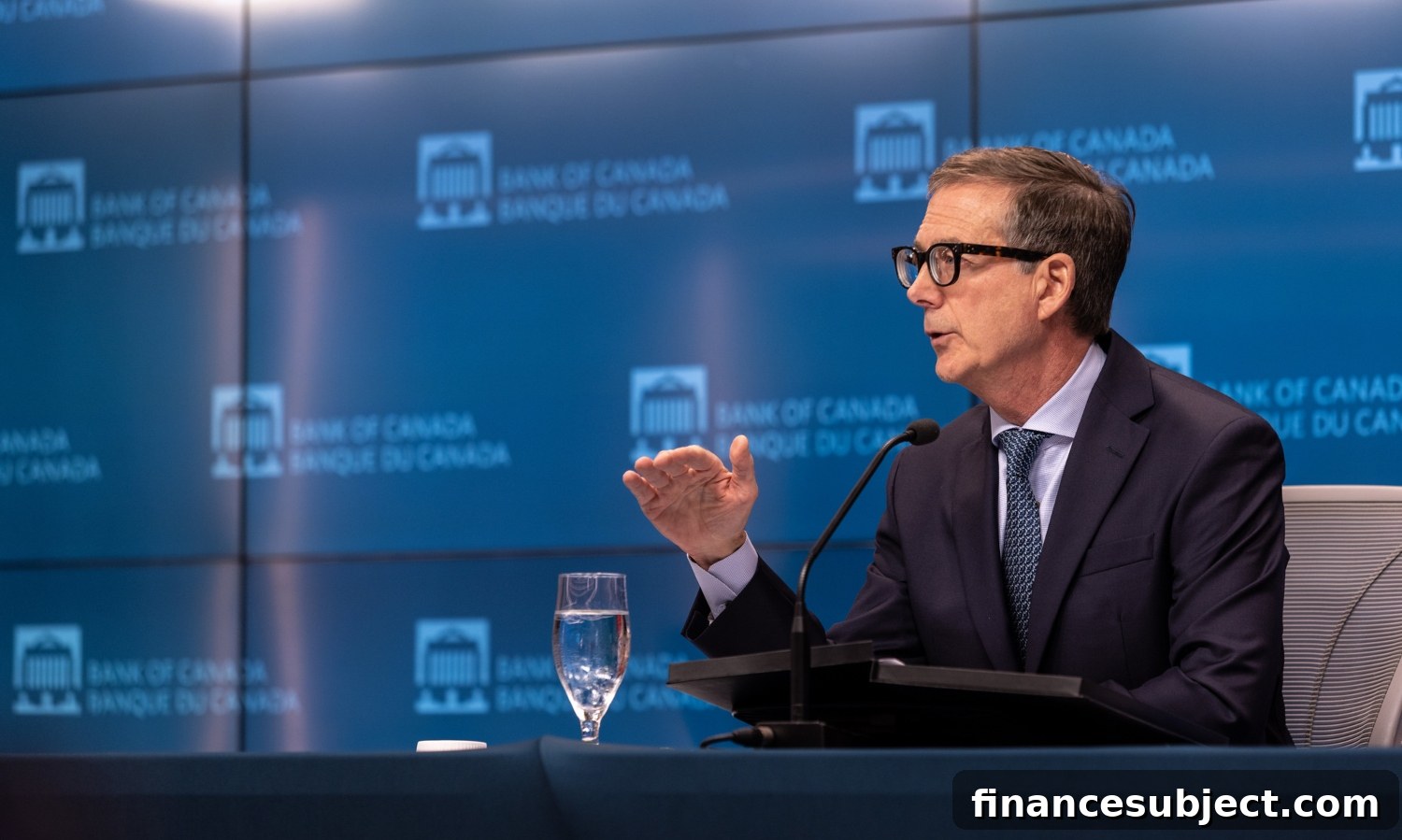
On June 5, the Bank of Canada (BoC) cut its benchmark policy interest rate from 5.00% to 4.75%. This marks the central bank’s first rate reduction in four years, reflecting slower inflation and more subdued economic growth over the past year. Many economists had expected the move as recent data points to easing price pressures.
The BoC explained its decision by noting that “with continued evidence that underlying inflation is easing, Governing Council agreed that monetary policy no longer needs to be as restrictive and reduced the policy interest rate by 25 basis points.” The central bank added that recent economic information has strengthened its confidence that inflation will move toward its 2% target.
Canada’s annual inflation rate, as measured by the Consumer Price Index (CPI), fell to 2.7% in April, down from 2.9% in March — the lowest annual rate in three years. Nonetheless, the BoC warned that risks to inflation remain and that it will continue to monitor the balance between demand and supply, inflation expectations, wage growth and business pricing behaviour. Many analysts expect additional reductions to the benchmark rate before the end of the year if inflation continues to cool.
So what does the BoC’s rate cut mean for your finances? The policy, or benchmark, rate guides interest rates across many financial products, including guaranteed investment certificates (GICs), lines of credit and mortgage rates. Its influence extends to a wide range of household decisions — from buying a first home to renewing a mortgage, repaying student debt or living on retirement income. Below is an explanation of how the BoC’s policy rate works, how it is determined and what changes in the rate may mean for individuals and businesses.
Inflation is down. Does it *feel* down?
— MoneySense (@MoneySense) February 28, 2024
What is the Bank of Canada interest rate?
The BoC’s policy interest rate — commonly called the overnight rate — is the central tool used to achieve stable inflation, which the bank targets at 2% (with a control range of 1% to 3%). Inflation, measured by the CPI, reflects the general rise in consumer prices and the related decline in the purchasing power of money. Moderate, predictable inflation helps businesses and households plan, while elevated inflation erodes real incomes and savings.
The overnight rate influences how commercial banks set their own borrowing and lending rates. It essentially serves as a benchmark for the short-term rate at which major banks lend to one another. When the BoC raises the overnight rate, borrowing costs for banks increase and are typically passed on to businesses and consumers through higher lending rates. Conversely, cutting the overnight rate lowers borrowing costs, which normally translates into cheaper loans and mortgages and reduced returns on safe savings vehicles.
Video: How the Bank of Canada’s interest rate affects you
What happens when the Bank of Canada raises or lowers interest rates?
When economic growth weakens or the economy faces a severe shock, the BoC can reduce rates to stimulate activity. Lower overnight rates usually mean lower monthly payments for new and variable-rate loans, encouraging household and business spending and helping the economy recover. At the same time, lower rates typically reduce returns on savings accounts and short-term investments.
If the economy is expanding too quickly and inflation is rising above the target range, the BoC may raise the overnight rate. Higher rates increase borrowing costs, discourage excessive spending, and help ease inflationary pressures. In normal conditions, the BoC tends to adjust its benchmark rate in modest increments, often 25 basis points or less, to avoid sudden shocks to financial markets and borrowers.
How often does the Bank of Canada review interest rates?
Since 2020, the BoC has published an annual schedule of eight fixed policy-rate announcement dates to help households and businesses plan for potential changes. On those dates, the central bank reports whether it will hold, raise or lower the overnight rate. In exceptional circumstances, such as major economic disruptions or national emergencies, the bank can make announcements on unscheduled dates, as it did during the early stages of the COVID-19 pandemic.
The overnight rate has moved in response to major economic events: it dropped dramatically after the 2008 financial crisis, rose gradually in the 2010s, fell sharply in early 2020, and then climbed quickly in 2021–2022 as inflation accelerated. Those hikes peaked amid 2022’s high inflation, prompting a period of rapid tightening not seen in decades.
What is the prime rate?
The prime rate is the interest rate banks use as the basis for many consumer and commercial loan products, such as lines of credit, variable-rate mortgages and some student loans. While each major bank sets its own prime rate, they typically move together and are closely tied to the BoC’s overnight rate. Currently, Canada’s prime rate stands at 5.95%.
How is the prime rate set?
Prime rates usually adjust rapidly after a change in the BoC’s overnight rate. Most lenders update their prime rate almost immediately when the central bank shifts its policy rate. Many variable-rate loan products are expressed as “prime plus” or “prime minus” a percentage. For example, a product priced at “prime minus 1%” would yield an effective rate of prime minus one percentage point.
How does a change in interest rates affect you?
Changes to the prime rate ripple through the economy. Borrowers with variable-rate mortgages, home equity lines of credit (HELOCs), lines of credit or variable-rate student loans will see payments change when prime moves. A one-percentage-point rise in prime can materially increase monthly mortgage costs and the total interest paid over the life of a loan.
Fixed-rate loan holders are insulated from immediate market shifts: their interest rate is locked for the term of the loan and does not change with movements in the overnight rate. Meanwhile, savers and investors feel the effects in the opposite direction — when the overnight rate rises, banks can offer higher rates on savings accounts and GICs; when the overnight rate falls, returns on safe short-term investments typically fall as well.
What should you do when the overnight rate changes?
Stay informed about scheduled BoC policy announcements and plan for how rate moves will affect your cash flow and long-term goals. If you have a variable-rate mortgage, use a mortgage payment calculator to estimate how a rate change would affect your monthly payments. If you expect rates to fall, consider short-term GICs or variable-rate mortgages if appropriate for your risk tolerance and financial plan. Those approaching retirement should consider consulting a financial planner to review income and investment strategies in a changing rate environment.
Further reading on interest rates
- A contrarian approach to inflation, interest rates and the markets
- I keep hearing interest rates may rise. What would that mean for my mortgage?
- What an interest rate hike could mean for you
This article is presented by an advertising partner.
This content is editorially produced with financial support from an advertiser. The advertiser provided funding but did not influence the content’s editorial development.