
Kyle Prevost, creator of 4 Steps to a Worry-Free Retirement, Canada’s DIY retirement planning course, summarizes the latest financial headlines and provides context for Canadian investors.
RBC and National Bank continue to lead the pack
Canadian banks are preparing for tougher conditions by increasing their provisions for credit losses. That means they are setting aside more capital in case some loans go bad — a conservative approach that helps preserve the strong reputation Canadian banks have earned over time.
Canadian bank earnings highlights
Here’s how several major Canadian banks performed in the quarter ending April 30, 2024:
- BMO Financial Group (BMO/TSX): Adjusted earnings per share of $2.59 (versus $2.77 estimated by analysts) and revenues of $7.97 billion (versus $8.06 billion estimated).
- Scotiabank (BNS/TSX): Adjusted earnings per share of $1.58 (versus $1.56 estimated) and revenues of $8.35 billion (versus $8.33 billion estimated).
- RBC (RY/TSX): Adjusted earnings per share of $2.92 (versus $2.74 estimated) and revenue of $14.15 billion (versus $13.60 billion estimated).
- TD (TD/TSX): Adjusted earnings per share of $2.04 (versus $1.85 estimated) and revenue of $13.88 billion (versus $12.37 billion estimated).
- CIBC (CIBC/TSX): Earnings per share of $1.75 (versus $1.64 estimated) and revenues of $6.16 billion (versus $6.08 billion estimated).
- National Bank (NA/TSX): Adjusted earnings per share of $2.54 (versus $2.41 estimated) and revenues of $2.84 billion (versus $2.79 billion estimated).
All of these banks noted higher provisions for credit losses, which weighed on their net earnings. This conservative provisioning is a trade-off investors accept for the stability and trustworthiness of Canada’s major banks.
BMO reported the weakest results among the group and its shares fell nearly 8% over the five trading days following the report. Scotiabank also saw a modest decline. By contrast, RBC reinforced its best-in-class reputation with shares up roughly 3%, while National Bank and CIBC posted solid results that lifted their share prices by about 2%.
Several banks, including BMO, National Bank and RBC, announced quarterly dividend increases in the range of about 2.5% to 4%. Those raises signal management confidence in future cash flows despite the uptick in loan defaults caused by higher interest rates.
TD, although beating earnings expectations, remains under pressure in the market. Year to date, its shares have fallen more than 12%. That pressure is largely due to an ongoing U.S.-based money-laundering investigation. TD has set aside a substantial amount to cover probable fines and must also invest heavily in compliance and anti-money-laundering systems. Some analysts worry these costs and regulatory burdens could impede TD’s U.S. growth plans and reduce profits in the near term.
TD’s CEO acknowledged that investors want more clarity on the aggregate costs and timelines related to the investigations and said the bank is working to resolve the issues so investors can have a clearer picture. Rating agencies have reacted by revising outlooks, adding to investor uncertainty.
HP and Best Buy up big
This week’s U.S. retail and tech earnings brought mixed reactions from the market. Some companies rallied strongly on optimism, while others saw pullbacks despite meeting expectations.
U.S. earnings highlights
- HP (HPQ/NYSE): Earnings per share of $0.82 (versus $0.81 predicted) and revenues of $12.80 billion (versus $12.61 billion predicted).
- Dell (DELL/NYSE): Earnings per share of $1.27 (versus $1.29 predicted) and revenues of $22.24 billion (versus $21.65 billion predicted).
- Best Buy Co. (BBY/NYSE): Earnings per share of $1.20 (versus $1.07 predicted) and revenues of $8.85 billion (versus $8.97 billion predicted).
- Costco Wholesale (COST/NYSE): Earnings per share of $3.78 (versus $3.70 predicted) and revenues of $58.52 billion (versus $57.98 billion predicted).
Markets reacted very differently to these reports. HP rallied more than 15% on the day, and Best Buy climbed roughly 13%, while Dell fell about 5%. Costco, despite a strong report, showed little movement in after-hours trading. The differing responses reflect how investors parsed each company’s narrative: HP leaned into increased AI-related opportunities, Best Buy emphasized cost reductions and margin improvement, and Costco demonstrated solid, steady growth driven by rising same-store sales and visitor traffic.
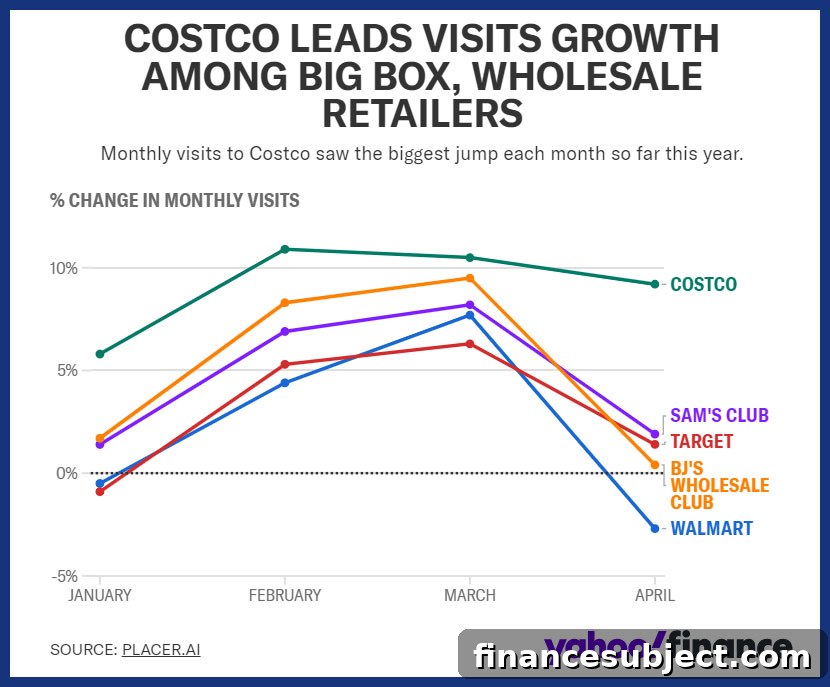
Among these, Costco’s long-term outlook appears especially robust. Same-store sales growth and steady visitor trends point to durable strength in its business model, even if short-term market reactions to earnings can be uneven.
Of course stocks go up when companies make more money
While technical analysis offers frameworks to interpret price action, a fundamental truth remains: rising corporate profits tend to support higher stock valuations. With most S&P 500 companies having reported first-quarter results, a large majority beat expectations, and analysts are forecasting meaningful earnings growth this year after a muted prior year. When companies are expected to earn more, investors are generally willing to pay higher prices for those future profits.
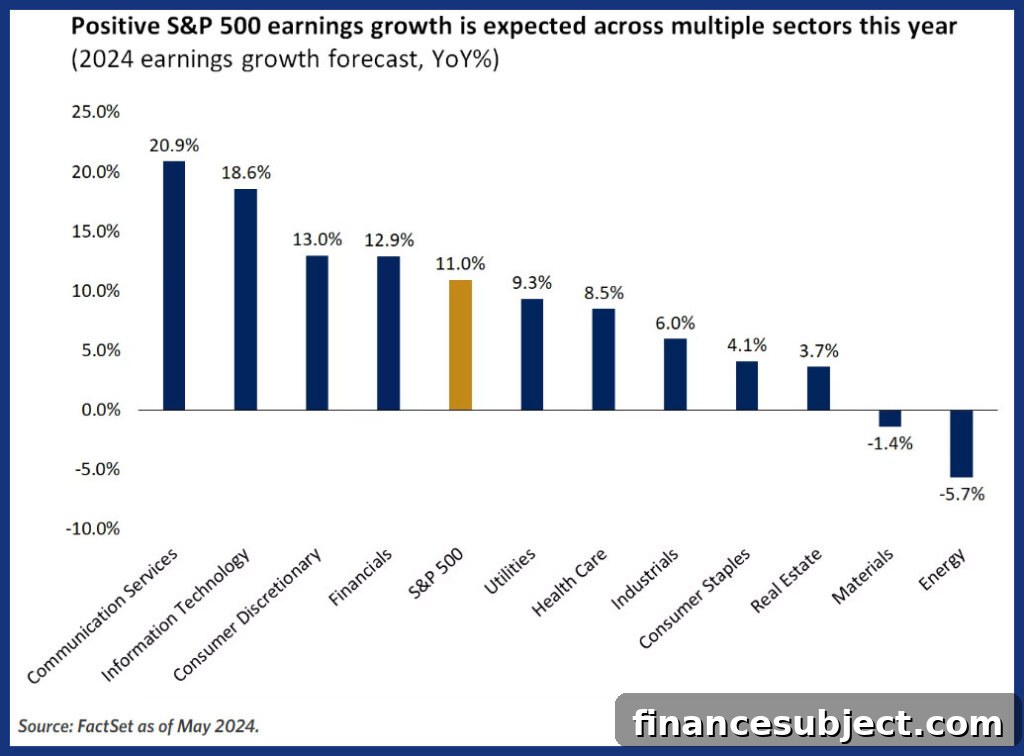
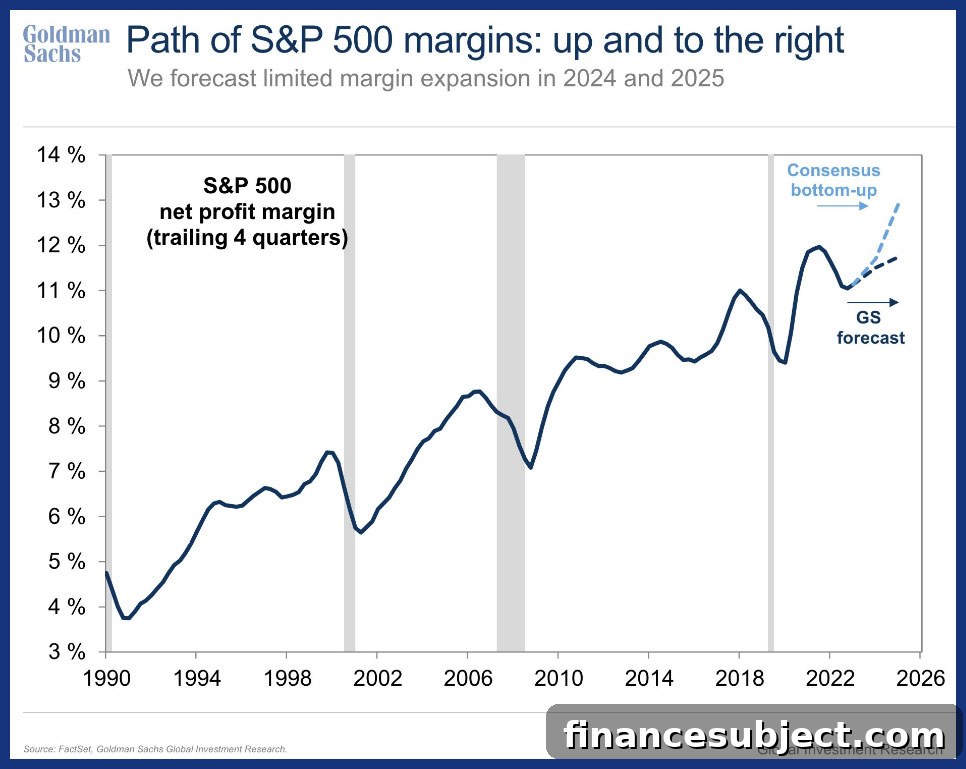
What’s driving bigger profits? A mix of factors: successful new products and services, efficiency gains and cost control, favorable pricing power, and other company-specific improvements. These drivers combine to expand profit margins and justify higher stock prices. That said, markets can and do correct, and short-term pullbacks are always possible. But the underlying increase in corporate earnings helps explain why markets have trended upward over time.
Stagflation’s disappearing act
In 2022 many commentators warned of stagflation — the combination of stagnant growth and stubborn inflation. Two years on, the worst-case stagflation scenario has not materialized in the U.S. or Canada. Wages have risen, unemployment in the U.S. remains near multi-decade lows, and inflation has been trending downward.
Economists use a simple “misery index” — a rough measure combining inflation and unemployment — to gauge how economically difficult times feel. While there were concerningly high readings around 2020 and 2022, we are nowhere near the extreme stagflation era of the 1970s and early 1980s. Aside from brief spikes during the global financial crisis and the onset of the pandemic, recent years have been relatively tame by historical standards.
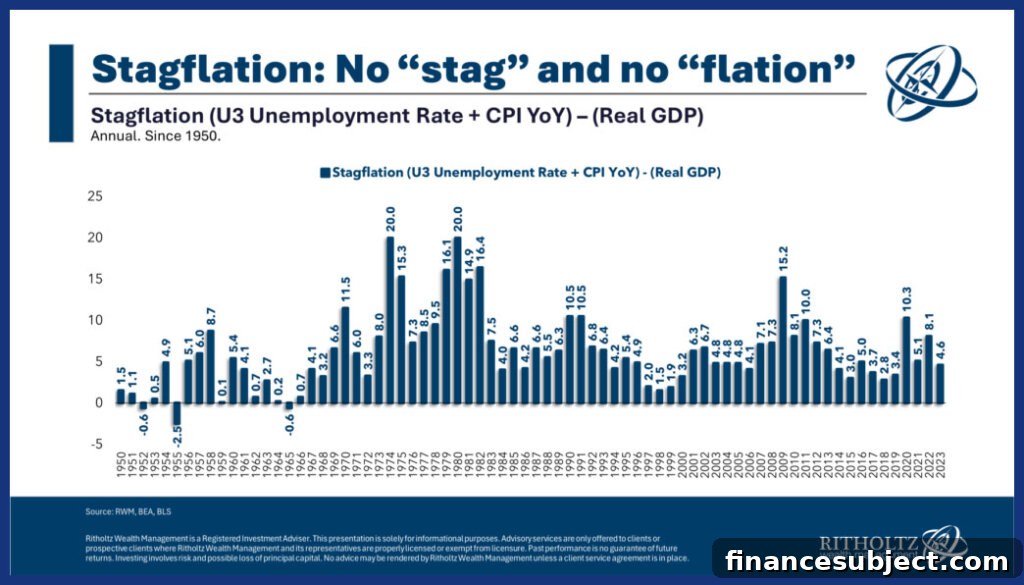
Canada’s economic experience has differed somewhat from the U.S., with some indicators showing more modest growth and higher cost-of-living pressures. Even so, Canada’s readings remain below long-term extremes. Sensational negative headlines tend to attract attention, but for long-term investors, a balanced perspective that recognizes both risks and the underlying resilience of the economy is usually more useful.
Read more about investing:
- Best ETFs in Canada
- TD Bank stock: Steer clear or buy the dip?
- How much is capital gains tax and other questions answered
- A closer look at “Sell in May and go away”