

Kyle Prevost, creator of 4 Steps to a Worry-Free Retirement, Canada’s DIY retirement planning course, summarizes this week’s financial headlines and provides context for Canadian investors.
Inflation is down, and stocks climbed
This week the pattern continued where easing inflation readings helped push U.S. stock indexes higher.
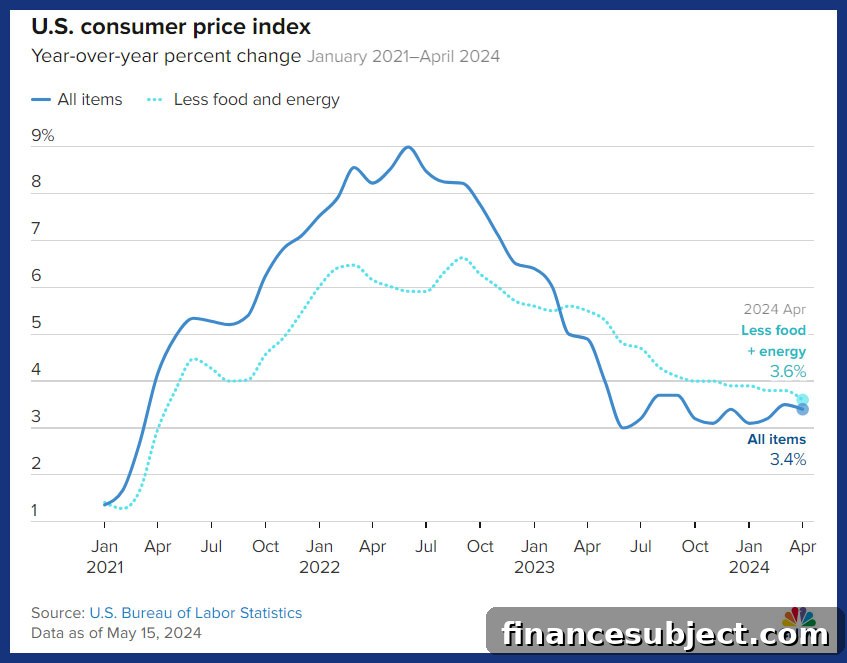
The U.S. Bureau of Labor Statistics said the Consumer Price Index (CPI) rose 0.3% in April, a touch below many economists’ forecasts.
Markets reacted quickly: the S&P 500 gained 1.17% on Wednesday, closing above 5,300 for the first time. The Nasdaq rose 1.40% that day, while the Dow climbed 0.88% and briefly crossed the 40,000 mark on Thursday before finishing just under it.
Investors appear to be pricing in a return to a looser monetary stance, even after U.S. Federal Reserve Chair Jerome Powell urged caution. As Powell noted earlier in the week, “We’ll need to be patient and let restrictive policy do its work […] I do think it’s really a question of keeping policy at the current rate for longer than had been thought.”
U.S. April inflation highlights
Key takeaways from the report:
- Core inflation: 3.6% excluding food and energy.
- Retail sales: Flat for the month, a notable miss versus the 0.4% consensus.
- Shelter costs: Rose 0.4% for the month and are up 5.5% year over year.
- Energy index: Increased 1.1% month-over-month, up 2.6% year over year.
- Food prices: Unchanged for the month—a relief for budget-conscious households.
- Car prices: Prices for both new and used cars eased slightly.
- Earnings: Real (inflation-adjusted) wages fell 0.2% in April but remain up 0.5% year over year.
Traders are pricing roughly a 70% chance of an interest-rate cut by September, despite Fed officials trying to temper expectations. The Canadian dollar also strengthened to five-week highs against the U.S. dollar following the softer U.S. inflation print.
featured1-year GICLock in a guaranteed 3.50% interest rate on a 1-year GIC.go to site
featuredSavings accountOpen a high-interest savings account and earn 4.60% interest for five months on eligible deposits up to $100,000.go to site
MoneySense is an award-winning magazine guiding Canadians on personal finance since 1999. Our editorial team works with leading personal finance experts and compares products across major institutions to help readers find the best financial solutions. Learn more about our advertising and partners.
Walmart shares reach record highs
Walmart reported a strong quarter that beat expectations and slightly raised its forward guidance, which pushed the stock to new all-time highs.
U.S. retail earnings highlights
Walmart benefited from stronger online demand and higher-income shoppers in the first quarter. Figures are in U.S. dollars.
- Walmart (WMT/NYSE): EPS of $0.60 (vs. $0.52 expected). Revenue of $161.51 billion (vs. $159.50 billion expected).
- Home Depot (HD/NYSE): EPS of $3.63 (vs. $3.60 expected). Revenue of $36.42 billion (vs. $36.66 billion expected).
Shares of Walmart rose more than 6% in pre-market trading on Thursday following the results. CFO John David Rainey pointed to a 22% year-over-year increase in e-commerce sales and noted the company’s delivery volumes now exceed store pickup volumes.
Rainey also said that while many consumers are still stretched, shoppers across income levels continue to come to Walmart for essentials like food and health items, even if discretionary spending on items such as home goods and electronics has softened.
Walmart is also looking to new revenue streams to drive growth, including Walmart+, and a growing advertising business. Global advertising revenue rose 24% in Q1, following a trend seen at other large retailers.
The company will, however, scale back some store services, including plans to close Walmart health clinics in the U.S.
Home Depot’s quarter was comparatively muted. With demand for home renovations slowing since the post-COVID renovation surge, Home Depot reported its weakest revenue performance in years, though its profitability held up better than sales. Shares were largely unchanged for the week.

Meme-stock frenzy returns
This week a single post on X from a well-known retail investor reignited activity in meme stocks and triggered large losses for some short sellers.
GameStop remains the archetypal meme stock: a company with weak long-term profit prospects whose share price can spike purely from speculative retail interest. When enough retail buyers swarm a stock, short sellers—investors who bet the price will fall—can suffer sizable losses in a short period.
What is a meme stock?
A meme stock is an equity whose price moves are driven largely by social media attention and speculative trading rather than fundamental earnings or valuations. These price moves can be rapid and extreme, creating big winners and big losers.
What is short selling?
Short selling is a strategy to profit from a decline in a security’s price. Holding a security with the expectation it will rise is referred to as a long position; selling a security you do not own in the hope of buying it back at a lower price is a short position.
Read “What is short selling?” in the MoneySense glossary.
The recent burst of buying around GameStop was driven in part by Keith Gill, known online as @TheRoaringKitty. A single post and follow-up messages encouraged retail traders to buy and hold, aiming to create a short squeeze. That activity cost short sellers more than a billion dollars in paper losses on the day of the spike.
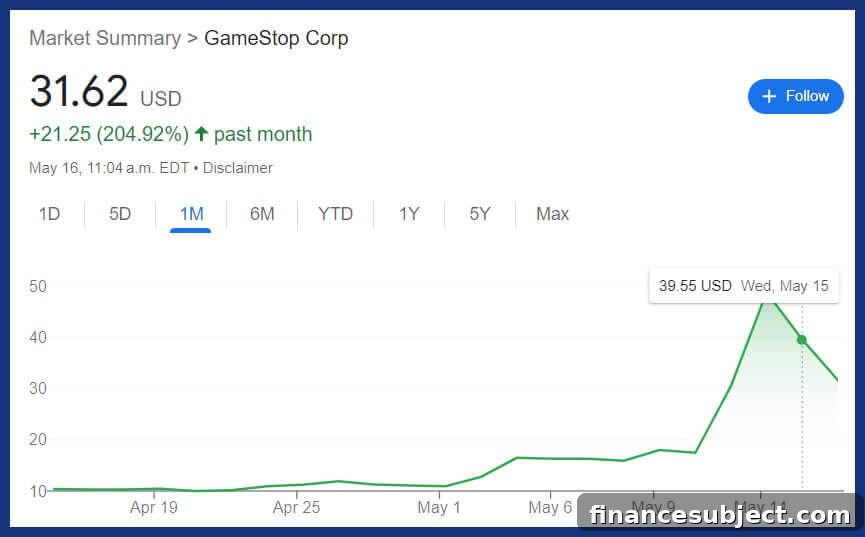
Enthusiastic retail traders also targeted other names during the rally, briefly lifting shares of companies like BlackBerry and AMC. By one estimate, a single brokerage reported about $5 billion of GameStop and AMC shares changed hands on Tuesday alone.
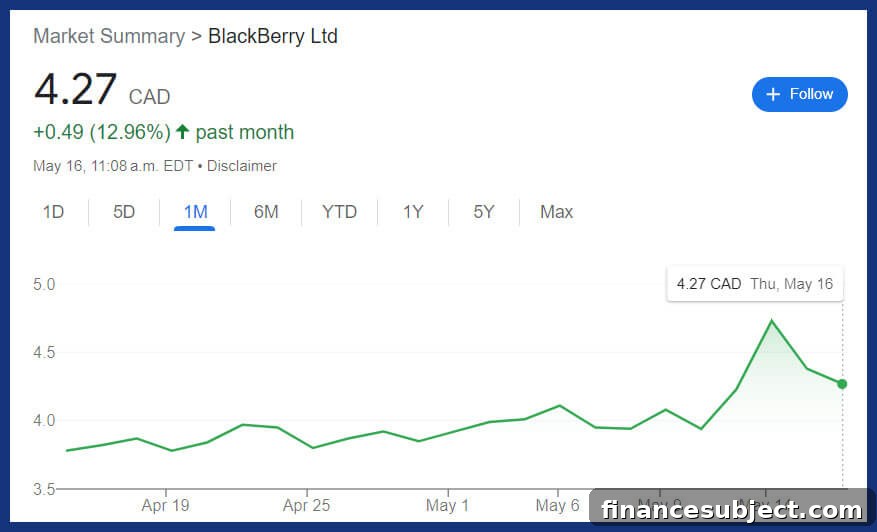
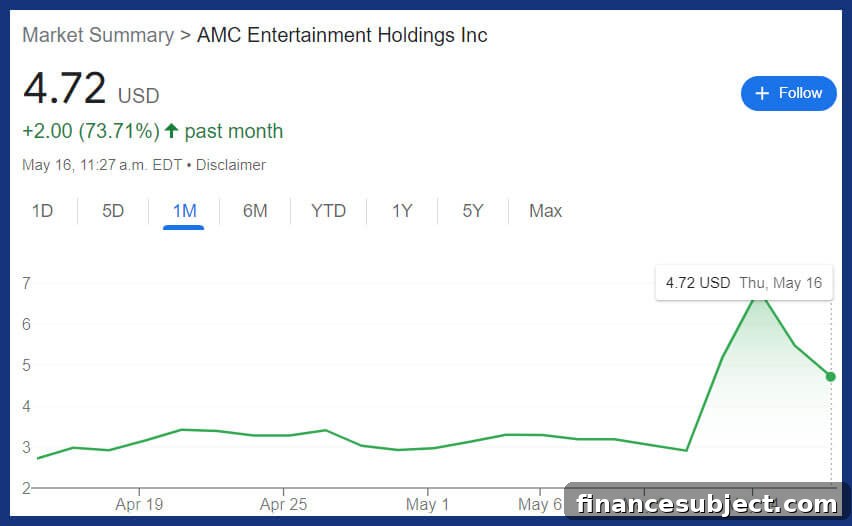
By the time this was written, much of the momentum had faded. Meme-stock rallies are notoriously volatile and driven more by sentiment than fundamentals—so they are risky for most investors.
Canadian utilities: steady and predictable
Utility companies reported steady quarters without major surprises, and investors rewarded that stability—shares rose modestly following earnings reports.
Canadian utilities earnings highlights
Three large Canadian utilities reported steady results this week.
- Emera (EMA/TSX): EPS of $0.76 (vs. $0.84 expected), and revenue of $2.02 billion (vs. $1.95 billion expected).
- Keyera (KEY/TSX): EPS of $0.31 (vs. $0.51 expected). Keyera did not publish a traditional revenue figure in the release but reported higher cash flow from operations: $398 million in Q1 2024 versus $311.4 million a year earlier.
- Hydro One (H/TSX): EPS of $0.49 (in line with expectations) and revenue of $2.17 billion (vs. $2.06 billion expected).
Warmer weather and higher interest costs were cited as factors compressing profits for these utilities. For investors focused on income and stability, utilities often deliver steady returns compared with more speculative trades.
This week’s lesson: headline-grabbing rallies in speculative names can generate quick gains, but long-term, reliable returns more often come from durable, profitable companies—even if they’re less exciting.
Read more about investing:
- TD Bank stock: Steer clear or buy the dip?
- How much is capital gains tax and other questions answered
- A closer look at “Sell in May and go away”
- Canada Goose, Lightspeed report earnings