

Kyle Prevost, creator of 4 Steps to a Worry-Free Retirement, Canada’s DIY retirement planning course, shares financial headlines and offers context for Canadian investors.
Canada’s unproductive budget
The federal budget announced this week promised to address Canada’s long-running productivity challenges, but the measures instead leaned toward higher taxes rather than structural reforms to boost growth. One of the most consequential changes affects the taxation of capital gains. Effective in about 10 weeks, the inclusion rate for capital gains will rise from 50% to 66.67% for gains held inside corporations and trusts. For individuals, the new inclusion rate will apply to all annual capital gains above a $250,000 threshold.
Here are the main implications Canadian investors and business owners should consider:
- The government is clearly tightening rules on owners who use private corporations to shelter investment income. This follows earlier measures that limited income splitting and capped passive-income advantages for private corporations.
- Relatively few Canadians will face the higher inclusion rate every year. The $250,000 threshold is substantial, and the government emphasizes that only a small percentage of taxpayers will be affected on an ongoing basis.
- However, many Canadians could be hit by the higher inclusion rate in the year of their death. Owners of cottages, rental properties or large non-registered investment accounts may easily exceed the $250,000 capital-gains threshold on their final tax returns.
- Expect a wave of transactions in the coming weeks as some taxpayers try to realize gains before the change takes effect. That front-loading could create a short-term revenue bump for Ottawa.
Policy debates about tax fairness are legitimate, but raising capital-gains taxation without clear measures to improve productivity may discourage investment and entrepreneurship. Increasing tax complexity also raises compliance and planning costs, which can be a drag on economic dynamism. Former finance minister Bill Morneau summarized concerns succinctly, warning the change could be troubling for many investors and impede growth.
The budget’s preference for higher revenues over immediate spending efficiencies is also notable given the rapid growth in public-sector employment. That trend can influence business decisions about incorporation and investment, and it feeds into the broader conversation about Canada’s competitiveness.
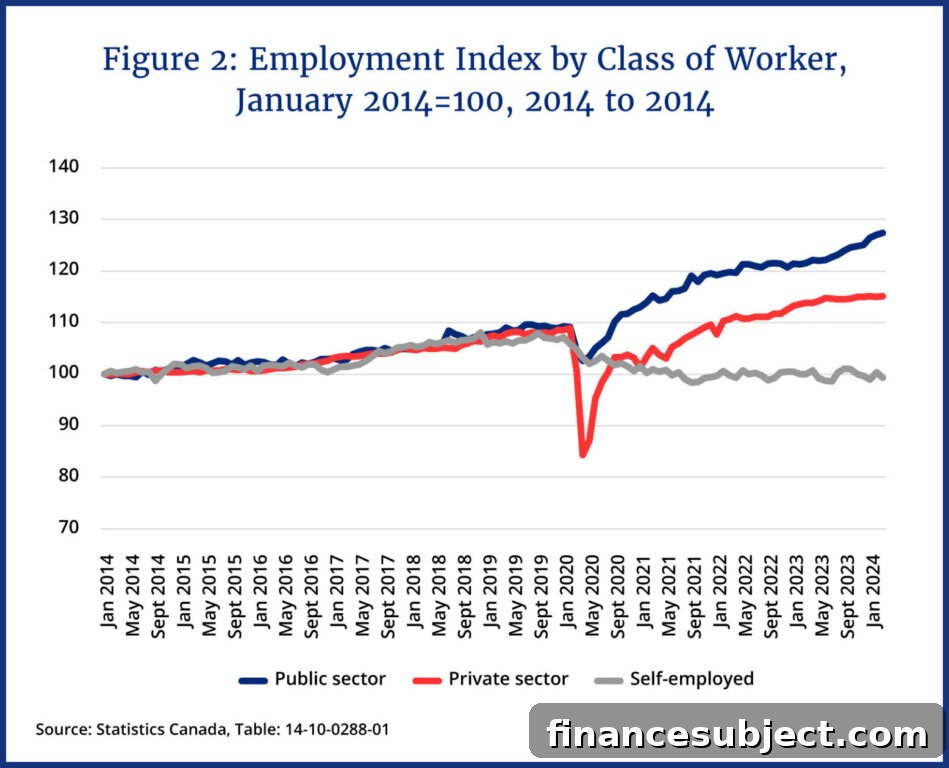
For accountants and financial planners, the changes will likely increase demand for tax and estate planning advice. Some Canadians may choose to defer realizing gains and hope for a future reversal, but that strategy carries risks depending on the outcome of future elections and policy shifts.
Netflix subscribers up, but stock cools on lower reporting going forward
Netflix reported a strong quarter with earnings that beat expectations, but the company signaled a shift in how it will report metrics going forward, and that cautious guidance prompted a market pullback.
Netflix earnings highlights
All figures are in U.S. currency.
- Netflix (NFLX/NASDAQ): Earnings per share of $5.28 (versus $4.52 predicted). Revenue of $9.37 billion (versus $9.28 billion estimate).
Streaming memberships rose 16% in Q1, reaching 269.6 million subscribers—above expectations. Nevertheless, Netflix announced it will stop disclosing membership counts in the future, shifting its emphasis to profitability and free cash flow. That change, combined with a modest revenue outlook, sent shares lower in after-hours trading despite the strong quarterly results. Over the past year, Netflix stock remains substantially higher—rewarding long-term shareholders—even as the company tests new content formats.
Co-CEO Ted Sarandos highlighted the company’s expansion into live programming and gaming as part of a broader content strategy: experimenting with event-driven live content and interactive experiences to build cultural moments and deepen member engagement.
featured1-year GICLock in your deposit and earn a guaranteed interest rate of 3.50%.go to site
featuredSavings accountOpen a High Interest Savings Account now and earn 4.60% interest for 5 months on eligible deposits up to $100,000.go to site
MoneySense is an award-winning personal finance publication helping Canadians since 1999. Our editorial team works with leading finance professionals to analyze financial products and strategies and to provide practical guidance for readers.
U.S. banks beat estimates
The U.S. banking sector delivered strong first-quarter results, with major banks generally beating earnings expectations. Investment banking activity helped drive outperformance at firms exposed to capital-markets flows.
American banks earnings highlights
All figures below are in U.S. dollars.
- JPMorgan (JPM/NYSE): EPS $4.44 (vs. $4.11 predicted). Revenue $42.55 billion (vs. $41.85 billion estimate).
- Bank of America (BAC/NYSE): EPS $0.83 (vs. $0.76 predicted). Revenue $25.98 billion (vs. $25.46 billion predicted).
- Wells Fargo (WFC/NYSE): EPS $1.26 (vs. $1.11 predicted). Revenue $20.86 billion (vs. $20.20 billion predicted).
- Morgan Stanley (MS/NYSE): EPS $2.02 (vs. $1.15 predicted). Revenue $15.14 billion (vs. $14.41 billion predicted).
- Citigroup (C/NYSE): EPS $1.86 (vs. $1.23 predicted). Revenue $21.10 billion (vs. $20.40 billion predicted).
- Goldman Sachs (GS/NYSE): EPS $11.58 (vs. $8.56 predicted). Revenue $14.21 billion (vs. $12.92 billion predicted).
Firms with heavier investment-banking exposure—Goldman Sachs and Morgan Stanley—posted especially strong quarters as capital markets activity picked up. Banks also reported lower provisions for credit losses, signaling greater confidence in consumer and commercial credit quality. However, net interest margins faced pressure as deposit costs began to rise toward loan yields.
Goldman Sachs’ CEO noted the recovery in capital markets activity, while JPMorgan’s CEO emphasized continued vigilance about uncertain global forces such as geopolitical risk and inflation. Overall, the results point to a healthier earnings backdrop for U.S. banks even as macro uncertainty remains.
Inflation rate is down, so is the Canadian dollar
Statistics Canada released the latest Consumer Price Index (CPI), reporting a 2.9% year-over-year increase in March. That slight uptick from February masks important differences across categories and has implications for monetary policy and the Canadian dollar.
Key inflation readings include:
- Services inflation: 4.5%
- Goods inflation: 1.1%
- Food prices: up 3.0%
- Shelter: up 6.5% and remains the main driver of headline inflation
- Mortgage carrying costs: up 25.4%
- CPI excluding food and energy: 2.9%
- Three-month annualized CPI-trim (a core measure): 1.3%
- Money markets price roughly a 78% chance of an interest-rate cut by the Bank of Canada in June.
Monetary policy operates with long and variable lags, so the Bank of Canada may not wait for headline measures to fall fully to target before easing. Diverging inflation trends between Canada and the U.S. could produce uncomfortable trade-offs, and a move by the BoC to cut rates before the U.S. Federal Reserve would likely weigh on the Canadian dollar. The loonie has already softened against the U.S. dollar in recent months.
Lower Canadian interest rates would also influence housing demand. Many prospective buyers are waiting for rate cuts to make use of accounts such as the First Home Savings Account (FHSA) and other programs, which could sustain pressure on housing prices if demand accelerates as borrowing costs fall.
Read more about investing:
- How might inflation impact your retirement plans?
- What is a cashable GIC?
- Will GIC rates keep going up?
- Delaying CPP and OAS to age 70: Is it worth the wait?