
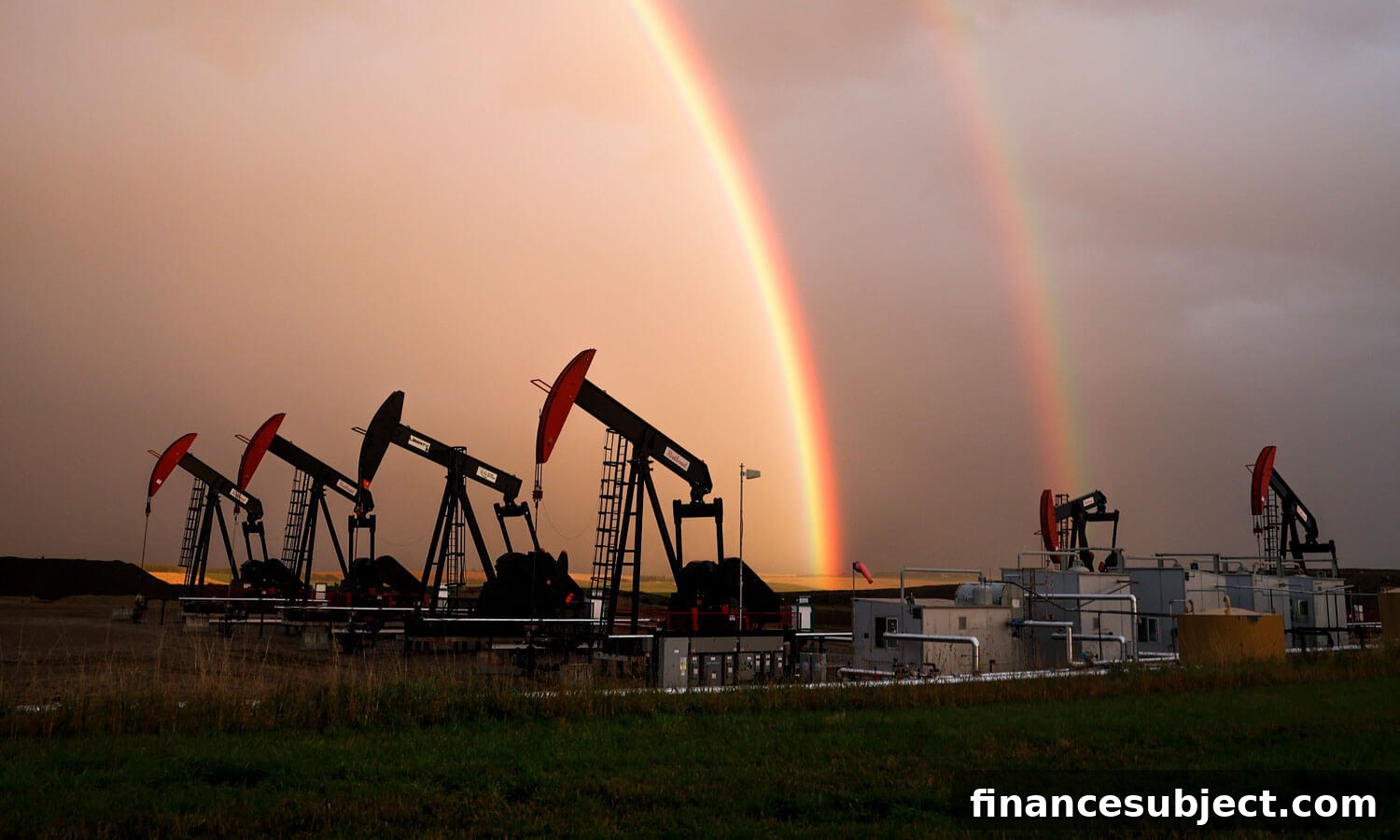
The price of oil has risen steadily through the year, yet the conversation at Canada’s largest oil and gas conference remained centered on spending discipline and capital returns. At the Canadian Association of Petroleum Producers conference in Toronto, industry leaders repeatedly emphasized predictable operations, steady cash flow and returning capital to shareholders rather than pursuing aggressive production growth.
Is boring good?
Rich Kruger, chief executive of Suncor Energy Inc., who took the helm of Canada’s largest oil and gas producer amid safety and operational challenges, described his aim as bringing clarity and simplicity to the company’s operations. His approach is to prioritize consistency and reliability over headline-grabbing expansion.
“I want to become consistently and boringly excellent,” Kruger said. “I’m not a big one for surprise parties.” He has been standardizing procedures, tightening planning and seeking steadier production profiles. That shift contrasts with earlier eras when rapid expansion was often pursued to maximize plant throughput and short-term production gains.
Kruger pointed to early development decisions at the Fort Hills oilsands site as an example of what can go wrong when speed takes precedence over long-term operational soundness. Mine slopes were set too steeply and insufficient attention was paid to water management, decisions largely driven by the desire to feed the processing plant faster. Those choices, he said, reflected a different industry mindset that assumed persistent resource scarcity and high oil prices, a mindset that no longer dominates corporate planning.
Oil prices are up
Despite a rise of roughly USD 15 per barrel this year, lifting prices to about USD 85 per barrel, speakers at the conference emphasized that higher prices do not automatically justify a return to unchecked growth. Instead, many firms are treating each additional barrel of production as a strategic decision to be weighed against the benefits of returning cash to investors.
The industry’s cautious stance comes as long-term demand prospects are being debated amid global efforts to reduce carbon emissions. Still, several analysts and executives pointed out that demand trends remain more nuanced than the simple narrative of an immediate peak in oil use. BMO analyst Randy Ollenberger noted that oil demand continues to grow and, at present, is doing so at a rate stronger than the historical average over the last decade-plus.
That perspective helps explain why many companies are focused on optimizing existing assets, finishing deferred projects and eliminating bottlenecks rather than launching major new greenfield developments. The goal is to balance disciplined growth with reliable cash returns so that investors receive consistent value even if large-scale expansion is off the table.



Investors looking for growth
Investors are increasingly signaling that they expect companies to deliver cash returns and predictable performance as much as, or more than, rapid production growth. Executives used their conference appearances to reassure shareholders that rising prices will not lead to a return to the boom-and-bust behavior of the past.
Jon McKenzie, CEO of Cenovus Energy Inc., described his company’s approach as restrained, strategic growth. He emphasized efforts to remove bottlenecks and complete previously shelved projects rather than embark on major new developments. “Growth that we’ve kicked off in 2023 is very different than the kind of growth you would have seen 10, 15 years ago,” McKenzie said. “We’re not talking about greenfield expansion, we’re not talking about phased expansions.”
Smaller producers echoed that message. Whitecap Resources Inc. chief executive Grant Fagerheim said the sector has adopted a mantra of disciplined growth. “Managing growth in a very disciplined manner, I think that’s a mantra that has been introduced to the energy sector, and I’m proud to be part of it,” he said, stressing that measured, deliberate expansion helps preserve shareholder value and long-term operational integrity.
Across the industry, executives described a shared philosophy: prioritize operational reliability, ensure robust project planning, and make investment decisions that balance future production with immediate returns to shareholders. That shift reflects both the evolving energy landscape and the preferences of capital markets, which increasingly reward companies that can demonstrate predictability, strong governance and sustainable cash generation.
Read more about investing:
- Making sense of the markets this week
- The best RRSPs in Canada
- The best online brokers in Canada
- Top 100 dividend stocks in Canada