

Financial topics rarely make the list of comfortable first-date conversation starters. Even long-term partners can struggle to raise subjects like retirement savings or estate planning. Yet as the cost of living rises and people try to plan for the future, money is becoming a more frequent and necessary dinner-table discussion.
There’s a stigma around talking about finances, but in my experience those conversations are best started early and revisited often. My husband and I have monthly budget check-ins and regular talks about our goals, progress and priorities. We were open about debt, salaries, savings and our attitudes toward money early in our relationship, and that openness continued into marriage. Now our discussions include life insurance, registered education savings plans (RESPs) for our children, wills and estate planning, and retirement strategies — rather than whether we can afford a spontaneous weekend away.
I didn’t pick my partner because of his financial situation, and I wouldn’t advise anyone to choose a partner based solely on money. Still, in today’s economic climate, financial stability and shared money values often rank as highly as personality, intelligence and physical attraction when people consider a long-term relationship. That said, many Canadians find money one of the most difficult topics to discuss with a romantic partner.
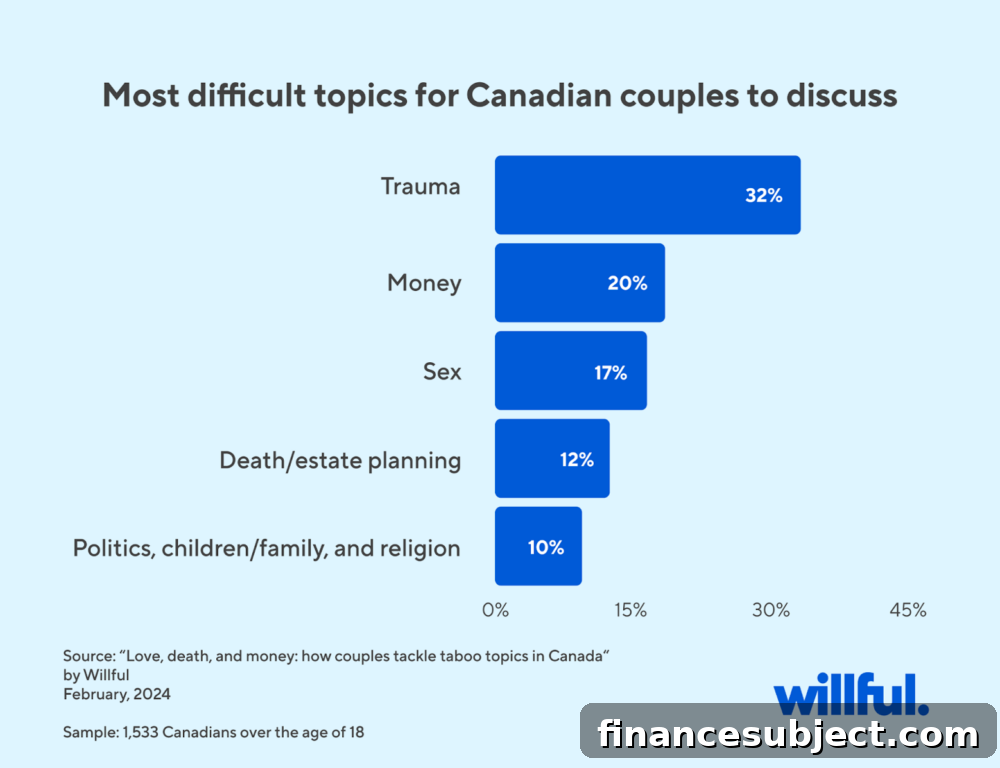
The most difficult topics for Canadian couples
As co-founders of Willful, an online platform for wills and estate planning, my husband and I wanted to know how comfortable Canadians are addressing traditionally taboo subjects. With the Canada Will Registry, we commissioned an Angus Reid study to explore this. The research showed that aside from trauma, money ranked as the hardest topic to bring up for the first time, followed closely by sex and death. That hesitation can delay important conversations: among the survey’s more than 1,500 respondents, 77% reported being in relationships, and of those people, one-third (33%) said they didn’t start discussing finances until after a year of dating. Another 7% said they’ve never talked about finances with a partner, and roughly one-third have not discussed end-of-life planning.
Avoiding money talk? You’re likely missing key financial details
Many people feel anxious about initiating money conversations: 39% of respondents said they felt or expect to feel nervous when discussing finances with a partner for the first time. Beyond awkwardness, avoiding the subject can leave couples unprepared in emergencies. The study found that many partners would struggle to access crucial information and documents if they needed to act quickly. Over half of those in relationships reported not having a will, and even fewer know where their partner’s will is kept.
That kind of confusion is exactly what inspired us to create Willful. We watched a family cope after the unexpected death of a sole earner whose estate plans were disorganized. Trying to locate passwords, life insurance policies, legal documents and end-of-life wishes under stress is both painful and inefficient. Our aim is to help people have the necessary conversations and to make essential documents accessible so loved ones don’t face added burden and conflict.
4 money moves to make as a couple
If money feels difficult to bring up, these practical steps can make discussions easier and more productive. The following approaches reflect guidance from MoneySense and our own experience:
- Start the conversation early and revisit it regularly to build comfort and transparency.
- Be candid about key facts such as outstanding debt, credit scores, income and savings so you both have a realistic picture.
- Set a recurring “money date” — a scheduled time to review budgets, bills and goals — to make financial planning habitual rather than stressful.
- Consider financial arrangements that work for you, whether that means joint accounts for shared expenses, separate accounts with agreed contributions, or a hybrid approach that preserves autonomy while creating a shared financial plan.
Whether you’re newly dating, cohabiting, or married, talking openly about money lays the groundwork for shared financial success and helps reduce conflict. Honest conversations make it easier to plan for children’s education, retirement, emergencies and end-of-life arrangements — and they ensure both partners know where important documents are stored.
Read more about money and relationships:
- Couples and credit scores: How your partner’s credit can affect yours
- Married with money: How to combine finances with your partner
- How to talk to your partner about money
- How financial advisors can help at different life stages
- How financial and estate planning can reduce money stress for women
This article was created by a MoneySense content partner.
This article is informational and was provided by a content partner based on their expertise. It is not advertising and does not replace professional advice; it has been edited by MoneySense for clarity and relevance.
Newsletter