

Kyle Prevost, creator of 4 Steps to a Worry-Free Retirement, Canada’s do-it-yourself retirement planning course, summarizes the week’s financial headlines and provides context for Canadian investors.
The most urgent global story remains the conflict in Israel and Gaza. Given the human suffering involved, we will avoid speculating about market impacts this week and focus on other financial developments affecting investors.
Inflation refuses to die
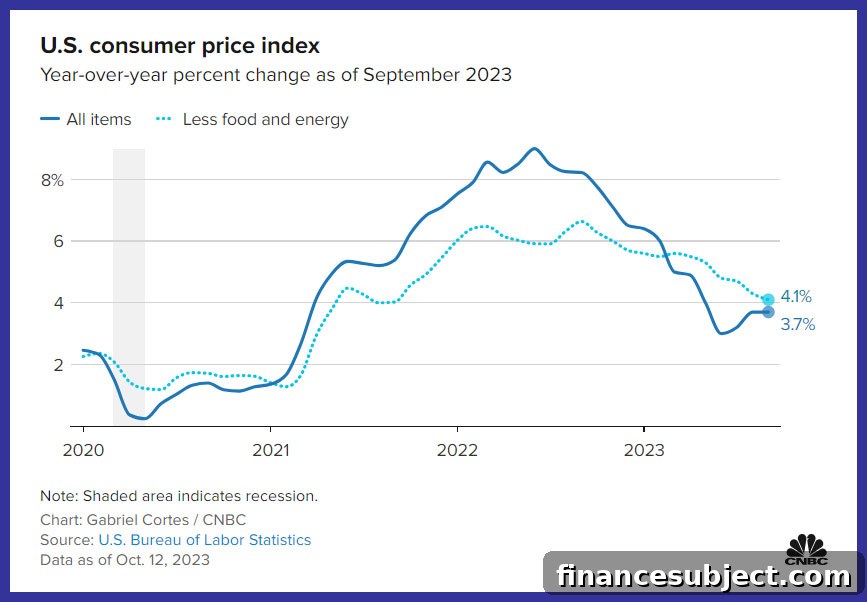
As we enter the season of scares, economists are watching a real one: inflation persists despite multiple attempts to bring it down. The U.S. Labour Department’s latest Consumer Price Index (CPI) report showed headline inflation at 3.7% year-over-year and core inflation at 4.1%, slightly above expectations.
U.S. Labour Department CPI report highlights
Key takeaways:
- CPI rose 0.4% from August to September.
- Core CPI increased 0.3% month-over-month.
- Shelter costs climbed 7.2% year-over-year and account for more than half of the CPI increase.
- Real hourly earnings are up 0.5% compared with a year ago.
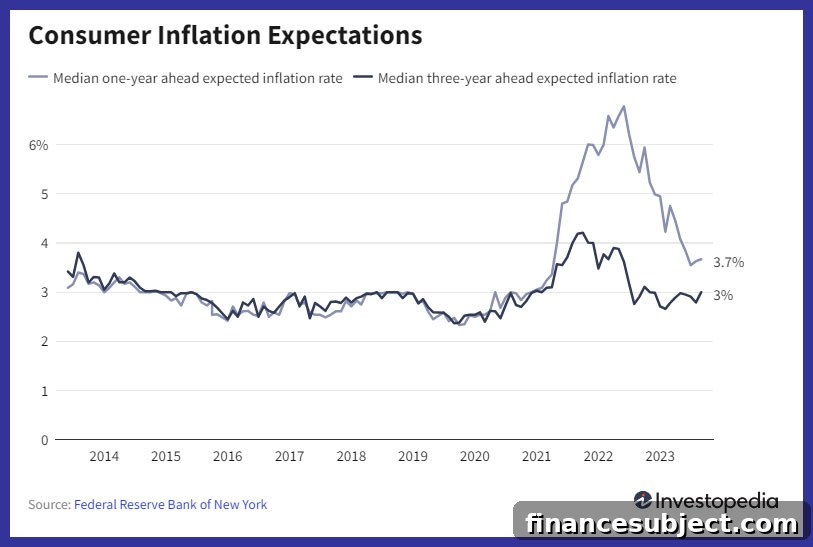
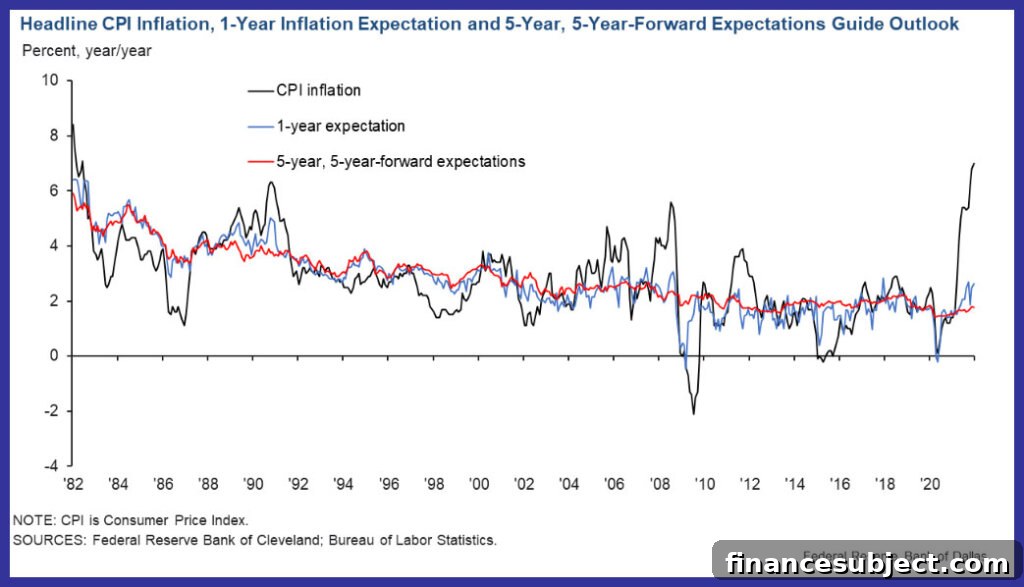
Despite the near-term persistence of prices, medium- and long-term inflation expectations remain reasonably anchored. The New York Fed’s consumer expectations survey indicates Americans expect inflation to be about 3% in three years and 2.8% in five years. Those levels are higher than central bankers would prefer but do not suggest runaway inflation expectations.
Consumer expectations are critical because they shape wage demands, spending habits, and the public’s faith in central banks like the U.S. Federal Reserve. If households continue to believe inflation will fall and trust monetary policy, that sentiment helps prevent inflation from becoming entrenched.
Are Pepsi earnings a sugar high?
PepsiCo (PEP) reported third-quarter results that beat modest expectations: earnings per share of $2.25 versus $2.15 expected, and revenue of $23.45 billion versus $23.39 billion expected. Shares rose about 2% on the announcement.
Digging deeper, the company’s beverage volume declined, reflecting the limits of price increases and shrinkflation (selling smaller packages at higher prices). North American beverages saw volume fall roughly 6%, with price increases offsetting much of that decline. The data suggest consumers may be starting to push back on repeated size reductions and price hikes, which could constrain margin expansion going forward.
Bright spots for Pepsi included strong Gatorade sales, up more than 10%, and product excitement around the relaunch of Mountain Dew Baja Blast—news that will please fans.
Delta earnings flying high
Delta Air Lines (DAL) posted solid results despite changes to lounge access and loyalty benefits. EPS came in at $2.03 versus $1.95 expected, while revenue was $14.55 billion, roughly in line with forecasts. Shares fell about 2.3% after the release.
Delta’s profits rose sharply—around 60% year-over-year—driven largely by stronger international travel revenue. Capacity was essentially flat, reflecting sustained demand for travel even as the pandemic-era surge in travel has normalized. The results highlight how airlines continue to benefit from robust international travel recovery.
Exxon: drill baby drill?
Exxon Mobil (XOM) made headlines after proposing to acquire Pioneer Natural Resources for nearly $60 billion, a move that would expand Exxon’s footprint in the Permian Basin and emphasizes a continued focus on low-cost shale oil production. The announcement knocked Exxon shares down about 2.5%, indicating some investor concern despite the deal being widely anticipated.
Exxon’s recent record profits give it the capital to pursue large acquisitions. The deal reinforces the company’s strategy of prioritizing traditional fossil-fuel production rather than a rapid shift to renewable energy—an approach that will shape its long-term business and environmental debate.
Has fixed income beaten utility stocks?
Canadian utility stocks have lagged this year. The iShares S&P/TSX Capped Utilities Index ETF (XUT) shows notable underperformance driven by two main factors:
- Utilities typically carry significant debt to finance capital-intensive projects. Higher interest rates increase borrowing costs and compress profit margins. Although many utilities locked in low rates in prior years, rising financing costs are starting to weigh on earnings.
- Utilities compete with fixed-income alternatives such as GICs and bonds. When 10-year bond yields were very low, dividend-paying utilities looked attractive. Now that GICs and bond yields are considerably higher—often above 5%—risk-averse investors can get competitive, guaranteed returns without equity volatility.
Before switching from utility stocks to fixed income, investors should consider several points:
- Timing the market is extremely difficult. Selling when sentiment is negative often locks in poor outcomes.
- Many Canadian utilities have a history of raising dividends. A 4% yield today could translate into a higher yield on cost over time as dividends grow.
- Dividends and capital gains often receive more favorable tax treatment than interest income—this matters for non-registered accounts and can affect after-tax returns compared with GICs or bonds.
Utilities and fixed-income investments aren’t mutually exclusive. A diversified portfolio can include dividend-paying stocks, bond ETFs, and GICs to balance growth, income, and capital preservation.

Yes, it’s free: The Canadian Financial Summit
We also announced the 2023 speaker lineup for the Canadian Financial Summit. Attendance is free, and the Summit covers practical topics for Canadian investors, including ETFs, first-home savings accounts (FHSA), tax-advantaged accounts, and broader personal finance trends.
Michael McCullough
Top Canadian ETFs for This Year and Beyond
Michael McCullough will walk through the ETF landscape and share recommendations based on MoneySense’s ETF research to help investors decide which ETFs might fit their portfolios.
Allan Norman, MSc, CFP, CIM
All your FHSA questions answered
Certified Financial Planner Allan Norman will answer practical questions about the new first-home savings account—what it offers, who benefits, and how to open and use an FHSA effectively.
Lisa Hannam
Personal finance trends to plan for in 2023 and 2024
MoneySense executive editor Lisa Hannam and columnist Kyle Prevost will review the major financial themes shaping Canadian portfolios—interest rates, crypto, employment, AI, GICs, and more—so readers can plan for the year ahead.