
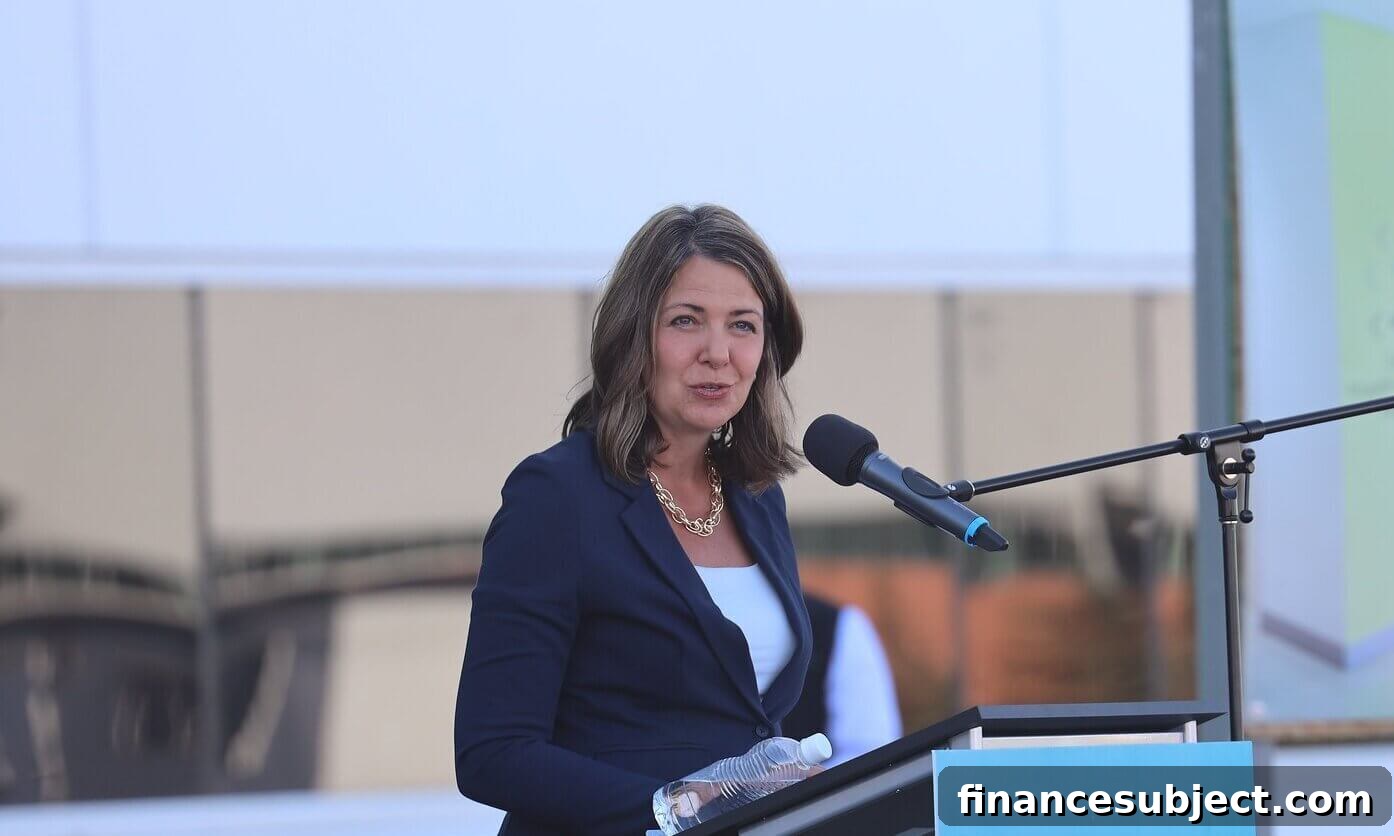
In late September, Alberta Premier Danielle Smith launched a public online consultation on a proposal to withdraw Alberta from the Canada Pension Plan (CPP). The announcement accompanied the release of a third-party report that claims Alberta would be entitled to 53 percent — roughly $334 billion — of the CPP’s total assets if the province left the federal plan. The provincial government argues that a provincially managed Alberta Pension Plan (APP) could deliver greater benefits for fewer premiums.
Can Alberta leave the CPP?
Yes. Government documents obtained by media outlets indicate the federal government would face significant legal and constitutional challenges in preventing a province from passing legislation to withdraw from the CPP. While the federal government administers national old age benefits and related laws, the documents state it cannot simply override a provincial law on the same subject.
The Alberta government projects the move could generate about $5 billion in provincial savings, funds it says could be redirected to boost benefits for Alberta seniors and reduce premium rates for contributors. However, the CPP’s board and many independent observers have raised questions about the assumptions and actuarial formulas used in the third-party report. Critics contend Alberta’s claim to 53 percent of CPP assets is likely overstated and that, even if withdrawal is legally possible, the province’s true entitlement — and the timing and mechanics of any transfer — are far from settled.
Political debate is active: Alberta’s opposition party has launched its own public consultation to gather residents’ views, reflecting the wide public interest and the potential divisiveness of any major pension reform.
The Quebec Pension Plan: A precedent for Alberta?
The third-party report draws a comparison with the Québec Pension Plan (QPP), which is administered by Quebec and allows residents to move freely across Canada while preserving pension rights. The QPP is often cited as an example of a successful provincial pension plan. However, there is an important difference: Quebec never joined the CPP when the federal program was created in 1966, so it was never part of the national fund. If Alberta proceeds to leave the CPP, it would be the first province to withdraw after having been part of the federal plan.
That distinction matters because Alberta would face unique transitional challenges: disentangling contributions and accrued benefits after decades in a national plan, negotiating any asset transfer, and ensuring benefit portability for people who have worked in multiple provinces.
What would replace the CPP in Alberta?
The proposal envisions an Alberta Pension Plan (APP) that would operate separately from the CPP and be governed and administered by the provincial government. Under the documents released by the province, three main legal steps would be required to implement such a plan: provide three years’ notice before withdrawal, pass provincial legislation within one year after that notice period, and create a pension plan deemed comparable to the CPP.
Determining “comparability” is a major unresolved issue. Canadian legislation does not spell out precise criteria for what constitutes a comparable replacement plan, making the assessment subjective and potentially contentious. The province would need to ensure that benefit structures, contribution rules, indexing, portability and governance meet standards acceptable to both contributors and retirees, and to any negotiating counterparties.
Funding the transition is another open question. Premier Smith’s plan relies on receiving a share of CPP investment assets, but there is no guarantee of a full transfer at the 53 percent level cited in the report. Setting up a new, large-scale pension fund involves considerable upfront and ongoing costs: creating an investment authority, staffing and expertise, new contribution and payment systems, changes to tax reporting, and legal and actuarial work to manage liabilities and interprovincial transfers. These practical and financial hurdles will factor heavily into any final decision.
What comes next?
Albertans are currently invited to participate in the consultation process, either online or at public engagement sessions. An engagement panel will review submissions and prepare a report for the Alberta government, with a scheduled delivery in May 2024. Premier Smith has indicated a referendum on the question could be considered as early as 2025, with a potential roll-out of a new plan by 2027 if voters and lawmakers approve the change.
Any move to leave the CPP would be complex and politically charged, affecting long-term retirement security, contribution levels, portability for mobile workers, and intergovernmental relations. Albertans considering the proposal should weigh the claimed financial benefits against the legal uncertainty, transition costs and operational challenges of establishing a provincial pension plan.
Read more about the CPP:
- Planning for retirement with little or no savings to draw on
- Should you collect CPP and OAS while working in your 60s?
- Delaying CPP and OAS to age 70: Is it worth the wait?
- CPP vs RRSP: Can you transfer your CPP to an RRSP?