

This week, Cut the Crap Investing founder Dale Roberts reviews recent financial headlines and provides context for Canadian investors.
Is AI akin to the invention of electricity?
Markets have been buoyed by exuberance around artificial intelligence—commonly shortened to “AI.” During the April 30 “Making sense of the markets” column, at the height of AI-related earnings enthusiasm, I observed how investors were rewarding companies that frequently mention AI in their communications.
“Google and Microsoft were two of the tech stars in the headlines. The market has certainly attached a premium to how many times management mentions the letters AI, for artificial intelligence. The potential of AI is driving the enthusiasm.”
Some commentators have gone even further, comparing AI’s potential to major historical inventions. One popular line circulating in social media suggested:
“AI is akin to the invention of electricity.”

Personally, I’m not an avid user of AI tools—and no, this column was not written by ChatGPT—but that doesn’t mean I’m not positioned to benefit from AI-driven growth. I hold technology and semiconductor stocks and I own the Horizons sector ETF (CHPS/TSX). After all, modern computing and AI rely on chips.
For many investors, avoiding AI exposure in 2023 would have meant missing large gains. If you own a broad U.S. market ETF like IVV (NYSE), you’ve participated in much of the rally driven by AI enthusiasm. The Nasdaq 100, a growth-focused index, set records and was on track for its best first half ever thanks in part to AI themes.
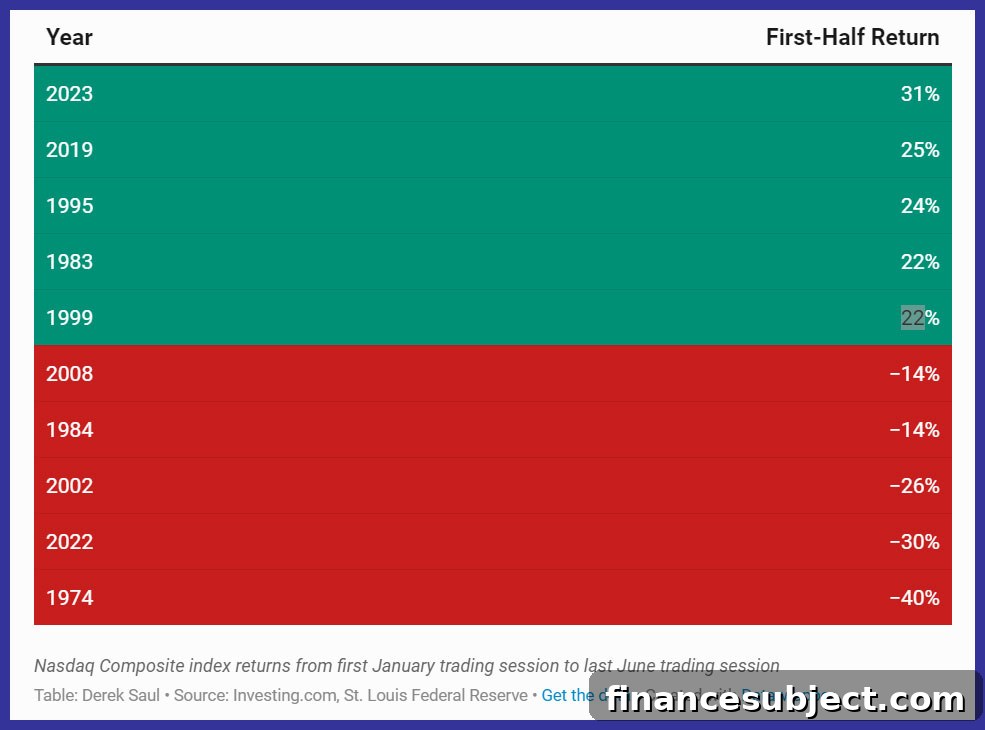
Those returns were striking, but they also raise the familiar question: are we repeating history? The Nasdaq historically outperforms the S&P 500 over long stretches, yet during the late-1990s dot-com bubble the Nasdaq’s higher valuations arrived long before profits did, and it underperformed the S&P for more than a decade afterward. It’s reasonable to caution that current enthusiasm for AI could be running ahead of fundamentals.
Two weeks ago I asked whether we were in a new bull market or merely experiencing a bear trap. The truth is none of us can reliably predict the market’s next move. What 2023 has shown is that exposure to growth assets can materially shape portfolio outcomes—and that passive investors, such as those following simple couch potato strategies, will inevitably “ride the wave” when markets surge.
Dividend payers are not paying off
In the first half of 2023, stocks in the S&P 500 that don’t pay dividends collectively outperformed dividend-paying firms by a wide margin. Ned Davis Research reported roughly an 18% gain for non-payers versus about a 4% advance for dividend payers—marking the weakest relative start for dividend stocks since 2009.
About 400 S&P 500 companies pay dividends while roughly 100 do not. The overall S&P 500 dividend yield was near 1.47% as of early July 2023. Much of the non-payer outperformance is tied to AI-fuelled momentum and high-growth names like Tesla (TSLA), which do not pay dividends but delivered strong returns.
I enjoy receiving dividends, but I don’t invest solely for yield. Many of my best-performing holdings—Apple, Microsoft, Nike and Lowe’s—pay only modest dividends while generating substantial total returns. The companies that have driven long-term portfolio growth often reinvest free cash flow into expansion, product development and scale rather than returning large sums to shareholders.
Focusing exclusively on dividend income is a common pitfall for self-directed investors in both Canada and the U.S. A larger portfolio value typically produces better long-term outcomes, whether you’re saving for retirement or funding registered education savings plans (RESPs). As goals approach, sensible investors reduce risk, but earlier in the accumulation phase, growth should remain a priority.
Tesla deliveries beat expectations
Tesla reported record deliveries in the second quarter—466,140 cars worldwide—exceeding the Wall Street consensus of about 445,000. The company pursued volume in part by trimming prices, and it narrowed the gap between production and deliveries, producing slightly more vehicles than it shipped to customers during the quarter.
High-end Model S and X deliveries also surprised to the upside, while the more affordable Model 3 and Model Y volumes led the surge. Analysts argue that price cuts, strong demand and factory efficiencies explain Tesla’s delivery beat and leave the company on track toward its annual goals, with eventual margin recovery expected as scale improves.
“With this delivery beat, we believe the sum-of-the-parts story for Tesla is another step towards coming into play with its newly released supercharger network OEM deals, energy business, AI-driven autonomous path, unmatched battery ecosystem, and increased production scale/scope globally adding to the Tesla golden EV success story.”
Meanwhile, Chinese automakers—most notably BYD—are rapidly expanding. BYD nearly doubled deliveries in the quarter, narrowing the gap with Tesla in fully electric vehicle sales and posting very strong growth across new-energy vehicles. Other Chinese brands such as Li Auto, Xpeng and Nio showed notable gains as well.
Warren Buffett’s Berkshire Hathaway held a meaningful stake in BYD earlier in the year, though reports showed some reduction in that holding. As for Tesla, while the company created the modern EV category and maintains a strong brand, competition is intensifying. Chinese manufacturers are poised to claim large shares of the Asian market, and Tesla will likely face sustained pressure on market share and margins.
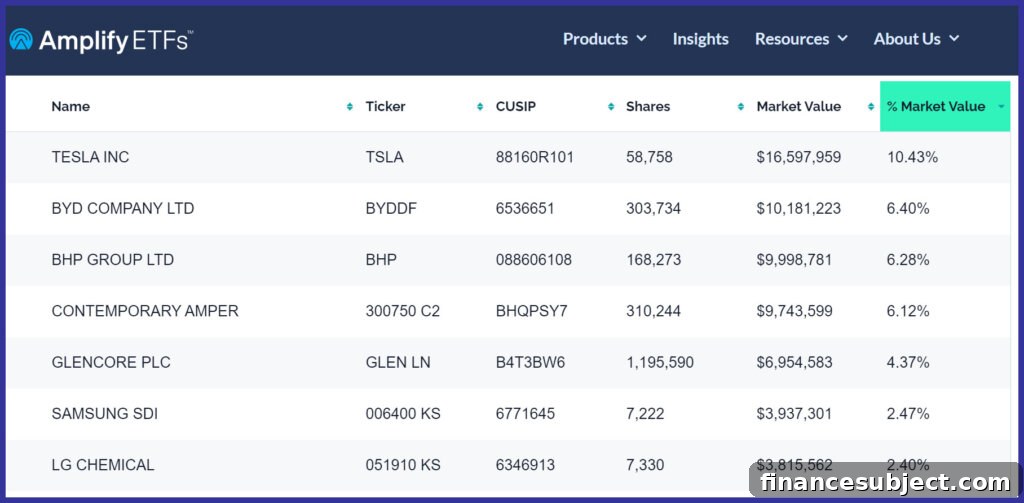
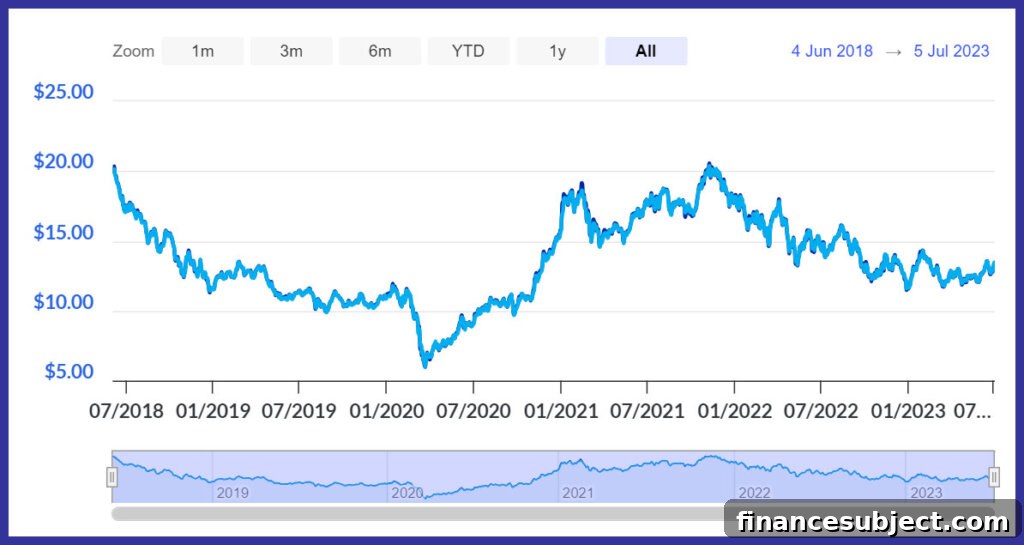
To participate in the broader EV and battery ecosystem without betting on a single automaker, I hold ETF exposure such as Amplify’s BATT (NYSE) and VanEck’s GMET (NYSE). These funds target the manufacturers, suppliers and materials that benefit from electrification and battery development. Government policy and climate initiatives are powerful economic tailwinds for the sector, but investors should remember it’s a competitive, policy-driven market and not guaranteed to be uniformly profitable.
Everything has gone K-shaped
Craig Basinger of Purpose Investments described the current recovery as “K-shaped,” meaning different parts of the economy are diverging: some businesses and sectors are moving sharply higher while others lag or decline. A V-shaped recovery implies a rapid rebound, and an L-shaped recovery implies a weak rebound. The K-shape captures how winners and losers have separated since the downturn.
“… a K-shaped recovery—the portion of the letter going up to the right representing the positive and the downward to the right portion of the letter representing things that are not going well. At the moment, it appears both the economy and markets are K-shaped.”
Services and experience-driven spending remain strong, while spending on goods has weakened—often an early sign of broader economic softening. As Basinger explains, reliable market predictions are hard because financial markets attempt to incorporate countless variables every second, there is unavoidable uncertainty and rare “black swan” events, behavioural forces still drive market sentiment, and the flow of new information creates asymmetries that confuse even the best strategists.
- Markets are complex: they tie together economic data, business valuations, geopolitics and sentiment continuously.
- Uncertainty: unforeseen developments and rare events can quickly change market dynamics.
- Behavioural factors: human emotion and bias still shape markets, despite algorithmic trading.
- Information asymmetry: the rapid flow of new data makes it hard for strategists to sustain an advantage.
These realities reinforce a simple, practical lesson: stick to a disciplined investment plan. Trying to time markets or chase short-term narratives often undermines long-term results.
Thanks for reading. It’s been a pleasure filling in for Kyle Prevost—he’ll be back next week. Happy investing, and enjoy your summer.