
After two years of rapid price increases, Canada’s housing market eased in 2022. Prices were at record highs during the unusually busy winter months, then declined through spring and summer as higher inflation and rising interest rates reduced buying power for many Canadians.
Mortgage rate increases were a dominant theme last year. The Canadian Real Estate Association (CREA) reported a national composite benchmark price of $817,000 in January 2022 that had fallen to $717,000 by December — a drop of roughly $100,000. Although prices eased in many regions, some markets still delivered solid gains, and others continue to offer strong value and growth potential.
For the 2023 edition of “Where to Buy Real Estate in Canada,” MoneySense collaborated with Zoocasa, a consumer real estate search platform, to identify the most attractive regions and neighbourhoods across 45 areas. We assessed affordability, recent growth and other local indicators to highlight where buyers could find value from Halifax to Vancouver.
- The best places to buy real estate: National overview
- What’s shaping the real estate market in 2023?
- A closer look at Canada’s top three real estate markets
- 1. Greater Moncton, N.B.
- 2. Sault Ste. Marie, Ont.
- 3. North Bay, Ont.
- Neighbourhood rankings
- Methodology
Best places to buy real estate: National overview
Below is Zoocasa’s national ranking of the best places to buy real estate in Canada, based on analysis of 45 regions. The table compares benchmark prices at the end of 2022 with recent price growth and a value score that takes both affordability and historical performance into account. Use the table to compare regions by price, short- and long-term growth, and relative value.
| Rank | Overall rank | Region | Region | Province | Benchmark price 2022 | 1-year growth | 3-year | 5-year | Value | National average (+/-) |
|---|---|---|---|---|---|---|---|---|---|---|
| 1 | 1 | Greater Moncton | Greater Moncton | N.B. | $320,817 | 26% | 84% | 102% | 4.75 | $-472,041 |
| 2 | 2 | Sault Ste. Marie | Sault Ste. Marie | Ont. | $292,208 | 26% | 75% | 84% | 4.68 | $-500,650 |
| 3 | 3 | North Bay | North Bay | Ont. | $413,525 | 21% | 83% | 90% | 4.23 | $-379,333 |
| 45 | 46 | Oakville-Milton | Oakville – Milton | Ont. | $1,401,042 | 10% | 51% | 46% | 0.97 | $608,184 |
Source: Zoocasa
Return to menu.
How to read the table:
- Benchmark price 2022: Composite benchmark across all property types as of Dec. 31, 2022 — includes detached and attached homes, townhouses and apartments.
- 1-year, 3-year and 5-year growth: Percent change in the composite benchmark price over each respective period.
- Value: A score from 0 to 5 that balances affordability and recent price growth.
- National average (+/-): Difference between the area’s benchmark price and the national average as of Dec. 31, 2022.
Return to menu.
Answer a few quick questions to receive a personalized rate quote*
I’m renewing/refinancing
You will be leaving MoneySense. Just close the tab to return.
What’s shaping the real estate market in 2023?
Demand slowed in 2022 as interest rates rose, inventories stayed low and many buyers opted to wait. CREA reported December sales were about 39% below year-earlier levels. Even though prices fell in many areas, higher borrowing costs made homes less affordable for many prospective buyers.
Zoocasa broker Lauren Haw notes that many buyers who paused in 2022 are reconsidering their options, shifting toward more affordable home types like condos and townhouses or exploring smaller markets where their dollars stretch further. Fixed mortgage rates started easing in early 2023, which has helped revive interest among previously sidelined buyers.
Compared with 2021, price growth in 2022 was generally lower across the markets we studied. Most of last year’s gains occurred in the first quarter, and many major markets saw steady price declines for the remainder of the year. Still, some smaller and suburban markets delivered continued gains, and regions neighbouring large centres—such as Kitchener-Waterloo, Hamilton and Calgary suburbs—remain popular.
Housing supply across Canada remains tight. The federal government’s increased immigration targets—aimed at boosting population growth—will add housing demand, particularly in major city cores, which could push prices higher in areas where supply is constrained.
Return to menu.
Neighbourhood rankings
Alberta
• Calgary • Edmonton
Nova Scotia
• Halifax
British Columbia
• Burnaby, New Westminster, Richmond
• Coquitlam, Port Coquitlam, Port Moody
• Langley, Pitt Meadows, Maple Ridge
• North Shore • Vancouver
Ontario
• Durham Region • Halton Region
• Peel Region • Toronto
• York Region
Canada’s top three real estate markets in 2023
1. Greater Moncton, N.B.
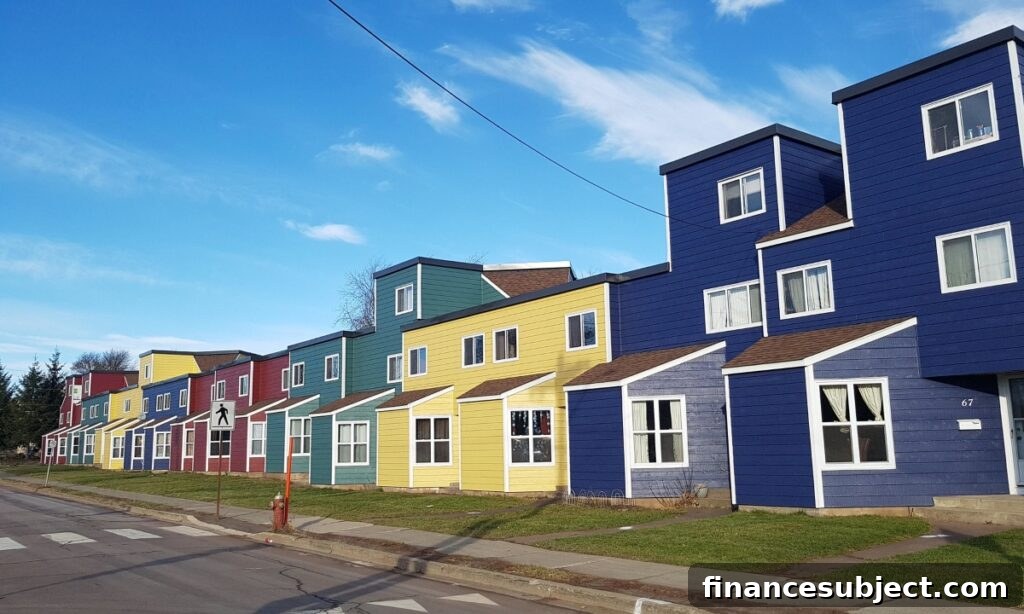
Greater Moncton — which includes Moncton, Riverview and Dieppe — ranks first for the second consecutive year thanks to a high value score and relatively low prices. With a composite benchmark of $320,817 in 2022, this region remains far more affordable than most Canadian markets and offers opportunities for first-time buyers, sellers and investors.
Market developments in Greater Moncton
House prices in Greater Moncton rose rapidly in recent years but remain well below the national average, making the area attractive for newcomers to the market. Rental cost increases are encouraging more first-time buyers to search for entry-level homes, keeping demand for homes around the $300,000 mark high.
The region’s benchmark rose 26% year-over-year, 84% over three years and 102% over five years. After interest-rate related cooling in late 2022 the market became more balanced. If interest rates stabilize, buyer demand could return more strongly.
Outlook
Moncton’s combination of affordability, steady employment opportunities and access to nature suggests continued buyer interest. Immigration and interprovincial migration are likely to support prices over time while keeping entry points affordable relative to national averages.
Return to menu.
2. Sault Ste. Marie, Ont.
Set on the Great Lakes with abundant outdoor amenities, Sault Ste. Marie scored highly for value in our rankings. With a population just over 78,000 and a benchmark price of $292,208 at the end of 2022, the city offers low prices, community appeal and growth potential.

Market developments in Sault Ste. Marie
In 2022 the area attracted out-of-town buyers and investors, pushing the benchmark into the $300,000 range for the first time. Demand for detached family homes and multi-family rental units was especially strong. Although the market cooled late in the year, low inventory meant listings still sold quickly and often received multiple offers.
Outlook
Sault Ste. Marie’s affordability relative to national averages, strong rental demand and ongoing buyer interest position it well for growth in 2023, particularly if broader affordability conditions improve.
Return to menu.
3. North Bay, Ont.
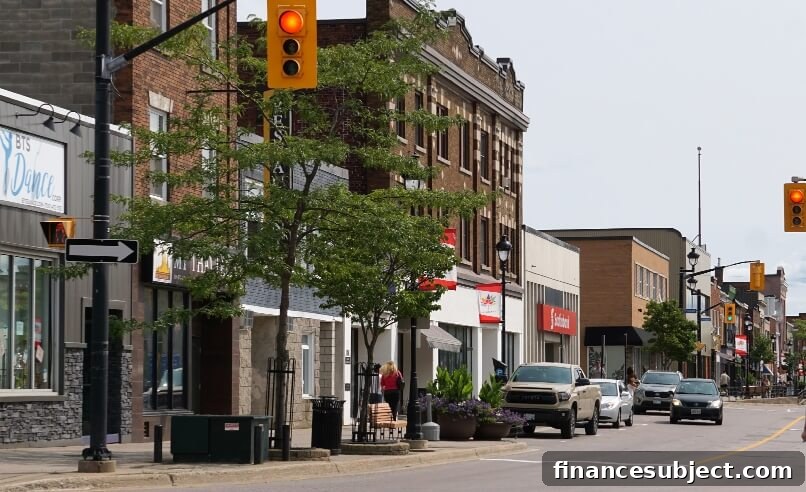
North Bay, on Lake Nipissing, retains a top-three rank thanks to a balance of affordability and strong recent growth. With a benchmark of $413,525 in 2022 — well below the national average — the city has seen notable price appreciation over one, three and five years.
Market developments in North Bay
North Bay’s benchmark rose 21% over one year, 83% over three years and 90% over five years, while remaining attractive to buyers seeking affordability plus steady appreciation. The market offers a range of property types including condos, older character homes and modern single-family houses.
Outlook
After a modest dip late in 2022, benchmark prices began to recover in early 2023. North Bay’s outdoor lifestyle, lower entry prices and improving demand make it a compelling option for buyers who want affordability with upside potential.
Return to menu.
Methodology: How we determined the best places to buy real estate
Zoocasa examined real estate data from top markets across Canada to identify regions and neighbourhoods that offer the strongest combination of value and growth potential for 2023. Rankings are based on data available at the end of March 2023, supplemented by interviews conducted in February and March.
National ranking
Benchmark home price data for the national ranking was sourced from CREA. Not all Canadian markets report separate CREA benchmark data, so the analysis focuses on areas with available data. Some combined regions, such as Hamilton and Burlington, are reported together by CREA and reflected as combined benchmark values.
We ranked regions based on benchmark prices and recent price growth. Areas within the same geographic region were compared directly to produce the overall ordering and scores.
Value
The value score incorporates an area’s composite benchmark price as of Dec. 31, 2022, relative to the national picture, and weighs recent price growth over one, three and five years — with greater emphasis on the most recent period. The score rewards affordability and positive, steady appreciation.
Neighbourhood rankings
Neighbourhood rankings combine the value score with a neighbourhood economics score weighted equally. The economics score is based on metrics commonly used in affordability indexes, including homeownership versus rental rates, education levels and household incomes.
Qualitative factors
We also reviewed amenities, accessibility and the share of households with children to better describe lifestyle characteristics. While these qualitative measures did not determine rankings, they offer context for prospective buyers.
Neighbourhood accessibility scores are made up of walk, transit and bike scores, each out of 100, weighted 60%, 30% and 10% respectively, then converted to an accessibility score out of 5.
Data sources
Primary sources include Statistics Canada, CREA and regional real estate boards such as NSAR, TRREB, RAE, CREB and REBGV, along with WalkScore for local accessibility data.
Return to menu.
Read more about buying a home:
- Mortgage affordability calculator
- The complete guide for first-time home buyers in Canada
- Video: Buying your first home? Learn about the First-Time Home Buyer Incentive
- What to know about the new First Home Savings Account
- Buying a second home: How it works in Canada
What does the * mean?
Affiliate links may generate a commission that helps keep this site free to users. Links marked with an asterisk (*) or labelled as “Featured” are affiliate links. Links marked “Sponsored” indicate paid placements. Editorial content remains independent and is not influenced by affiliate or sponsored relationships.
What type of article am I reading?
This package is presented by an advertising partner. It was independently produced by MoneySense in collaboration with Zoocasa and is supported financially by Ratehub.ca.